Begleiten Sie uns auf eine literarische Weltreise!
Buch zum Bücherregal hinzufügen
Grey
Einen neuen Kommentar schreiben Default profile 50px
Grey
Jetzt das ganze Buch im Abo oder die ersten Seiten gratis lesen!
All characters reduced
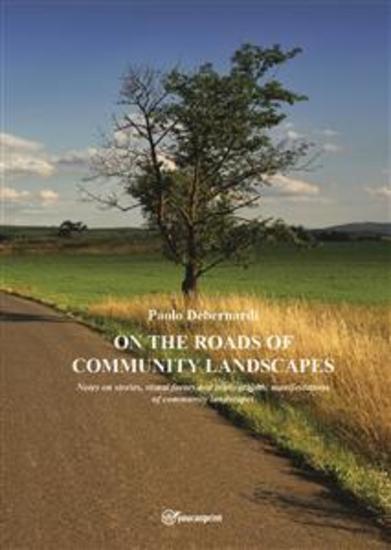
On the Roads of Community Landscapes - cover

On the Roads of Community Landscapes

Paolo Debernardi

Verlag: Youcanprint

  • 0
  • 0
  • 0

Beschreibung

The paper text is a conceptual introduction to the "INTERNATIONAL INVENTORY OF COMMUNITY CULTURAL AND BIOCULTURAL LANDSCAPES"  ( for the moment, in digital form. The Inventory is an attempt to identify rural, pasture, forestry and coastal community spaces, still existing and observable in the landscape and identity dimension as stratified over the millennia, also in relation to the presence of management practices still existing, potentially subject to analysis and studies by agroecologists and naturalists. These spaces have been reviewed in approximately 1300 files, on an international basis, into 8 main typologies, divided into nations, departments, regions and localities, in relation to scientific reports and activities carried out by bodies, associations, universities and foundations as well as on the basis of personal direct observations in different continents. Anyone among the readers can find, in alphabetical order, in the Inventory sheets of different nations, the presence of areas of interest to them and inform me, if they believe, of the presence of other spaces of communities and landscapes, by email:  debernardi@ager-landscape .org
Verfügbar seit: 23.01.2024.

Weitere Bücher, die Sie mögen werden

  • I Like To Write Spell and Read! - cover

    I Like To Write Spell and Read!

    Kim Mitzo Thompson, Karen Mitzo...

    • 0
    • 0
    • 0
    Kids will love this sweet story/song combination as they listen to “I Like To Write, Spell, And Read” and follow along word-for-word in this adorably illustrated eBook. Cheery music will entertain pre-readers as these fun-filled lyrics reinforce how enjoyable writing, reading, and learning is for young readers. Kids and parents alike will not want to stop reading and singing along to “I Like To Write, Spell, And Read” over and over again!
    Zum Buch
  • Searching for Harry Chapin's America - cover

    Searching for Harry Chapin's...

    Pat Fenton

    • 0
    • 0
    • 0
    In "Searching for Harry Chapin’s America: Remember When the Music," journalist Pat Fenton describes his road trips to the towns and people that inspired Harry Chapin’s most renowned songs. While Fenton’s account includes exclusive interviews with Chapin’s family and associates, and an excerpt from Chapin’s unpublished writings, the audio adaptation includes actual cuts from Chapin's best-known songs. Composer and multi-instrumentalist David Amram, who narrates Fenton's chronicle, performs his own brief interludes of "incidental music," where he was inspired to do so.Harry Chapin (1942-1981) was a legendary top-charting American songwriter in the 1970s and ’80s. During his lifetime, Chapin was nominated twice for a Grammy Award: in 1972 for Best New Artist, and in 1974 for Best Pop Male Vocal Performance. In 2011, thirty years after his untimely death, Chapin’s Number One-charting song, “Cat’s In the Cradle,” was inducted into the Grammy Hall of Fame. "Searching for Harry Chapin’s America" was published on July 16, 2021, and is a fortieth-year commemoration of this musical icon’s tragic death in a car crash on July 16, 1981.  The audio adaptation follows a year later, in July, 2022, and extends the tribute to Chapin's legacy of songs and philanthropy."Like 'Don Quixote,' or 'On the Road,' Pat Fenton’s classic book takes you on an unforgettable series of journeys and makes you feel that you are now welcome to be with the people and places that Harry Chapin memorialized in his timeless songs."—David Amram, composer/multi-instrumentalist/author “A portrait of an age as well as an artist. Chapin was an American original who combined Walt Whitman’s lyric realism with Woody Guthrie’s passionate truth-telling. Fenton’s blend of sympathy, honesty, and insight gives us the man in full. Fenton’s talents as a master storyteller have never been on better display.” 	 —Peter Quinn, novelist/political historian
    Zum Buch
  • Music Bitz - 21 Tips for the New Film Composer - cover

    Music Bitz - 21 Tips for the New...

    Ryan McLean

    • 0
    • 0
    • 0
    Helpful tips on treating and writing music for film. Whether you have writer's block or looking for a fresh approach, these 21 tips are for you.
    Zum Buch
  • Paddy Reilly - From The Fields of Athenry to The Dubliners and Beyond - cover

    Paddy Reilly - From The Fields...

    Paddy Reilly

    • 0
    • 0
    • 0
    Patrick 'Paddy' Reilly is an Irish folk singer and guitarist. Born in Rathcoole, County Dublin, he is one of Ireland's most famous balladeers and is best known for his renditions of "The Fields of Athenry", "Rose of Allendale" and "The Town I Loved So Well". Reilly released his version of "The Fields of Athenry" as a single in 1983; it was the most successful version of this song, remaining in the Irish charts for 72 weeks.
    After years a solo performer, he joined The Dubliners in 1996 as a replacement for long-time member Ronnie Drew. He played with the group for nine years before leaving for New York City.
    In this memoir, Paddy is gracious and generous about sharing his memories, good and bad, with the readers who have helped make him Ireland's best loved balladeer for almost 60 years.
    Zum Buch
  • Writing Dancing in the Age of Postmodernism - cover

    Writing Dancing in the Age of...

    Sally Banes

    • 0
    • 0
    • 0
    Drawing of the postmodern perspective and concerns that informed her groundbreaking Terpsichore in Sneakers, Sally Banes's Writing Dancing documents the background and developments of avant-garde and popular dance, analyzing individual artists, performances, and entire dance movements. With a sure grasp of shifting cultural dynamics, Banes shows how postmodern dance is integrally connected to other oppositional, often marginalized strands of dance culture, and considers how certain kinds of dance move from the margins to the mainstream.Banes begins by considering the act of dance criticism itself, exploring its modes, methods, and underlying assumptions, and examining the work of other critics. She traces the development of contemporary dance from the early work of such influential figures as Merce Cunningham and George Balanchine to such contemporary choreographers as Molissa Fenley, Karole Armitage, and Michael Clark. She analyzes the contributions of the Judson Dance Theatre and the Workers' Dance League, the emergence of Latin postmodern dance in New York, and the impact of black jazz in Russia. In addition, Banes explores such untraditional performance modes as breakdancing and the "drunk dancing" of Fred Astaire.
    Zum Buch
  • Kofun Period - The Mysterious Tomb Builders and the Roots of Imperial Japan - cover

    Kofun Period - The Mysterious...

    Rolf Hedger

    • 0
    • 0
    • 0
    The Kofun Period, which lasted from approximately 250 to 600 AD, marks a significant era in early Japanese history. This period is named after the distinct burial mounds, or "kofun," that were constructed during this time. These mounds vary in size and shape but are most commonly recognized for their keyhole-like design. The Kofun Period is pivotal as it represents a time of political consolidation, the development of social structures, and the emergence of a powerful ruling elite that would lay the foundation for the imperial system in Japan. 
    The beginning of the Kofun Period is closely tied to the formation of more complex societies in the Japanese archipelago. By this time, a system of chiefdoms had developed, and the early Yamato state began to emerge as a dominant political force. The period sees the consolidation of power under a centralized leadership, which eventually paved the way for the establishment of the imperial family that still exists today. During the Kofun Period, society transitioned from small, localized groups to more organized and hierarchical structures, a shift that was reflected in the elaborate tombs built for the elites. 
    The most notable characteristic of the Kofun Period is the construction of large burial mounds for the ruling class. These tombs were not only elaborate final resting places for powerful individuals but also symbolized the political power and religious authority of the deceased. The kofun mounds varied in size, with some measuring several hundred meters in length. These tombs were often surrounded by moats and would contain a wealth of grave goods, such as weapons, jewelry, and pottery, which reflected both the material culture of the time and the importance of the individual being buried.
    Zum Buch