Join us on a literary world trip!
Add this book to bookshelf
Grey
Write a new comment Default profile 50px
Grey
Subscribe to read the full book or read the first pages for free!
All characters reduced
Beadle's Dime National Speaker Embodying Gems of Oratory and Wit - Particularly Adapted to American Schools and Firesides - cover

Beadle's Dime National Speaker Embodying Gems of Oratory and Wit - Particularly Adapted to American Schools and Firesides

Daniel Webster, Edward Everett, Theodore Parker, C. H. Spurgeon, Alfred Domett, Metta Victoria Victor, Bishop Whipple, George E. Pugh, Owen Meredith

Publisher: Good Press

  • 0
  • 0
  • 0

Summary

Beadle's Dime National Speaker, Embodying Gems of Oratory and Wit captures a rich tapestry of eloquence and humor, reflecting the literary zeitgeist of 19th-century America. The anthology stands as a testament to the variegated styles of rhetoric and wit that marked an era of dynamic cultural discourse. From soaring speeches that evoke the fervor of public life to incisive humor that mirrors society's quirks, the collection resonates with voices that once stirred the nation's conscience. Each piece, emerging as a gem of expression, showcases the ability of language to inspire, entertain, and provoke thought. The anthology features celebrated figures such as Daniel Webster and C. H. Spurgeon, whose formidable oratory and persuasive skills are legendary. These works are augmented by softer, yet equally potent voices like Metta Victoria Victor and Alfred Domett, whose contributions underscore the broader cultural narratives at play. United by their engagement with the zeitgeist, the contributing authors bring together a diversity of perspectives, themes, and cultural insights that align with key historical movements like Transcendentalism and the burgeoning national identity narrative. Beadle's Dime National Speaker offers an unparalleled journey into the rich world of 19th-century oration and wit, a confluence of styles that engages the contemporary reader through its depth and relevance. It harbors transformative potential for readers eager to explore the intersections of eloquence and humor across diverse voices, shedding light on societal changes and enduring themes. This collection invites both scholars and enthusiasts to explore its multitude of perspectives, gaining educational enrichment and inspiration from the dialogues it cultivates within its pages.
Available since: 10/19/2023.
Print length: 82 pages.
Other books that might interest you

  • Athens - A History - cover

    Athens - A History

    Bruce Clark

    • 0
    • 0
    • 0
    A sweeping history of Athens, telling the three-thousand-year story of the birthplace of Western civilization. 
     
    Even on the most smog-bound of days, the rocky outcrop on which the Acropolis stands is visible above the sprawling roofscape of the Greek capital. Athens presents one of the most recognizable and symbolically freighted panoramas of any of the world's cities: the pillars and pediments of the Parthenon – the temple dedicated to Athena, goddess of wisdom, that crowns the Acropolis – dominate a city whose name is synonymous for many with civilization itself. 
     
    It is hard not to feel the hand of history in such a place. The birthplace of democracy, Western philosophy and theatre, Athens' importance cannot be understated. Few cities have enjoyed a history so rich in artistic creativity and the making of ideas; or one so curiously patterned by alternating cycles of turbulence and quietness. From the legal reforms of the lawmaker Solon in the sixth century BCE to the travails of early twenty-first century Athens, as it struggles with the legacy of the economic crises of the 2000s, Clark brings the city's history to life, evoking its cultural richness and political resonance in this epic, kaleidoscopic history.
    Show book
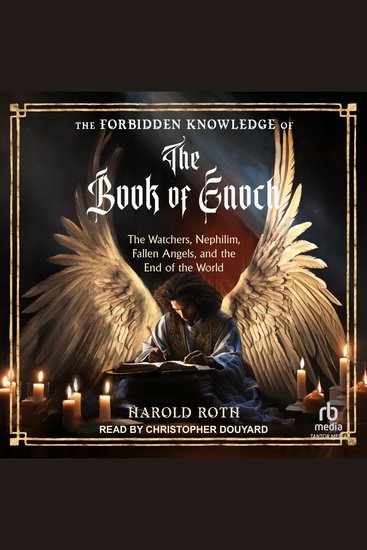
  • The Forbidden Knowledge of the Book of Enoch - The Watchers Nephilim Fallen Angels and the End of the World - cover

    The Forbidden Knowledge of the...

    Harold Roth

    • 0
    • 0
    • 0
    Forbidden knowledge is at the core of the Book of Enoch. Its text has captured interest from 300 BCE up to the present day. Ancient people have all consulted the Book of Enoch for their magical and mystical practices. Sometimes part of religious canon and doctrine, and sometimes outright banned, the Book of Enoch has persisted for well over 2,000 years. Roth interprets the content of the Book of Enoch and addresses how that knowledge has been used in the past and can be useful in the present. The Forbidden Knowledge of the Book of Enoch shows that the Book of Enoch remains as vital, if not more so, today as it has been for centuries. 


    From Renaissance magic to early Christian apocalyptic texts, all the way down to today's conspiracy theories and modern magical angelology, the Book of Enoch has been influential in many spiritual and religious traditions. What has been missing from the various approaches to the Book of Enoch has been any real attempt to find not only what is at the center of these stories but also their connections to magic. The Forbidden Knowledge of the Book of Enoch finds and elucidates those connections. 


    This new work will be useful to magic workers, mystics, those who work with angels, those interested in Jewish magic and mystical practices, and those who are simply curious to peek at apocalyptic visions.
    Show book
  • Both Not Half - 'Few people write about identity with such fluency and sincerity' SATHNAM SANGHERA - cover

    Both Not Half - 'Few people...

    Jassa Ahluwali

    • 0
    • 0
    • 0
    GOLD WINNER OF 'BEST NARRATOR' AT THE AUDIO PRODUCTION AWARDS. 'This guy has better Punjabi than both of us and he's only half Punjabi.' Only. Half. I stared at those words. The intent behind the comment was in no way malicious, but it hurt. I felt diminished. I felt like I was being robbed of something essential to me. And as I stared at my screen, realisation dawned. '#bothnothalf' I replied. For over twenty-five years, actor Jassa Ahluwalia described himself as 'half Indian, half English'. His fluent Punjabi always prompted bewilderment, medical staff questioned the legitimacy of his name, and the world of casting taught him he wasn't 'the right kind of mixed-race'. Feeling caught between two worlds, it wasn't long before Jassa embarked on a call to action: we need to change how we think and talk about mixed identity. By delving into the media we grew up consuming and the legacies of empire we have been taught, Ahluwalia asks: is there anything to be learnt from Rudyard Kipling? Why were movie stars urged to hide their mixed identities? To what extent did colonialism encourage or hinder mixed marriages? Is nationalism outdated? How can the politics of class and queer liberation inform our understanding of mixed identity? Both Not Half is a rallying cry for a new and inclusive future. It's a journey of self-discovery that unearths the historical roots of modern mixed identity as we know it, braving to deconstruct the binaries we have inherited and the narratives we passively accept. Part-memoir, part-manifesto: this is a campaign for belonging in a divided world.This immersive audiobook includes exclusive audio clips from Jassa 's Ted Talk, original audio from self-tapes, a bonus conversation with his sister Ramanique Ahluwalia, and much more.
    Show book
  • Meroitic Kingdom - Forgotten Kingdom of the Nile's Black Pharaohs - cover

    Meroitic Kingdom - Forgotten...

    Rolf Hedger

    • 0
    • 0
    • 0
    The Land of Kush, an ancient and powerful civilization, thrived along the banks of the Nile in what is now Sudan. Situated south of Egypt, Kush was a land of vast deserts, fertile floodplains, and rich natural resources. This region played a crucial role in shaping the history of northeastern Africa, serving as a bridge between central Africa and the Mediterranean world. The rise of the Kingdom of Kush was deeply influenced by its geography, trade networks, and interactions with neighboring civilizations. 
    The Nile River was the lifeline of Kush, providing water for agriculture, transportation, and trade. The river's annual flooding deposited nutrient-rich silt, allowing the Kushites to cultivate crops such as barley, wheat, and sorghum. This agricultural abundance supported growing populations and enabled the kingdom to expand its influence. The vast deserts surrounding Kush acted as natural barriers, protecting the civilization from invasions while also encouraging the development of trade routes that connected Kush to Egypt, the Red Sea, and beyond. 
    Kush's wealth was largely derived from its abundant natural resources, particularly gold, iron, and precious stones. Gold mines in Nubia were among the richest in the ancient world, making Kush a major supplier of gold to Egypt and other civilizations. Ironworking became another defining feature of Kushite industry, allowing the kingdom to produce advanced tools and weapons that strengthened its economy and military. The Kushites also controlled trade routes that transported luxury goods such as ivory, ebony, and incense, further enriching their civilization.
    Show book
  • ADHD Raising an Explosive Child - Positive Parenting Strategies for Understanding Your Child - cover

    ADHD Raising an Explosive Child...

    Sophia Hughes

    • 0
    • 0
    • 0
    ADHD affects nearly one in ten children, yet many parents struggle to recognize the symptoms and effectively manage their child's condition. For those who have received a diagnosis, uncertainty about how to best support their child often persists. If you find yourself in this situation, this groundbreaking book offers transformative insights that can revolutionize your parenting journey. 
    Within these pages, you'll embark on a journey of understanding and empowerment: 
    Recognition and Evaluation: Learn to identify the signs and symptoms of ADHD and navigate the process of evaluation by medical professionals specializing in pediatric care. 
    Understanding ADHD: Gain insight into the three major types of ADHD – primarily inattentive, primarily hyperactive and impulsive, and combined – and their distinct characteristics. 
    Effective Treatment Strategies: Explore practical, evidence-based approaches to setting up and implementing a comprehensive treatment plan tailored to your child's unique needs. 
    Positive Parenting Techniques: Discover common-sense strategies for fostering a supportive and nurturing environment for your child, while understanding that ADHD symptoms are not a result of parenting deficiencies. 
    Thigpen's insightful organization allows parents to use this book as a comprehensive reference, offering clarity on ADHD symptoms, treatment options, and developmental milestones. Whether you're seeking guidance on understanding your child's diagnosis or strategies for managing ADHD-related challenges, "ADHD: Raising an Explosive Child" provides the essential support and knowledge you need. 
    Parenting a child with ADHD presents unique complexities, but with the right resources and support, you can navigate this journey with confidence and compassion. If you're ready to empower yourself and your child, "ADHD: Raising an Explosive Child" is the indispensable companion you've been searching for.
    Show book
  • America’s Greatest Engineering Projects: The Construction History of the Transcontinental Railroad the Panama Canal and the Hoover Dam - cover

    America’s Greatest Engineering...

    Editors Charles River

    • 0
    • 0
    • 0
    The Transcontinental Railroad, laid across the United States during the 1860s, remains the very epitome of contradiction. On the one hand, it was a triumph of engineering skills over thousands of miles of rough terrain, but on the other hand, it drained the natural resources in those places nearly dry. It “civilized” the American West by making it easier for women and children to travel there, but it dispossessed Native American civilizations that had lived there for generations. It made the careers of many men and destroyed the lives from many others. It was bold and careless, ingenious and cruel, gentle and violent, and it enriched some and bankrupted others. In short, it was the best and worst of 19th century America in action. 
    Traveling around the tip of South America was fraught with danger, and European explorers and settlers had proposed building a canal in Panama or Nicaragua several centuries before the Panama Canal was actually built. Taking about 10 years to build, workers had to excavate millions of cubic yards of earth and fight off hordes of insects to make Roosevelt’s vision a reality. Roosevelt also had to tie up the U.S. Navy in a revolt in Colombia to ensure Panama could become independent and thus ensure America had control of the canal. 
    During the 1930s, at the height of the Great Depression, thousands of workers began work on the Hoover Dam, built in the Black Canyon, which had been cut by the powerful Colorado River. The Colorado River was responsible for the Grand Canyon, and by the 20th century, the idea of damming the river and creating an artificial lake was being explored for all of its potential, including hydroelectric power and irrigation. By the time the project was proposed in the 1920s, the contractors vowing to build it were facing the challenge of building the largest dam the world had ever known. As if that wasn’t enough, the landscape was completely unforgiving.
    Show book