¡Acompáñanos a viajar por el mundo de los libros!
Añadir este libro a la estantería
Grey
Escribe un nuevo comentario Default profile 50px
Grey
Suscríbete para leer el libro completo o lee las primeras páginas gratis.
All characters reduced
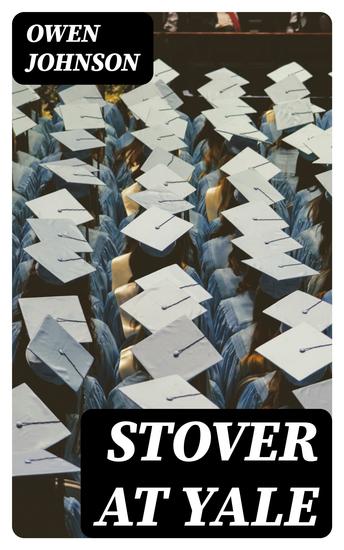
Stover at Yale - cover

Stover at Yale

Owen Johnson

Editorial: DigiCat

  • 0
  • 0
  • 0

Sinopsis

Set against the backdrop of Yale University in the early 20th century, Owen Johnson's "Stover at Yale" is a captivating exploration of academic life, friendship, and the challenges of growing up. Written in a rich, descriptive style, the novel delves into the experiences of its protagonist, Stover, as he navigates the complexities of the Ivy League environment, highlighting themes of ambition, societal expectations, and personal growth. Johnson captures the nuances of collegiate culture, employing vivid dialogue and robust character development to convey the tensions between athletic prowess and academic achievement, all while echoing the broader tensions of America's evolving social landscape. Owen Johnson, an alumnus of Yale himself, draws from his own experiences to paint a realistic portrait of university life. His tenure at Yale not only provides authenticity to the narrative but also reflects the author's reflections on masculinity and ambition in a rapidly modernizing society. Johnson's upbringing and early literary influences shaped his perspectives, allowing him to infuse authenticity into a tale that resonates with both nostalgia and critique. For readers seeking a timeless tale of youth, aspiration, and the formative power of education, "Stover at Yale" is an essential read. Johnson's insightful prose and keen observations make it a compelling choice for those interested in the intricacies of university culture and personal discovery, delivering a narrative that resonates with enduring relevance.
Disponible desde: 04/09/2022.
Longitud de impresión: 250 páginas.

Otros libros que te pueden interesar

  • The House of Mapuhi - cover

    The House of Mapuhi

    Jack London

    • 0
    • 0
    • 0
    "I would rather be ashes than dust! I would rather that my spark should burn out in a brilliant blaze than it should be stifled by dry-rot. I would rather be a superb meteor, every atom of me in magnificent glow, than a sleepy and permanent planet. The proper function of man is to live, not exist. I shall not waste my days in trying to prolong them, I shall use my time."--a quote from Jack London. London was a man of adventure, a man of action and only he could have truly conceived such a dynamic and challenging credo as this. And only he, with his great physical strength, his intense intellect, and his turbulent spirit, could have successfully lived up to it.
    Ver libro
  • After the Race - From their pens to your ears genius in every story - cover

    After the Race - From their pens...

    James Joyce

    • 0
    • 0
    • 0
    James Augustine Aloysius Joyce was born on the 2nd February 1882 in Dublin into a middle-class family, and the eldest of ten surviving siblings 
    Admired as a brilliant student he briefly attended the Christian Brothers-run O'Connell School before excelling at the Jesuit schools of Clongowes and Belvedere.  From there he went on to attend University College Dublin from 1898, studying English, French and Italian 
    In 1902, Joyce was now in his early twenties, and went to Paris to study Medicine but soon abandoned his teachings.  Back in Dublin to attend to his dying Mother he met Nora Barnacle. They bonded immediately into a life-long match. Together they decided to emigrate to Europe.  The couple lived in Trieste, Rome, Paris, and finally Zürich where Joyce pursued a variety of jobs and ventures to supplement his literary pursuits but none of these paid off.  
    After publishing a poetry volume, ‘Chamber Music’, in 1907, his short story collection ‘The Dubliners’, in 1914, helped establish his talent in the rapidly changing world.  
    Although far from home Joyce’s literary heart and works were set in his recollections of Dublin.  Characters are close resemblances of family and friends and indeed enemies.  His landmark work ‘Ulysses’, published in 1922, is set in the streets and alleyways of the city as it parallels Homer’s Odyssey in a variety of styles including its famed stream of consciousness. 
    His pen continued to produce classics of the order of ‘A Portrait of the Artist as A Young Man’ and ‘Finnegan’s Wake’ together with several volumes of poetry and a play ‘The Exiles, in 1918.   
    On the 11th January 1941, Joyce underwent surgery in Zürich for a perforated duodenal ulcer. The next day he fell into a coma. On the 13th after a brief period of lucidity in which he called for his wife and son he passed.  He was 58.
    Ver libro
  • Where Love Is God Is - From their pens to your ears genius in every story - cover

    Where Love Is God Is - From...

    Leo Tolstoy

    • 0
    • 0
    • 0
    Leo Tolstoy was born in 1828 in the Russian province of Tula to a wealthy noble family. As a child, he had private tutors but he showed little interest in any formal education. When he went to the University of Kazan in 1843 to study oriental languages and law, he left without completing his courses.  Life now was relaxed and idle but with some writing also taking place.  Gambling debts forced an abrupt change of path and he joined the army to fight in the Crimean War.  He was commended for his bravery and promoted but was appalled at the brutality and loss of life.  He recorded these and other earlier experiences in his diaries which formed the basis of several of his works. 
    In 1852 ‘Childhood’ was published to immediate success and was followed by ‘Boyhood’ and ‘Youth’. 
    His experience in the army and the horrors he witnessed resulted in ‘The Cossacks’ in 1862 and the trilogy ‘Sevastopol Tales’. After the war he travelled around Europe, visiting London and Paris and meeting such luminaries as Victor Hugo and Charles Darwin.  
    It was now that Tolstoy began his masterpiece, ‘War and Peace’. Published in 1869 it was an epic work that changed literature. He quickly followed this with ‘Anna Karenina’.  
    These successes made Tolstoy rich and helped him accomplish many of his dreams but also brought problems as he grappled with his faith and the lot of the oppressed poor. These revolutionary views became so popular that the authorities now kept him under surveillance.  
    He led a life of asceticism and vegetarianism and put his socialist ideals into practice by establishing numerous schools for the poor and food programmes. He also believed in giving away his wealth, which caused much discord with his wife.  
    His writing continued to bring forth classics such as ‘The Death of Ivan Ilyich’ and many brilliant and incisive short stories such as ‘How Much Land Does A Man Need’.  
    In 1901 Tolstoy was excommunicated from the Church and controversially deselected for the Nobel Prize for Literature. 
    Whilst undertaking a pilgrimage by train in October 1910 with his daughter Aleksandra he caught pneumonia in the nearby town of Astapovo.  Leo Tolstoy died on November 9th, 1910, he was 82.
    Ver libro
  • The Room in the Tower - From their pens to your ears genius in every story - cover

    The Room in the Tower - From...

    E F Benson

    • 0
    • 0
    • 0
    Edward Frederic Benson was born in Berkshire, England on 24th July 1867. 
    Educated at Marlborough and Kings College Cambridge he began his career as a writer at an early age and was published whilst still studying. 
    Benson was also a gifted athlete and represented his country at figure skating. 
    His career was prodigious and widely acknowledged.  Perhaps he is best known for his collection of novels about ‘Mapp & Lucia’ which have proved very popular throughout the decades.   
    Benson was also well regarded as a writer of ghost stories—‘spook stories’ in the then vernacular—as well as biographies.  His ghost and supernatural fiction covered a range of subjects but all were exceptionally well-written, drenched in atmosphere, riven with chills and have stood the test of popularity over the decades as testament to his literary talents.  
    Benson was never married and practised his homosexuality discreetly. 
    E F Benson died on 29th February 1940 at University College Hospital, London of throat cancer.  He was 72.
    Ver libro
  • The Idiot - cover

    The Idiot

    Fyodor Dostoevsky

    • 0
    • 0
    • 0
    A man too good for this world. A society determined to break him.
    Prince Myshkin returns to Russia after years of illness, carrying a rare gift—unshakable kindness. But in a world fueled by greed, jealousy, and desire, his innocence becomes a danger. Drawn into a tragic love triangle and a whirlwind of emotional chaos, Myshkin's gentle heart collides with people who mistake compassion for weakness, leading to consequences as devastating as they are inevitable.
    
    Praised as "one of Dostoevsky's most beautiful and heartbreaking works," this novel explores moral purity, madness, passion, and the fragile line between goodness and ruin. Its unforgettable characters and emotional depth continue to move readers around the world.
    
    If you crave psychological intensity, moral complexity, and a story that lingers long after the final page, this masterpiece will stay with you.
    
    Open the book—and witness the fate of a pure soul in a broken world.
    Ver libro
  • Little Women - cover

    Little Women

    Louisa M Alcott

    • 0
    • 0
    • 0
    Meg, Jo, Beth, and Amy, and their mother, whom they call Marmee, live in a new neighborhood (loosely based on Concord) in Massachusetts in genteel poverty. Having lost all his money, their father is serving as a chaplain for the Union Army in the American Civil War, far from home. The mother and daughters face their first Christmas without him. When Marmee asks them to give their Christmas breakfast away to an impoverished family, the girls and their mother venture to the Hummels' home, laden with baskets, to feed the hungry children, help patch up the holes, and give them firewood. When they return, they discover their wealthy, elderly neighbor, Mr. Laurence, has sent over a decadent surprise dinner, to make up for their breakfast. The two families become acquainted following these acts of kindness.
    Ver libro