Rejoignez-nous pour un voyage dans le monde des livres!
Ajouter ce livre à l'électronique
Grey
Ecrivez un nouveau commentaire Default profile 50px
Grey
Abonnez-vous pour lire le livre complet ou lisez les premières pages gratuitement!
All characters reduced
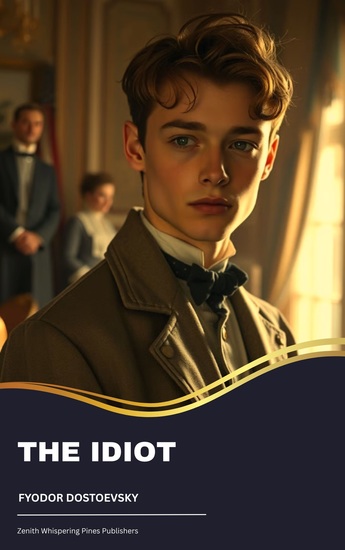
The Idiot - cover

The Idiot

Fyodor Dostoevsky

Traducteur Eva Martin

Maison d'édition: Zenith Whispering Pines Publishers

  • 0
  • 0
  • 0

Synopsis

A man too good for this world. A society determined to break him.
Prince Myshkin returns to Russia after years of illness, carrying a rare gift—unshakable kindness. But in a world fueled by greed, jealousy, and desire, his innocence becomes a danger. Drawn into a tragic love triangle and a whirlwind of emotional chaos, Myshkin's gentle heart collides with people who mistake compassion for weakness, leading to consequences as devastating as they are inevitable.

Praised as "one of Dostoevsky's most beautiful and heartbreaking works," this novel explores moral purity, madness, passion, and the fragile line between goodness and ruin. Its unforgettable characters and emotional depth continue to move readers around the world.

If you crave psychological intensity, moral complexity, and a story that lingers long after the final page, this masterpiece will stay with you.

Open the book—and witness the fate of a pure soul in a broken world.
Disponible depuis: 08/12/2025.
Longueur d'impression: 720 pages.

D'autres livres qui pourraient vous intéresser

  • Juvenilia – Volume II - cover

    Juvenilia – Volume II

    Jane Austen

    • 0
    • 0
    • 0
    "Run mad as often as you choose; but do not faint!"
    
    If Volume I was the spark, Juvenilia – Volume II is the fire. In this volume, a mid-teen Jane Austen takes aim at the "cult of sensibility" that dominated the novels of her day. The centerpiece, "Love and Freindship" (spelled intentionally with Austen's original flourish), is a brilliant epistolary parody featuring heroines who faint on every sofa they encounter and wander the countryside in a state of perpetual, melodramatic "distraction." This volume also features her iconic "History of England," where she gleefully abandons historical accuracy to defend Mary, Queen of Scots, and mock the "vile" Elizabeth I. It is a collection that proves Austen was a master of irony before she was even twenty.
    
    The Masterpiece of Parody: Love and Freindship: Through a series of letters, Austen deconstructs the romantic tropes of the era. Her characters, Laura and Sophia, believe that "feeling" is more important than "common sense," leading to a series of absurd adventures involving stolen money, secret marriages, and dying of a "chill" caught while fainting in the dew.
    
    The Bias of a Historian: In The History of England, Austen mocks the dry, "objective" historians of her time. Writing as a "partial, prejudiced, and ignorant historian," she proves that history is often just a matter of who you like and who you don't—a biting critique of how narratives are constructed that still feels modern today.
    
    A Developing Genius: From the unfinished "Lesley Castle" to the sharp "Collection of Letters," this volume shows Austen experimenting with different voices and structures. You can see the DNA of Northanger Abbey and Sense and Sensibility being formed in these rowdy, rebellious pages.
    
    Join the fun at the Austen family table. Purchase "Juvenilia – Volume II" today.
    Voir livre
  • General Custer - Folly At Little Bighorn - The Classic Tale - cover

    General Custer - Folly At Little...

    Elizabeth Bacon Custer

    • 0
    • 0
    • 0
    Since the Battle of Little Bighorn, George Armstrong Custer (1839-1876) possessed one of the most unique places in American history. Although he was a capable cavalry officer who served honorably during the Civil War, he remains one of the most instantly identifiable and famous military men in American history due to the fact he was killed during one of the country’s most well known and ignominious defeats, the Battle of Little Bighorn. And yet, this one relatively insignificant battle during America’s Indian Wars has become one of the country’s most mythologized events and continues to fascinate Americans nearly 140 years later. Though he’s now best remembered for “Custer’s Last Stand”, Custer mastered the art of public relations, dressing impeccably and having newspaper correspondents accompany him on the campaign, all in an effort to help cultivate and enhance his legacy.  
     
    For nearly 58 years, Elizabeth Bacon Custer was probably the most famous widow in the world. In this lively, fascinating, loving portrait of life on the plains with her already-famous husband, Libbie tells a civilized audience of the excitement, fun, and perils endured at a remote frontier post. Intelligent and beautiful, Libbie was a partner, confidant, and booster to the general, as well as an important figure in the social life of the posts he commanded. This book has been used as source material on the general's life as well as the frontier army for well over a century. Celebrated among the prominent people of her day, Libbie never remarried after Custer's death at the Little Bighorn in 1876. She spent the rest of her life writing and lecturing about him, burnishing his reputation and keeping his memory alive. Long a jewel of western Americana, this book continues to find and entertain new audiences in the 21st century.
    Voir livre
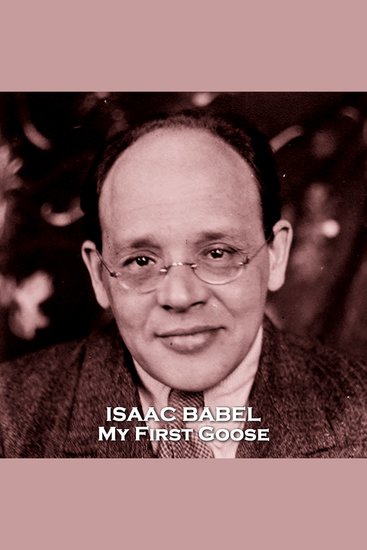
  • My First Goose - From their pens to your ears genius in every story - cover

    My First Goose - From their pens...

    Isaac Babel

    • 0
    • 0
    • 0
    The bookshelves of European literature are incredible collections that have gathered together centu-ries of very talented authors.  From this continent their fame spread and whilst among their number many are now forgotten or neglected their talents endure.  Among them is Isaac Babel.
    Voir livre
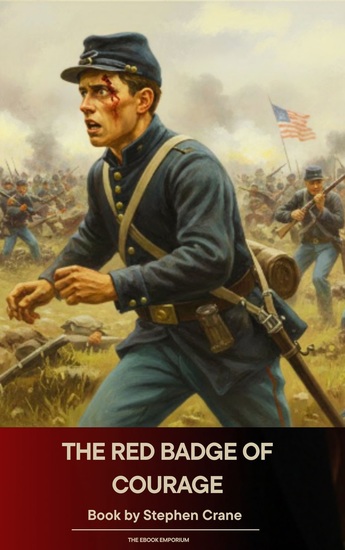
  • The Red Badge of Courage - cover

    The Red Badge of Courage

    Stephen Crane

    • 0
    • 0
    • 0
    "He had fled, he told himself, because annihilation had approached."
    
    Experience the American Civil War not through the grand strategy of generals, but through the frantic heartbeat of a single private. Henry Fleming, a young recruit known simply as "The Youth," enters the war with romantic visions of "Grecian" glory. However, when the real smoke of battle clears, he finds himself paralyzed by terror. After fleeing the front lines in a moment of panic, Henry becomes obsessed with his perceived cowardice. He longs for a "red badge of courage"—a visible wound—to hide his internal shame. Crane's vivid, impressionistic prose drags the reader through the mud, the chaos, and the transformative fire of the front lines as Henry seeks a way to redeem himself in his own eyes.
    
    The Birth of Impressionism in Fiction: Stephen Crane's style was revolutionary. Instead of a detached historical account, he uses colors, sounds, and fragmented images to mirror the sensory overload of combat. The "monstrous" machinery of war and the "red sun" pasted in the sky like a wafer create an atmosphere that feels more like a lived memory than a story.
    
    The Internal Battle: The true conflict of the novel isn't between the Union and the Confederacy, but within Henry himself. Crane explores the universal struggle of a young person confronting the reality that they might not be the hero they imagined. The novel deconstructs the concept of "courage," suggesting it is often a mixture of vanity, herd instinct, and mindless rage.
    
    Why It Is a Literary Essential: The Red Badge of Courage remains timeless because it focuses on the universal human condition under extreme pressure. It is a slim, intense volume that stripped away the Victorian sentimentality of war and replaced it with a psychological depth that influenced every great war writer of the 20th century, from Hemingway to O'Brien.
    
    Face the "Great Blue Monster" of war. Purchase "The Red Badge of Courage" today.
    Voir livre
  • The Count of Monte Cristo - cover

    The Count of Monte Cristo

    Alexandre Dumas

    • 0
    • 0
    • 0
    "The Count of Monte Cristo" by Alexandre Dumas is a gripping tale of betrayal, vengeance, and redemption. The story follows Edmond Dantès, a young merchant sailor who is wrongfully imprisoned for a crime he did not commit. After escaping from a notorious prison and discovering a hidden fortune, he assumes the identity of the Count of Monte Cristo and sets out to exact revenge on those who wronged him. With themes of justice, revenge, and forgiveness, this timeless adventure delves into the complexities of human emotions and the consequences of actions.
    Voir livre
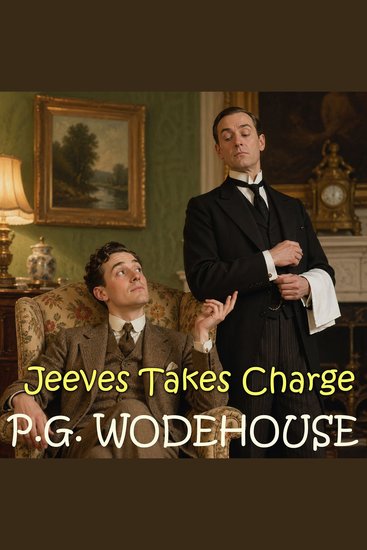
  • Jeeves Takes Charge - cover

    Jeeves Takes Charge

    P. G. Wodehouse

    • 0
    • 0
    • 0
    There are times when life requires initiative, decisiveness, and a certain strength of character. Fortunately for Bertie Wooster, he has Jeeves.
    Between the delicate politics of high society and the quiet catastrophes of everyday existence, authority proves to be a surprisingly fluid arrangement — one that Jeeves manages with unruffled calm, alarming precision, and impeccable timing.
    With P. G. Wodehouse, no predicament is ever quite as serious as it seems, and no social disaster beyond elegant correction — provided the right gentleman is in attendance.
    When in doubt… leave it to Jeeves.
    Voir livre