Join us on a literary world trip!
Add this book to bookshelf
Grey
Write a new comment Default profile 50px
Grey
Subscribe to read the full book or read the first pages for free!
All characters reduced
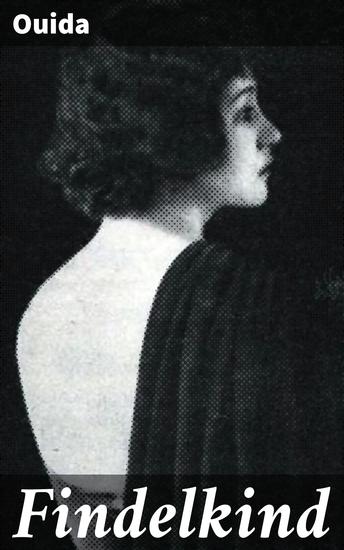
Findelkind - Innocence Lost: A Tale of Charity and Hope in the Swiss Alps - cover

Findelkind - Innocence Lost: A Tale of Charity and Hope in the Swiss Alps

Ouida

Publisher: Good Press

  • 0
  • 0
  • 0

Summary

In "Findelkind," Ouida crafts a captivating narrative that explores themes of childhood innocence, social disparity, and the profound connections formed in the face of adversity. Set against the backdrop of 19th-century Europe, the novel showcases her signature lush prose and vivid characterizations, immersing readers in the emotional landscape of her young protagonist, a foundling girl navigating a world that oscillates between cruelty and kindness. Ouida'Äôs literary style harmoniously blends romanticism and realism, creating a poignant commentary on societal norms and the human condition, while also reflecting the Victorian era's preoccupation with childhood and morality. Ouida, a pseudonym for Maria Louise Ram√©, rose to prominence as a novelist in Victorian England, known for her strong female characters and rich descriptions of nature. Coming from a diverse background and having experienced both privilege and hardship, she was acutely aware of societal injustices, which deeply informed her writing. Her personal connections with children and her advocacy for social reform drove her to illuminate the plight of the marginalized, encapsulated within the tender yet harrowing tale in "Findelkind." "Findelkind" is highly recommended for readers interested in historical fiction that offers a nuanced exploration of childhood and societal challenges. This novel not only enchants with its lyrical prose but also invites readers to reflect on the complexities of compassion and resilience. Engage with Ouida'Äôs themes that resonate even today, and discover the timeless beauty of a narrative that illuminates both sorrow and hope.
Available since: 08/19/2023.
Print length: 24 pages.
Other books that might interest you

  • Tempest The (Unabridged) - cover

    Tempest The (Unabridged)

    Charles Dickens

    • 0
    • 0
    • 0
    Charles Dickens was a writer and social critic who created some of the world's best-known fictional characters and is regarded as the greatest novelist of the Victorian era. His works enjoyed unprecedented popularity during his lifetime, and by the twentieth century critics and scholars had recognised him as a literary genius. His novels and short stories enjoy lasting popularity.
    THE TEMPEST: It was a murky confusion here and there blotted with a color like the color of the smoke from damp fuel of flying clouds tossed up into most remarkable heaps, suggesting greater heights in the clouds than there were depths below them to the bottom of the deepest hollows in the earth, through which the wild moon seemed to plunge headlong, as if, in a dread disturbance of the laws of nature, she had lost her way and were frightened.
    Show book
  • The Queen of Spades - cover

    The Queen of Spades

    Alexander Pushkin

    • 0
    • 0
    • 0
    Dive deep into the classic story "The Queen of Spades," and prepare to be captivated by its magnetic characters and unpredictable twists that challenge their desires and beliefs. This thrilling literary masterpiece will leave you questioning the fine line between destiny and obsession. Get ready for an immersive experience that will keep you hooked until the very last page. This timeless classic has received a stellar 5-star rating from The Guardian. 
    Show book
  • A Fight with a Cannon - From their pens to your ears genius in every story - cover

    A Fight with a Cannon - From...

    Victor Hugo

    • 0
    • 0
    • 0
    Victor Marie Hugo was born on 26th February 1802 in Besançon, France.   
    There can be no doubt that Hugo is ranked as the greatest of French authors and poets. In addition to this he fought against social injustice throughout his life and from his frequent elections to the French Assembly. 
    Hugo published his first novel, Han d’Islande (1823), the year after his marriage and so began an immense canon of fiction and poetry not only for France but to World literature.  
    He was elected to the Académie Française in 1841 and the same year came a peerage and entrance to the Higher Chamber as a pair de France, where he spoke against the death penalty, social injustice and in favour of press freedom.  
    In the years leading up to the Revolution of 1848 Hugo began to lean towards Republicanism and greater freedoms.  With the formation of the Second Republic, he was again elected to the Assembly. 
    When Napoleon III seized power in 1851, and established an anti-parliamentary constitution, Hugo openly declared him a traitor to France. This, of course, meant exile where he remained until 1870.  In exile he published his greatest work ‘Les Misérables’, and further widely honoured collections of poetry. 
    Returning home he was again elected to the National Assembly and the Senate.  It was the time of the Franco-Prussian war and with Paris under siege and food ever more scarce, he wrote in his diary that he was now "eating the unknown". 
    Later he was instrumental in strengthening the rights of artists and copyright, steps which led to the international protections of the Berne Convention.  
    Victor Hugo died on 22nd May 1885, aged 83.
    Show book
  • The Murders in the Rue Morgue - cover

    The Murders in the Rue Morgue

    Edgar Allan Poe

    • 0
    • 0
    • 0
    The Murders in the Rue Morgue is a short story by Edgar Allan Poe published in Graham's Magazine in 1841. It has been recognized as the first modern detective story; Poe referred to it as one of his "tales of ratiocination". Two works that share some similarities predate Poe's stories, including Das Fräulein von Scuderi (1819) by E. T. A. Hoffmann and Zadig (1747) by Voltaire. C. Auguste Dupin is a man in Paris who solves the mystery of the brutal murder of two women. Numerous witnesses heard a suspect, though no one agrees on what language was spoken.     At the murder scene, Dupin finds a hair that does not appear to be human. As the first fictional detective, Poe's Dupin displays many traits which became literary conventions in subsequent fictional detectives, including Sherlock Holmes and Hercule Poirot. Many later characters, for example, follow Poe's model of the brilliant detective, his personal friend who serves as narrator, and the final revelation being presented before the reasoning that leads up to it. Dupin himself reappears in "The Mystery of Marie Rogêt" and "The Purloined Letter".
    Show book
  • The Ernest Hemingway Collection Signature Classics Novels - A Farewell to Arms The Sun Also Rises The Torrents of Spring - cover

    The Ernest Hemingway Collection...

    Ernest Hemingway

    • 0
    • 0
    • 0
    The Ernest Hemingway Collection brings together three of Hemingway's classic novels—A Farewell to Arms, The Sun Also Rises, and The Torrents of Spring—in an illustrated edition that highlights the emotional depth, iconic style, and thematic resonance of his work. Each novel captures Hemingway's unique approach to storytelling, balancing simplicity and poignancy in narratives that explore themes of love, identity, and the search for purpose in an often chaotic world.
    In A Farewell to Arms, Hemingway tells a story of love and sacrifice during World War I. The novel follows the relationship between Lieutenant Frederic Henry, an American in the Italian army, and Catherine Barkley, a British nurse. Their romance provides a fleeting refuge from the surrounding devastation, but the couple is ultimately challenged by the unrelenting realities of war, fate, and loss. With minimalistic prose and powerful imagery, Hemingway crafts a haunting portrayal of the human cost of conflict.
    The Sun Also Rises, one of Hemingway's most famous works, delves into the lives of disillusioned expatriates in post-World War I Europe. The story centers on Jake Barnes and Lady Brett Ashley, whose unrequited love is complicated by a sense of existential detachment common among the "Lost Generation." Set in Paris and Spain, the novel explores the characters' pursuit of pleasure, purpose, and identity amid a world struggling to find meaning after the horrors of war. Hemingway's sharp, descriptive prose captures both the glamour and emptiness of their lives.
    Finally, The Torrents of Spring, a satirical work, reveals Hemingway's humorous side while serving as a parody of the romanticism that often permeated American literature of the time. Through witty characterization and exaggerated situations, Hemingway critiques the literary norms of his era, particularly the style of Sherwood Anderson.
    Illustrated with carefully selected imagery, this collection provides visual depth to Hemingway's layered storytelling, enriching readers' experience of each novel's setting and tone. This collection is ideal for those seeking to understand Hemingway's diverse styles and narrative power across romance, existential exploration, and literary satire.
     
    A Farewell to Arms
    The Sun Also Rises
    The Torrents of Spring
    Show book
  • Behind a Mask - cover

    Behind a Mask

    Louisa May Alcott

    • 0
    • 0
    • 0
    Jean Muir, a cunning and ambitious governess, infiltrates the wealthy Coventry household under a veil of innocence. With calculated charm and deceit, she manipulates each family member to achieve her ambitions, exposing their secrets and vulnerabilities. Alcott crafts a gripping tale of social climbing, betrayal, and revenge, challenging societal expectations of femininity and morality. Beneath its suspenseful surface lies a sharp critique of class dynamics and gender roles. Darker and more subversive than her traditional works, this novella reveals Alcott’s mastery of psychological drama and biting social commentary.
    Show book