Join us on a literary world trip!
Add this book to bookshelf
Grey
Write a new comment Default profile 50px
Grey
Subscribe to read the full book or read the first pages for free!
All characters reduced
The Moral Foundations of Life - A Series of Talks on the Ethical Principles of the Christian Life - cover

The Moral Foundations of Life - A Series of Talks on the Ethical Principles of the Christian Life

Oswald Chambers

Publisher: CrossReach Publications

  • 0
  • 0
  • 0

Summary

The first appeal was to conscience, and could be expressed in this way: “Follow Him, He is Thy supreme Lord.” The presentation of Jesus Christ always awakens that desire, the presentation of abstract ideals never does. You can present morality, good principles, the duty of loving your neighbour, and never arouse a man’s conscience to want anything; but when you present Jesus Christ, instantly there is a dumb awakening; a want to be what He would like me to be. It is not conviction of sin, but an awakening out of the sleep of indifference into a want.
 
There are some things that are without meaning for us. For instance, to be told that God will give us the Holy Spirit if we ask Him, may be a dead proposition; but when we come in contact with a person filled with the Spirit of God we instantly awaken to a want. Or again, if you tell half a dozen clean-living, upright, sterling men that God so loved them that He gave His Son to die for them, only their good breeding will keep them from being amused—“Why should Jesus Christ die for me”? It is not a living proposition to them, not in the sphere of their life at all. Their morality is well within their own grasp, they are clean living and upright, all that can be desired; they will never be awakened in that way; but present them with Jesus Christ, or with a life that is like His life, and instantly there will awaken in them a want they were not conscious of before. That is why Jesus said, “If I had not come …, they had not had sin: but now they have no cloke for their sin.” You can never argue anyone into the Kingdom of heaven, you cannot argue anyone any where. The only result of arguing is to prove to your own mind that you are right and the other fellow wrong. You cannot argue for truth; but immediately Incarnate Truth is presented, a want awakens in the soul which only God can meet. Conscience is that faculty of the spirit which fits itself on to the highest a man knows; and when the light of Jesus Christ is thrown on what is regarded as the highest, conscience records exactly and the reason is startled and amazed (cf. Acts 26:9).
Available since: 03/24/2022.
Print length: 101 pages.

Other books that might interest you

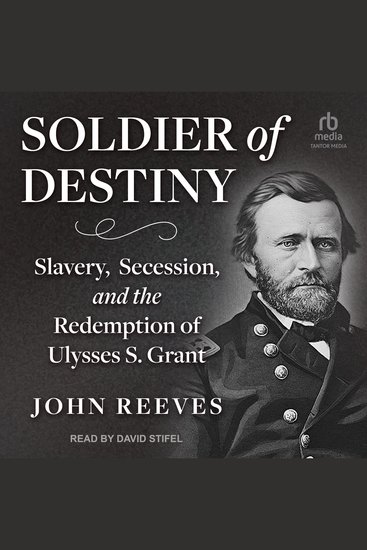
  • Soldier of Destiny - Slavery Secession and the Redemption of Ulysses S Grant - cover

    Soldier of Destiny - Slavery...

    John Reeves

    • 0
    • 0
    • 0
    Captain Ulysses S. Grant rose to become general-in-chief of the United States Army in 1864. Was it destiny? Or was he just an ordinary man, opportunistically benefiting from the turmoil of the Civil War to advance to the highest military rank? 


    Soldier of Destiny reveals that Grant always possessed the latent abilities of a skilled commander—and he was able to develop these skills out West without the overwhelming pressure faced by more senior commanders in the Eastern theater at the beginning of the Civil War. 


    From 1861 to 1864, Grant went from being ambivalent about slavery to becoming one of the leading individuals responsible for emancipating the slaves. Soldier of Destiny tells the story of Grant's connection to slavery in far more detail than in previous biographies. 


    Grant's life story is a tale of redemption within the context of his fraught relationships with his antislavery father and his slaveholding wife. This narrative explores the poverty, inequality, and extraordinary vitality of the American West during a crucial time in our nation's history. Writers on Grant have tended to overlook his St. Louis years, even though they are essential for understanding his later triumphs.
    Show book
  • Pocket diary for good mental health - 20 quick formulas for mental well being - cover

    Pocket diary for good mental...

    DR. AANCHAL MAKHIJA

    • 0
    • 0
    • 0
    "Pocket Diary for Mental Health" is a comprehensive guide designed to support individuals in navigating the ups and downs of life by providing practical and easy-to-apply strategies for various mental health challenges. With its collection of 20 quick formulae, this book serves as a valuable companion, offering insightful techniques that can be implemented anytime, anywhere, ensuring a positive impact on one's emotional well-being.In today's fast-paced world, it is not uncommon to experience stress, overwhelm, and frustration. This pocket diary recognizes these common struggles and provides a range of formulae to address them effectively. The book is structured to cater to different situations, ensuring that readers can find the appropriate formula to apply in any given moment.Each formula is carefully crafted to offer practical and actionable steps to alleviate mental distress. The author, drawing from extensive research and personal experience, shares a diverse range of strategies that have been proven effective in managing stress, reducing anxiety, and enhancing overall mental well-being. Whether facing a challenging work environment, experiencing relationship difficulties, or battling personal insecurities, "Pocket Diary for Mental Health" offers guidance and support.The book's strength lies in its concise yet powerful formulae.
    Show book
  • Growing Up Psychic - My Story of Not Just Surviving but Thriving and How Others Like Me Can Too - cover

    Growing Up Psychic - My Story of...

    Chip Coffey

    • 0
    • 0
    • 0
    No one knows more about psychic kids than Chip Coffey, and no expert on psychic kids is better known throughout the world. These kids are widely misunderstood, misjudged, and misdiagnosed. In Growing Up Psychic, Chip Coffey offers indispensable information for anyone who interacts with these extraordinary youngsters—parents, educators, medical professionals, mental health clinicians, members of the clergy, paranormal investigators—and adults who faced the challenges of growing up psychic. 


    In Growing Up Psychic, drawing on his firsthand experience and the true stories of kids he has worked with and helped, Chip Coffey shows you how to: 


    ● Determine if a child is really psychic—as opposed to simply imaginative or seeking attention 


    ● Identify the different kinds of psychic abilities kids (and adults) might have 


    ● Gain control over when and how psychic information is received 


    ● Safely connect with others in the psychic community 


    ● Deal with skeptics and disbelievers
    Show book
  • The Shocking Truth about Corporate Influence - cover

    The Shocking Truth about...

    Zoey Fraisers

    • 0
    • 0
    • 0
    Behind the polished image of multinational corporations lies an intricate web of influence that often escapes public scrutiny. These entities, driven by profit motives, exert significant control over political, economic, and social systems. Their ability to shape legislation, influence policy decisions, and dictate the trajectory of societal norms is unparalleled, raising critical questions about the balance of power in modern democracies. 
    One of the most potent tools corporations wield is lobbying. What began as a mechanism to convey industry perspectives to lawmakers has evolved into a powerful industry in itself. Corporations spend billions annually to hire lobbying firms, fund political campaigns, and ensure their interests are prioritized in policymaking. This relationship often leads to regulatory environments that favor corporate profits over public welfare, as evidenced by weakened labor protections, diluted environmental standards, and tax policies designed to benefit the wealthiest. 
    In addition to lobbying, corporations exert influence through their economic might. With massive revenues that surpass the GDP of some nations, they can dictate terms to governments and international organizations. This financial clout allows them to negotiate favorable trade agreements, secure tax incentives, and sidestep accountability for unethical practices. Governments, often reliant on corporate investment to sustain their economies, find themselves constrained in challenging this power dynamic.
    Show book
  • Ottomans The: An Enthralling Overview of the Rise and Fall of the Ottoman Empire and the Life of Suleiman the Magnificent - cover

    Ottomans The: An Enthralling...

    Billy Wellman

    • 0
    • 0
    • 0
    Two manuscripts in one book:The Ottoman Empire: An Enthralling Guide to One of the Mightiest and Longest-Lasting Dynasties in World HistorySuleiman the Magnificent: An Enthralling Guide to the Sultan Who Ruled during the Golden Age of the Ottoman Empire 
    Spanning three continents and controlling lands in the Balkans, the Caucasus, Crimea, Anatolia, the Middle East, the Levant, Egypt, and North Africa, the Ottoman Empire was one of the most menacing powers at the height of its power in the 16th century. It was feared by other great empires of Europe. But how exactly did the Ottomans achieve this great power, and how did they lose it by the early 20th century? 
    In the first part of this book, you will discover the following:The emergence of the Ottoman state under its first leader, OsmanThe different sultans of the empire and their reignsThe fall of Constantinople and the Golden Age of the Ottoman EmpireDifferent wars and political processes that shaped the empire’s history 
    Suleiman the Magnificent certainly earned his name. He not only had a huge impact on the history of Turkey and the Middle East but also on the European politics of his day, allying himself with France against the Habsburgs of Spain. He is also known for his life-long love affair with Roxelana, a slave girl who became his wife and, some say, co-ruler of the empire. 
    In the second part of the book, you will find out:Why Suleiman was a master goldsmith as well as a sultanHow he became a major patron of the arts, employing the famous architect Sinan and changing the skyline of IstanbulWhy he is known to the Turks as “Suleiman the Law Maker (Kanuni)” 
    Scroll up and click the “add to cart” button to begin learning about the Ottomans!
    Show book
  • ADHD in School - Supportive Strategies for Educators and Parents - cover

    ADHD in School - Supportive...

    Valerie Vogue

    • 0
    • 0
    • 0
    Attention Deficit Hyperactivity Disorder (ADHD) is one of the most commonly diagnosed neurodevelopmental disorders in children. It affects approximately 5-10% of school-aged children worldwide and can significantly impact their academic performance and social interactions. ADHD is characterized by symptoms of inattention, hyperactivity, and impulsivity, which can vary greatly in their severity and presentation from one child to another. 
    In the classroom setting, ADHD can present a variety of challenges for both students and educators. Children with ADHD often struggle to stay focused on tasks, follow instructions, and maintain organizational systems. Their difficulty with impulse control can lead to frequent interruptions, inappropriate behaviors, and challenges in completing assignments. These behaviors are often misinterpreted as laziness, defiance, or a lack of intelligence, leading to frustration and misunderstanding for both the student and teacher. 
    It is important to understand that ADHD is not caused by a lack of discipline or effort. It is a neurobiological condition that affects the brain's ability to regulate attention, behavior, and emotions. Students with ADHD may have difficulty with executive functioning, which includes skills like planning, organization, time management, and self-regulation. These challenges can make traditional classroom settings particularly difficult, as many educational systems rely on structure, rigid schedules, and the ability to remain focused for extended periods.
    Show book