Join us on a literary world trip!
Add this book to bookshelf
Grey
Write a new comment Default profile 50px
Grey
Subscribe to read the full book or read the first pages for free!
All characters reduced
Foundations of the subquantum mechanism - deep roots of the quantum mechanics - cover

Foundations of the subquantum mechanism - deep roots of the quantum mechanics

Oskar Valda

Publisher: StreetLib

  • 0
  • 0
  • 0

Summary

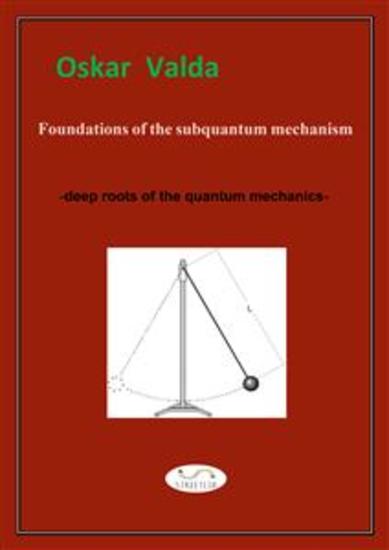
Many physicists have pointed out that the formulation of Quantum Mechanics is missing an important piece. Its theoretical incompleteness has been evoked, there has been talk of hidden variables, non-locality of the theory, provoking long debates which have left things at a standstill. There is even Einstein's famous phrase in which he says that "God does not play dice". A big mistake! If God did not play dice, as Darwin taught us, there would be neither evolution nor the immense variety of our world which would be limited to a single atom. Perhaps more simply the theory lacks an unprecedented operation of analysis and synthesis capable of providing the "missing part" or a new logical paradigm capable of making Quantum Mechanics understandable to human beings.The book starts from the basics with the analysis of the concept of Planck's constant h in terms of Minimum Action, i.e.: a flow of a quantum of energy in the unit of time. The next step is to formalize the motion as a phenomenon on the fabric of a space that is also quantized, recently back in fashion in Quantum Gravity.Attention! In this case a mysterious question arises: how can one conceive the movement of a particle between discrete areoles of space with solution of continuity? A promising idea may be that of resorting to the strange dual nature of wave-matter discovered by de Broglie by means of which the particle would not move but probably only its information is translated in wave form between spatial quanta. However, this idea requires a subquantum mechanism where the quantum vacuum becomes a key participatory element, or rather a fundamental intermediary already glimpsed in Alain Aspect's experiments on entanglement. The development of a paradigm of the subquantum mechanism would show among other things that the main concepts of special and general relativity can be derived from Quantum Mechanics. This approach helps to clarify within an intelligible logical structure several obscure aspects of modern physics including Quantum Gravity itself and also the root cause for which space is curved by the presence of mass. In fact, according to advanced physics, space is anything but inconsistent, as supposed at the time by the Michelson-Morley test.Einstein's well-known reasoning -gedanken experiment- of the elevator represented an ingenious analogy on gravity capable of providing a final effect that can be calculated with extreme precision, alas overlooking the profound cause of the phenomenon. In fact, General Relativity does not predict that gravity implies invisible attractive forces between masses but only a deformable geometry that pilots the trajectories of the planets along the edge of a sort of funnel. Nevertheless, we have a problem namely that to bend a spatial fabric, by no means inconsistent, a force whose origin is obscure is needed. On this specific  point no one has been able to provide an exhaustive logical framework. Instead, it seems that the existence of Matter in space requires quantized actions of energy without which the objects of the world would disappear instantaneously. Such an effect would delight the great physicist Ernst Mach who hypothesized mass as a condensation of accelerations that were exchanged between them in terms of gravitational attraction.(With a more philosophical approach see by the same author: "The hidden paradigm of Quantum Mechanics"- Streetlib).
Available since: 02/26/2023.
Other books that might interest you

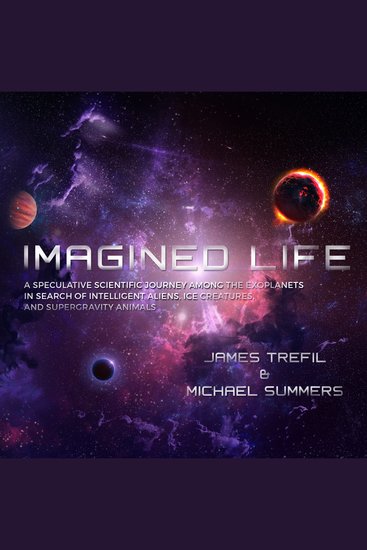
  • Imagined Life - A Speculative Scientific Journey among the Exoplanets in Search of Intelligent Aliens Ice Creatures and Supergravity Animals - cover

    Imagined Life - A Speculative...

    Michael Summers, James Trefil

    • 0
    • 0
    • 0
    The captivating possibilities of extraterrestrial life on exoplanets, based on current scientific knowledge of existing worlds and forms of life 


    It is now known that we live in a galaxy with more planets than stars. The Milky Way alone encompasses 30 trillion potential home planets. Scientists Trefil and Summers bring listeners on a marvelous experimental voyage through the possibilities of life—unlike anything we have experienced so far—that could exist on planets outside our own solar system. 


    Life could be out there in many forms: on frozen worlds, living in liquid oceans beneath ice and communicating (and even battling) with bubbles; on super-dense planets, where they would have evolved body types capable of dealing with extreme gravity; on tidally locked planets with one side turned eternally toward a star; and even on "rogue worlds," which have no star at all. Yet this is no fictional flight of fancy: the authors take what we know about exoplanets and life on our own world and use that data to hypothesize about how, where, and which sorts of life might develop. Imagined Life is a must-have for anyone wanting to learn how the realities of our universe may turn out to be far stranger than fiction.
    Show book
  • Data Analyses - Detailed Scientific and Business-Oriented Data Reading Skills - cover

    Data Analyses - Detailed...

    Benjamin Farrar

    • 0
    • 0
    • 0
    An extensive guide to help you analyze data more effectively.  
    Learn more about how to analyze data now! Explore the field of data science and the way to analyze big and small data. This elaborate guide will take you on a journey to multiple aspects of this skill. There is a trick, a science, to doing it the right way, and some of the most important secrets will be revealed in the chapters ahead of you. Dive into the complicated matter of analyzing and mining for data correctly. Forget about intuition or assumptions.  
    You’ll learn, among others:Linear, probabilistic, and other models to use in the visualization and analysis of data you have found.Systems such as clustering, viewing genetic algorithms, and neural methods.Assessment analysis strategies, organization, and numeric predictions.Modeling data and imagining.The three Vs of big data and what to do with them.Software recommendations and applications.Purposes for health care, business, and industrial data.Tips on analyzing decision trees, regression, and sentiment.Attributes, classifications, data sets, and kinds of learning you must recognize to fully be aware of that with which you are dealing.Data quality and data quantity thoughts.Data-mining procedure steps, including CRISP-DM and SEMMA.Machine algorithms and interesting side notes regarding them.Instructions, infrastructure, edition, and other methods. 
    Data creates truths you can trust in if you draw the right conclusions. Drawing those conclusions involves clear skills and a background in information that leads to the correct steps. If this is up your alley, the best thing to do for you right now is to start listening.  
    Add this audiobook to cart now!
    Show book
  • The Science of Computing - Algorithms and Data Structures - cover

    The Science of Computing -...

    Craig Dames

    • 0
    • 0
    • 0
    Computing has become an integral part of modern society, shaping various industries, scientific research, and everyday life. At its core, computing involves the use of computers and algorithms to process data, solve problems, and automate tasks. This chapter provides an overview of computing and the fundamental principles of computational thinking, which form the foundation for problem-solving in the digital age. 
    Computing encompasses both hardware and software components. Hardware refers to the physical devices, such as processors, memory units, and input/output devices, that perform computational tasks. Software, on the other hand, consists of programs and algorithms that instruct hardware on how to process information. The evolution of computing has led to significant advancements, from early mechanical calculators to modern high-performance computing systems capable of handling vast amounts of data. 
    Computational thinking is a problem-solving approach that involves breaking down complex problems into manageable parts, recognizing patterns, and developing step-by-step solutions. It consists of several key principles, including decomposition, abstraction, pattern recognition, and algorithm design. Decomposition involves dividing a problem into smaller, more manageable sub-problems. Abstraction focuses on identifying relevant details while ignoring unnecessary complexity. Pattern recognition allows problem solvers to identify similarities between different problems, enabling efficient solutions. Algorithm design involves creating a set of well-defined steps to achieve a specific outcome.
    Show book
  • Building AR Apps with ARCore and ARKit - Master Augmented Reality App Development with ARCore and ARKit for Immersive and Interactive AR Experiences - cover

    Building AR Apps with ARCore and...

    Vedala Satyadev

    • 0
    • 0
    • 0
    Build Immersive AR Apps with ARCore and ARKit
    Book Description
    Augmented Reality (AR) is revolutionizing how we interact with digital content, and mastering ARCore and ARKit can give you a competitive edge in this rapidly growing field. Building AR Apps with ARCore and ARKit takes you on a structured journey, starting with the fundamentals of AR technology and progressing to building real-world applications.
    You'll begin by understanding the core principles of AR and setting up your development environment. From there, you’ll dive into ARCore and ARKit, learning how to harness their capabilities to create interactive and immersive experiences. Step by step, you’ll build your first AR applications, implementing crucial features such as spatial tracking, surface detection, and real-world interaction. As you advance, you’ll work on practical projects like an AR furniture app and an AR game, reinforcing your knowledge with hands-on experience.
    By the end of this book, you won’t just understand AR—you’ll be equipped to build and deploy powerful AR applications with confidence. Whether you're a developer looking to expand your skill set or an innovator eager to push the boundaries of digital experiences, this book provides the expertise you need. Don’t get left behind—start building the future of AR today!
    Table of Contents
    1. Understanding Augmented Reality
    2. Setting Up Your Development Environment
    3. Getting Started with ARCore
    4. Building Your First ARCore App
    5. Advanced ARCore Features
    6. Getting Started with ARKit
    7. Building Your First ARKit App
    8. Advanced ARKit Features
    9. Building an AR Furniture App
    10. Developing an AR Game      
    
    Index
    Show book
  • Data Structures for Beginners - Mastering the Building Blocks of Efficient Data Management - cover

    Data Structures for Beginners -...

    Brian Murray

    • 0
    • 0
    • 0
    This book is your gateway to understanding how data is organized, stored, and manipulated to create powerful applications. 
    With clear explanations, real-world examples, and hands-on exercises, you'll learn essential data structures like arrays, linked lists, stacks, queues, trees, graphs, and hash tables. Discover how these structures work, when to use them, and why they are crucial for writing efficient, scalable, and maintainable code. Each chapter is designed to break down complex topics into manageable concepts, making learning both accessible and engaging. 
    Explore practical applications of data structures in algorithm design, problem-solving, and optimizing software performance. Gain insights into how these concepts power technologies like search engines, social networks, and database systems. 
    Data Structures for Beginners equips you with the knowledge and confidence to master this critical subject. Build a strong foundation in data structures and set yourself up for success in the ever-evolving world of technology.
    Show book
  • Animal Souls - cover

    Animal Souls

    Sy Montgomery, Brenda Peterson

    • 0
    • 0
    • 0
    Over their long friendship, National Geographic authors, Sy Montgomery and Brenda Peterson, have engaged with many animals who’ve taught them about survival, play, and healing. Listen to Sy and Brenda explore animal dreams, their emotional lives, and how animals help us adapt to a changing planet. When we expand our consciousness, our spirituality, and our kinship with other animals, our world is whole and wondrous again. 
     
    Sy Montgomery is a bestselling author of 38 books for adults and children, including The Soul of an Octopus: A Surprising Exploration into the Wonder of Consciousness, a finalist for the 2015 National Book Award for Non-Fiction; the much-loved memoir, The Good, Good Pig; and the National Geographic book/international television special, Secrets of the Octopus. The New York Times names Sy as “One of our finest chroniclers of the natural world.” Sy lives on a farm in New Hampshire. www.SyMontgomery.com 
     
    Brenda Peterson is the critically acclaimed author of 24 books, including the novel Duck and Cover, a New York Times “Notable Book of the Year.” Build Me an Ark: A Life with Animals, was chosen as a “Best Spiritual Book of the Year.” Library Journal gave Peterson’s new Wild Chorus: Finding Harmony with Whales, Wolves, and Other Animals a starred review. Peterson lives on the Salish Sea in Seattle, Washington. www.BrendaPetersonBooks.com
    Show book