¡Acompáñanos a viajar por el mundo de los libros!
Añadir este libro a la estantería
Grey
Escribe un nuevo comentario Default profile 50px
Grey
Suscríbete para leer el libro completo o lee las primeras páginas gratis.
All characters reduced
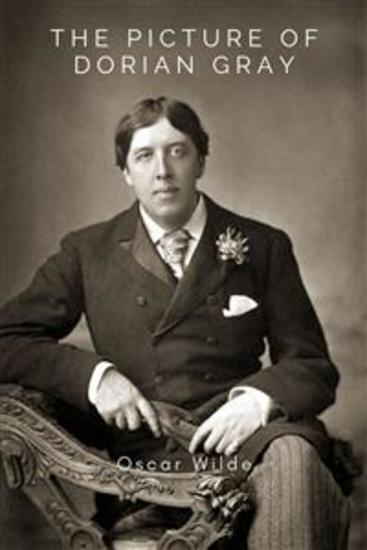
The Picture of Dorian Gray - cover

The Picture of Dorian Gray

Oscar Wilde

Editorial: Publisher s23237

  • 0
  • 0
  • 0

Sinopsis

Oscar Wilde's story of a fashionable young man who sells his soul for eternal youth and beauty is one of his most popular works. Written in Wilde's characteristically dazzling manner, full of stinging epigrams and shrewd observations, the tale of Dorian Gray's moral disintegration caused something of a scandal when it first appeared in 1890. Wilde was attacked for his decadence and corrupting influence, and a few years later the book and the aesthetic/moral dilemma it presented became issues in the trials occasioned by Wilde's homosexual liaisons, trials that resulted in his imprisonment. Of the book's value as autobiography, Wilde noted in a letter, "Basil Hallward is what I think I am: Lord Henry what the world thinks me: Dorian what I would like to be--in other ages, perhaps."
Disponible desde: 15/08/2022.

Otros libros que te pueden interesar

  • Vladimir Korolenko - A Short Story Collection - Ukranian born brilliant writer that was an outspoken critic of Tsarism and Communism - cover

    Vladimir Korolenko - A Short...

    Vladimir Korolenko

    • 0
    • 0
    • 0
    Vladimir Galaktionovich Korolenko was born in Zhytomyr, Ukraine, then part of the Russian Empire on 27th July 1853. 
     
    His father died when he was 13 and life was then often struck with bouts of poverty, which resulted in his education being somewhat erratic.   A spell in exile at 23 was followed by another as the politics of the times opposed his volatile but heart-felt passions. 
     
    Writing was also coming to the fore and in 1879 his debut short story telling of a young Narodnik searching for social and spiritual identity, was published. 
     
    In 1881, Korolenko refused to swear allegiance to the new Russian Tsar and was again exiled, this time much farther afield.  He spent the next three years doing manual work, but took time to study local customs and history.  These impressions in exile provided rich material for his writings. 
     
    In 1885 he was allowed to settle in Nizhny, where again he repeatedly questioned the authorities.  That same year ‘Makar's Dream’ established his literary reputation and was part of his first collection ‘Sketches and Stories’, the following year. 
     
    In the early 1890’s when famine struck Central Russia, he went to work on relief missions, collecting donations, supervising the delivery and distribution of food, opening 45 free canteens, all this while writing the graphic reports that would later be published as ‘In the Year of Famine’ in 1893. 
     
    By 1896 despite some psychological disorders, he was well regarded amongst Russian writers and was even a member of the Russian Academy of Sciences.  Throughout his writing career Korolenko was a staunch advocate of human rights, putting that sacred activity above what he called his 'part-time-writing'. 
     
    In the Revolutionary year of 1905, under his editorship, Russkoye Bogatstvo published the Manifest by the Petersburg Soviet of the Workers' deputies. Korolenko was now repeatedly harassed by the authorities, had his flat raided many times and materials confiscated. 
     
    As a lifetime opponent of Tsarism, he guardedly welcomed the Revolution of 1917.  Once the nature of Bolshevism was established, he soon started to criticize it. During the Russian Civil War that ensued, he condemned both the Red Terror and the White Terror.  
     
    Despite suffering from a progressive heart disorder, he collected food packages for children in famine-stricken Moscow and Petrograd as well as organised orphanages and shelters for the homeless.  
     
    Vladimir Korolenko died in Poltava, Ukraine, of the complications of pneumonia on 25th December 1921.  He was 68. 
     
    1 - Vladimir Korolenko - A Short Story Collection - An Introduction 
    2 - The Village of God by Vladimir Korolenko 
    3 - The Old Bell Ringer by Vladimir Korolenko 
    4 - Neccesity. An Eastern Tale by Vladimir Korolenko 
    5 - Lights by Vladimir Korolenko 
    6 - The Shades, a Phantasy by Vladimir Korolenko
    Ver libro
  • Ella D'Arcy - A Short Story Collection - An anthology from underrated female author D'Arcy her sparkling psychologically realist style covered themes such as marriage family and society - cover

    Ella D'Arcy - A Short Story...

    Ella D'Arcy

    • 0
    • 0
    • 0
    Ella D'Arcy was born on 23rd August 1857 in London, one of nine children.  
     
    Her education spanned London, Germany, France and the Channel Islands. A student of fine art, her poor eyesight meant a switch to literature was needed and with this she had hopes to be an author. 
     
    She worked as a contributor and unofficial editor, alongside Henry Harland, to The Yellow Book, Aubrey Beardsley’s sensational quarterly magazine that combined art, stories, poetry, essays and much else besides.  D'Arcy wrote several stories for the magazine and her stories have an undeniable psychological and realist style through her engagement with various themes from marriage, the family, imitation through to deception.  
     
    Recognition of her talents grew after the publication of ‘Irremediable’, in the Yellow Book, where it received much praise from critics.   
     
    She also wrote and published in the Argosy, Blackwood's Magazine, and Temple Bar.  
     
    However, D’Arcy’s canon was small and, apart from her magazine stories, her book publishing was limited to ‘Monochromes’ (1895), ‘Modern Instances’ and ‘The Bishop’s Dilemma’ (1898). She also translated André Maurois's biography of Percy Bysshe Shelley entitled ‘Ariel’ (1924). 
     
    Her diligence with work aside she was notorious for her inability to maintain relationships with friends.  When she did appear to them it was often unannounced.  This earned her the sobriquet 'Goblin Ella.' 
     
    D'Arcy spent much of her life living alone, though she had a constant urge to travel, but usually she resided on the edge of poverty. Her writing was often motivated by this need. 
     
    Much of her later life was spent in Paris before returning to London in 1937, where she died, in hospital, on 5th September 1937. 
     
    01 - Ella D'Arcy - A Short Story Collection - An Introduction 
    02 - At Twickenham by Ella D'Arcy 
    03 - White Magic by Ella D'Arcy 
    04 - Irremediable by Ella D'Arcy 
    05 - The Death Mask by Ella D'Arcy 
    06 - Sir Julian Garve by Ella D'Arcy
    Ver libro
  • Octopussy and the Living Daylights - A James Bond Adventure - cover

    Octopussy and the Living...

    Ian Fleming

    • 0
    • 0
    • 0
    FOUR TALES OF INTRIGUE THAT PUSH 007 TO THE LIMIT 
    In “Octopussy,” a former operative in the Second World War must face the consequences of past sins when James Bond knocks on the door of his Caribbean fortress, and in “The Property of a Lady” Bond deciphers the elaborate codes of a Sotheby’s bidding war in order to catch a KGB agent. “007 in New York” takes Bond to the titular city to warn an ex-agent of her boyfriend’s secret KGB affiliation. And “The Living Daylights” sends Bond to Berlin to protect a British agent before an assassin strikes.
    Ver libro
  • JUNGLE SONG - Nampay The Amazonian - cover

    JUNGLE SONG - Nampay The Amazonian

    Paul A. Hernandez

    • 0
    • 0
    • 0
    JUNGLE SONG, Nampay the Amazonian, is the tale of a young native who has ‘chanced’ across a guitar floating down a river and into his hands. Nampay teaches himself how to play while in the wilds of the Amazon jungle. Nampay’s story is told through friends and acquaintances who met him while he was on the road. Nampay’s tour is a legend among the roadies, blues-men and women, groupies, and many others in the western world. Nampay’s innocence guides him through the tours as much as his natural aptitude for music and his peaceful personality.  
    Ver libro
  • Fading Voices - From their pens to your ears genius in every story - cover

    Fading Voices - From their pens...

    Boleslaw Prus

    • 0
    • 0
    • 0
    Aleksander Głowacki who wrote under the nom de plume Boleslaw Prus was born on 20th August 1847 at Hrubieszów in the Kingdom of Poland, at that time, controlled by the Russian Empire. 
    At three his mother died and then at nine his father.  Female relatives helped raise him but at 15 he joined the Polish uprising against the might of Imperial Russia.  Wounded on the battlefield, arrested and imprisoned, he was later released into the care of a relative and resumed secondary school and then Warsaw University but poverty forced him to leave after two years.  At some point he developed agoraphobia which often caused problems. 
    In 1869, he enrolled in the Forestry Department at Puławy but was soon sacked and so he began a system of self-education that led to work as a newspaper columnist on a wide-ranging series of topics that eventually became the ‘Weekly Chronicles’ and spanned 40 years. 
    With his finances now stabilized he married and then adopted his late brother-in-law’s son.  
    It seems he had doubts as to the scale of his talents and early on adopted the name ‘Boleslaw Prus’ for both his journalistic and literary offerings. 
    His work as a short-story writer met with much acclaim. He wrote several dozen of them, originally published in newspapers and ranging in length from micro-story to novella. His keen observation of everyday life and sense of humor are evident in them.  
    During his career he also wrote novels. After ‘Pharoah’, in 1895, he embarked on a four-month journey taking in Berlin, Dresden, Nuremberg, Rapperswil in Switzerland, where he stayed for two months, and his final destination, Paris.  Here his agoraphobia was so bad he couldn’t cross the Seine.  
    However, his writing continued and in 1911 his novel ‘Changes’, though uncompleted, began to be serialised.  It was never finished. 
    Boleslaw Prus died on 19th May 1912, at his Warsaw apartment.  He was 64.  A National Hero, thousands attended both his funeral service and interment.
    Ver libro
  • Descent from the Mountain - A Cultivation Short Story - cover

    Descent from the Mountain - A...

    Tao Wong

    • 0
    • 0
    • 0
    Take a step. Take a bow. Look around, how far you've come.  
    For an immortal, the mortal world has little to offer them. Except, perhaps, perspective.  
    Descent from the Mountain is a short story set in the A Thousand Li universe. This story can be read as a stand-alone. There are no spoilers for later works and the short story does not include individuals from the main series.
    Ver libro