Join us on a literary world trip!
Add this book to bookshelf
Grey
Write a new comment Default profile 50px
Grey
Subscribe to read the full book or read the first pages for free!
All characters reduced
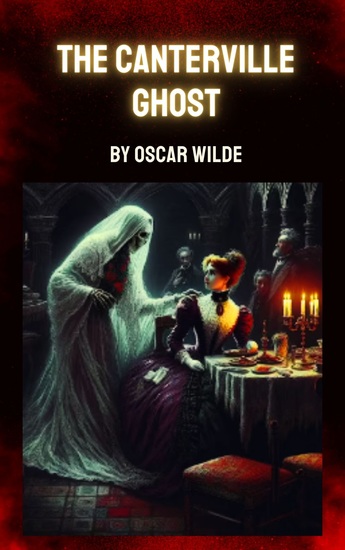
The Canterville Ghost - A Haunting Tale - cover

The Canterville Ghost - A Haunting Tale

Oscar Wilde, Zenith Crescent Moon Press

Publisher: Zenith Crescent Moon Press

  • 0
  • 0
  • 0

Summary

👻 Experience the Charm of Wilde's Wit and Ghostly Humor! 👻

Step into the spooky yet comical world of Oscar Wilde's "The Canterville Ghost", a delightful short story that blends ghostly apparitions with satirical humor. This eBook invites you to discover the misadventures of a ghostly apparition and the American family that moves into his haunted mansion. 🌟

📖 What Awaits You 📖

Meet Sir Simon, the tormented ghost haunting Canterville Chase, and the fun-loving Otis family who isn't the least bit scared 🕯️🏰

Enjoy Wilde's clever commentary on British and American culture and societal norms 🎩🇺🇸

Revel in the humorous and heartwarming interactions between the ghost and the Otis children 🌹👦👧

💬 Why Readers Are Enchanted 💬

"A brilliantly crafted tale that combines humor, satire, and a touch of spookiness. Wilde at his best" – [Testimonial]

"A must-read for anyone who loves a good ghost story with a twist of wit" – [Notable Mention]

💡 Ready for a Ghostly Adventure? 💡 Dive into the world of "The Canterville Ghost" and enjoy Wilde's masterful blend of comedy and supernatural charm. Get your copy today and let the haunting fun begin! 📘✨
Available since: 03/13/2025.
Print length: 37 pages.

Other books that might interest you

  • Six Easy Pieces - Easy Rawlins Stories - cover

    Six Easy Pieces - Easy Rawlins...

    Walter Mosley

    • 0
    • 0
    • 0
    Easy Rawlins mysteries--original short stories from the New York Times bestselling and award-winning mystery author. As Carolyn See said in The Washington Post Book World: "God bless the day that Walter Mosley created Easy Rawlins!"This handsome collection contains six interconnected stories. Fans can now add these original stories in Six Easy Pieces to their Walter Mosley library: "Smoke," "Crimson Stain," "Silver Lining," "Lavender," "Gato Green," "Gray-Eyed Death," and "Amber Gate."
    Show book
  • The Shadow - cover

    The Shadow

    Hans Christian Andersen

    • 0
    • 0
    • 0
    More classic horror narrations on Jonathan Dunne Horror Stories & Audiobooks: https://www.youtube.com/@JonathanDunneHorrorAudiobooks 
    Title: The Shadow 
    Author: Hans Christian Andersen 
    Narrator: Jonathan Dunne 
    Original Publication: 1847 
    Public Domain: Yes 
    Series Placement: Timeless Terrors No. 76 
    Description: 
    The Shadow is one of Hans Christian Andersen’s most unsettling tales — a dark allegory of identity, ambition, and the divided self. A learned man’s shadow detaches itself, slowly gaining independence and power, until it comes to dominate the very person who once cast it. 
    Told with quiet menace and philosophical precision, the story explores the danger of denying one’s darker nature and the triumph of intellect without conscience. Its horror is subtle and inevitable, unfolding through irony and psychological tension rather than spectacle. 
    Narrated by Amazon-bestselling horror author Jonathan Dunne, this performance highlights the story’s cold elegance and creeping dread. 
    Part of Timeless Terrors, The Shadow endures as a chilling reminder that the most frightening monsters are often our own reflections.
    Show book
  • Archetypes of Horror: The Night The Tropes Survived - cover

    Archetypes of Horror: The Night...

    Jr. Eli Taff

    • 0
    • 0
    • 0
    On a chilling night in 1994, a small town was consumed by chaos as horror movie clichés became terrifyingly real. Slashers stalked dark alleys, ancient demons awakened, and alien hunters prowled the shadows. The victims we've come to expect—like the Slutty Girl, the Stoner, the Jock, and the Nerd—were targeted, cornered, and left for dead.  
    But what if, just once, the story didn't end the way we thought it would? 
    **Archetypes of Horror: The Night The Tropes Survived** twists the familiar rules of the genre, offering ten flash fiction stories where classic horror movie victims fight back, survive, and find unexpected futures. From the cheerleader who outsmarts an alien killer to the goth kid who narrowly escapes a cursed fate, these stories breathe new life into old tropes, delivering sharp, suspenseful narratives that challenge our expectations. Each tale is packed with gripping suspense, moments of dark humor, and an underlying sense of dread that will keep readers on the edge of their seats. 
    For readers who loved **Creepshow**, **Goosebumps**, and **Scary Stories to Tell in the Dark**, **Archetypes of Horror** will be a thrilling and nostalgic ride, tapping into the universal fear of what happens when the familiar becomes deadly. Are you ready to discover what happens when the victims fight back… and when they wake up?
    Show book
  • A Dialogue Among Clever People - From their pens to your ears genius in every story - cover

    A Dialogue Among Clever People -...

    Leo Tolstoy

    • 0
    • 0
    • 0
    Leo Tolstoy was born in 1828 in the Russian province of Tula to a wealthy noble family. As a child, he had private tutors but he showed little interest in any formal education. When he went to the University of Kazan in 1843 to study oriental languages and law, he left without completing his courses.  Life now was relaxed and idle but with some writing also taking place.  Gambling debts forced an abrupt change of path and he joined the army to fight in the Crimean War.  He was commended for his bravery and promoted but was appalled at the brutality and loss of life.  He recorded these and other earlier experiences in his diaries which formed the basis of several of his works. 
    In 1852 ‘Childhood’ was published to immediate success and was followed by ‘Boyhood’ and ‘Youth’. 
    His experience in the army and the horrors he witnessed resulted in ‘The Cossacks’ in 1862 and the trilogy ‘Sevastopol Tales’. After the war he travelled around Europe, visiting London and Paris and meeting such luminaries as Victor Hugo and Charles Darwin.  
    It was now that Tolstoy began his masterpiece, ‘War and Peace’. Published in 1869 it was an epic work that changed literature. He quickly followed this with ‘Anna Karenina’.  
    These successes made Tolstoy rich and helped him accomplish many of his dreams but also brought problems as he grappled with his faith and the lot of the oppressed poor. These revolutionary views became so popular that the authorities now kept him under surveillance.  
    He led a life of asceticism and vegetarianism and put his socialist ideals into practice by establishing numerous schools for the poor and food programmes. He also believed in giving away his wealth, which caused much discord with his wife.  
    His writing continued to bring forth classics such as ‘The Death of Ivan Ilyich’ and many brilliant and incisive short stories such as ‘How Much Land Does A Man Need’.  
    In 1901 Tolstoy was excommunicated from the Church and controversially deselected for the Nobel Prize for Literature. 
    Whilst undertaking a pilgrimage by train in October 1910 with his daughter Aleksandra he caught pneumonia in the nearby town of Astapovo.  Leo Tolstoy died on November 9th, 1910, he was 82.
    Show book
  • Whatever Happened to Interracial Love? - Stories - cover

    Whatever Happened to Interracial...

    Kathleen Collins

    • 0
    • 0
    • 0
    Whatever Happened to Interracial Love? has descriptive copy which is not yet available from the Publisher.
    Show book
  • A Moonlight Fable - cover

    A Moonlight Fable

    H. G. Wells

    • 0
    • 0
    • 0
    In H.G. Wells' short story "A Moonlight Fable," we meet a young boy whose mother gives him a beautiful, silver-white suit, instructing him to save it for a special occasion. The boy, enchanted by the suit’s beauty, dons it one moonlit night, drawn by the desire to experience its magic. Against the surreal backdrop of the moonlit landscape, the boy embarks on a whimsical adventure, seeking freedom and transcendence. However, his innocent act of rebellion leads to an unexpected, poignant conclusion. Wells crafts a fable about the fleeting nature of beauty and the bittersweet pangs of youth, love, and loss.
    Show book