¡Acompáñanos a viajar por el mundo de los libros!
Añadir este libro a la estantería
Grey
Escribe un nuevo comentario Default profile 50px
Grey
Suscríbete para leer el libro completo o lee las primeras páginas gratis.
All characters reduced
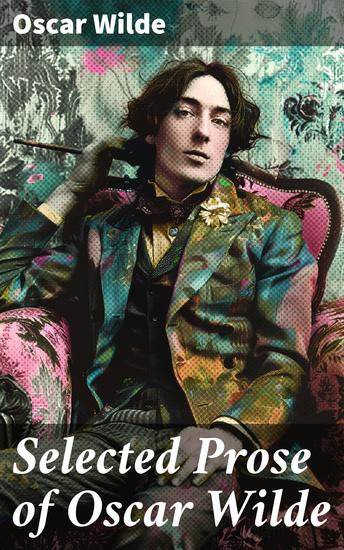
Selected Prose of Oscar Wilde - Essays on Aestheticism and Decadence in Victorian Literature - cover

Selected Prose of Oscar Wilde - Essays on Aestheticism and Decadence in Victorian Literature

Oscar Wilde

Editorial: Good Press

  • 0
  • 0
  • 0

Sinopsis

In "Selected Prose of Oscar Wilde," readers are invited into a rich tapestry of thought, characterized by Wilde's signature wit and stylistic brilliance. This collection encompasses a diverse array of genres, including essays, letters, and critiques, revealing Wilde's profound insights into aesthetics, society, and human nature. The prose exemplifies the fin-de-si√®cle literary movement, marked by a fusion of elegance and decadence, as Wilde deftly confronts moral complexities and societal conventions with a provocative yet playful tone. Oscar Wilde, a luminary of the late 19th century, is renowned not only as a playwright and poet but also as a fervent advocate for individualism and artistic expression. His tumultuous life, marked by both remarkable success and societal ostracism, profoundly influenced his literary endeavors. Wilde's experiences'Äîranging from the vibrant London literary scene to his controversial trial'Äîimbued his writing with a keen awareness of the interplay between art and ethics, making his prose both timeless and relevant. "Selected Prose of Oscar Wilde" is an essential companion for anyone seeking to understand the intricacies of human experience through the lens of one of literature's most provocative figures. This collection promises to spark reflection and appreciation, urging readers to embrace the beauty of language and the complexity of life.
Disponible desde: 15/08/2023.
Longitud de impresión: 78 páginas.

Otros libros que te pueden interesar

  • Under the Rainbow - Inside John Bruton's Coalition Government - cover

    Under the Rainbow - Inside John...

    Shane Kenny

    • 0
    • 0
    • 0
    The 'Rainbow Government', that was how the media described the Fine Gael, Labour and Democratic Left coalition government that John Bruton led from late 1994 to June 1997, arguably the most left wing government in the history of the state.
    In Under the Rainbow, Shane Kenny uses his unique perspective as government press secretary to deliver the ultimate insider account of this crucial juncture in Irish politics; a period which contained critical breakthroughs in the Northern Ireland peace process, the most high profile murder in the history of the state (Veronica Guerin), the establishment of the 'payments to politicians' tribunal, which finally exposed the sources of Charles Haughey's wealth, and a divorce referendum which heralded the dawn of a changing Ireland.
    With anecdotes and quotations from the author's own notes and tapes from the time, Under the Rainbow is a singular chronicle of political and economic achievement, aligned with professional and personal tragedy – a captivating mix of the atmosphere and facts of government life.
    Ver libro
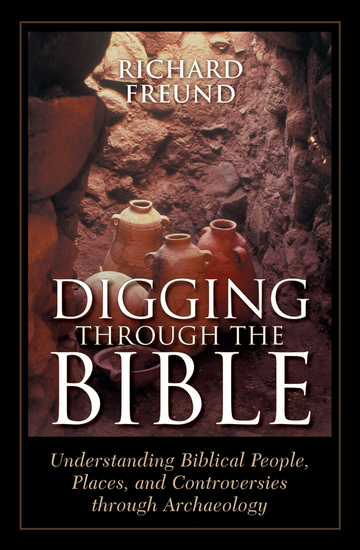
  • Digging Through the Bible - Understanding Biblical People Places and Controversies through Archaeology - cover

    Digging Through the Bible -...

    Richard A Freund

    • 0
    • 0
    • 0
    A “masterful and eminently readable” journey through the fascinating insights and revelations of Biblical archeology (Publishers Weekly, starred review). Many of our religious beliefs are based on faith alone, but archaeology gives us the opportunity to find evidence about what really happened in the distant past—evidence that can have a dramatic impact on what and how we believe. In Digging Through the Bible, archaeologist and rabbi Richard Freund takes readers through digs he has led in the Holy Land, searching for evidence about key biblical characters and events.  Digging Through the Bible presents overviews of the evidence surrounding figures such as Moses, Kings David and Solomon, and Mary the mother of Jesus, as well as new information that can help us more fully understand the life and times in which these people would have lived. Freund also presents new evidence about finding the grave of the Teacher of Righteousness mentioned in the Dead Sea Scrolls, and gives a compelling argument about how the Exodus of the Israelites may have taken place in three separate waves over time, rather than in a single event as presented in the Bible.
    Ver libro
  • The Unbroken Reich - What If Germany Had Won World War I? - cover

    The Unbroken Reich - What If...

    Marcus Draysun

    • 0
    • 0
    • 0
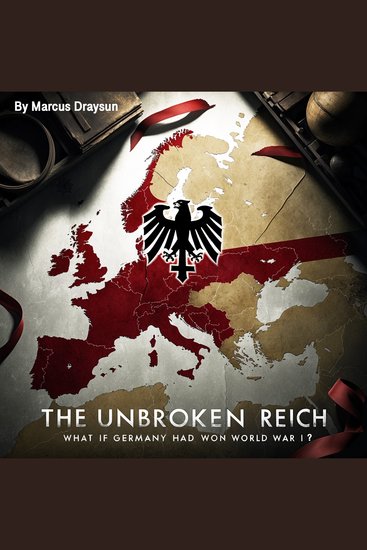
    As World War I raged across Europe, 1917 emerged as the critical year that could have determined the war’s ultimate outcome. In our reality, the entry of the United States and the crumbling of the Eastern Front led to Germany’s eventual defeat. But what if events had unfolded differently? A few pivotal moments could have swung the war in Germany’s favor, altering the course of history entirely. 
    One of the most significant factors was the failure of the German spring offensives in 1918. If these attacks had broken through Allied lines, Germany might have forced Britain and France to negotiate peace before American troops arrived in full strength. The Germans, under General Ludendorff, came close to achieving this, but logistical challenges and the resilience of the Allies ultimately led to exhaustion on the German side. Had Germany secured victory on the Western Front in early 1918, a new Europe could have emerged under German dominance. 
    Another key element was the Russian Revolution. With the fall of the Tsar and the rise of the Bolsheviks, Russia exited the war, allowing Germany to shift troops westward. However, if Germany had been able to negotiate a more favorable peace with Russia earlier—perhaps by supporting a less radical government—it could have stabilized the Eastern Front sooner, securing vital resources and preventing the chaotic collapse that followed. A stable Russian ally or puppet state could have relieved Germany’s strategic burden and ensured long-term control over Eastern Europe.
    Ver libro
  • Repair your heart from sadness coaching session & Meditations Self-Healing tool kit - reclaim true self after sadness overcome betrayal renew confidence strength love again be your true self - cover

    Repair your heart from sadness...

    LoveAndBloom

    • 0
    • 0
    • 0
    The pain of ending relationships, the loss of loved ones, and heartaches are one of the experiences of being human. Some people bounce back rather quickly while others took years to recover.  
    It is important to note that there is no right or wrong in your recovery journey. Life is meant to be experienced. We move on one chapter at a time. And we start anew.  
    Love that bonds deeply in your heart and soul takes time to resolve. It takes courage, forgiveness, and healing to move on. Not all stories can be resolved by both parties. But you are the one who is in charge of your life.  
    In this course, we will Be your personal coach Allow yourself to grieve the losses you had Deeply accept every part of yourself Letting go of your partners or loved ones Start a new chapter of your life Know that you deserve love Let go of the past Repair your fragmented soul And much more 
    Ver libro
  • Thai History - Facts and Background of the Siamese and the Khmer Empire (2 in 1) - cover

    Thai History - Facts and...

    Kelly Mass

    • 0
    • 0
    • 0
    Learn more about the history of those countries. The topics addressed will be the following: 
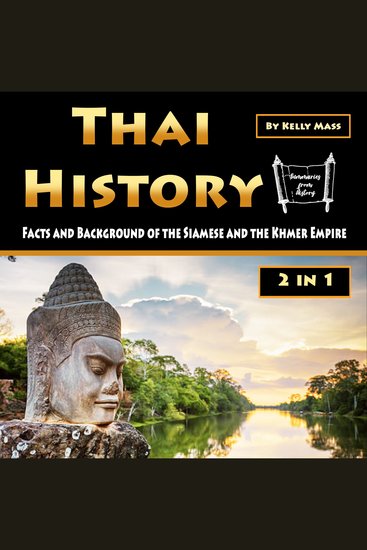
    The Khmer Empire--Historians describe Cambodia as the Khmer State or the Angkorian Empire (Khmer:) from the 9th century to the 15th century, when it was a Hindu/Buddhist empire in Southeast Asia. The empire, which developed from the old societies of Funan and Chenla, governed and/or "vassalized" the majority of mainland Southeast Asia and parts of Southern China, covering from the suggestion of the Indochinese Peninsula northward to modern-day Yunnan province in China, and from Vietnam westward to Myanmar. The Khmer Empire was greater at its peak than the Byzantine Empire (Eastern Roman Empire) that existed at the exact same period. 
    The Siamese-- Siam was just a much different name for what's now referred to as Thailand. The Siamese are the people who live there, though they're never ever called as such any longer. 
    Thailand is a fascinating country, with its own culinary arts, culture, history, royalty, infrastructure, and influence on the world. To learn more about these “Thai” people before they were called Thai, when they were Siamese, is to learn about those people’s roots.
    Ver libro
  • Start of World War I The: The History of the Events at the Beginning of the Great War - cover

    Start of World War I The: The...

    Editors Charles River

    • 0
    • 0
    • 0
    By the 20th century, warfare was nothing new to the European powers, especially when it came to fighting each other. Conflicts had been a mainstay on the European continent for over two millennia. Even after the Napoleonic wars had enveloped Europe in large scale war for nearly 20 years in the 19th century, the Europeans’ imperialism continued unabated. It would take the devastation of World War I to shock Europe and jolt the world’s superpowers out of their imperialistic tendencies.  
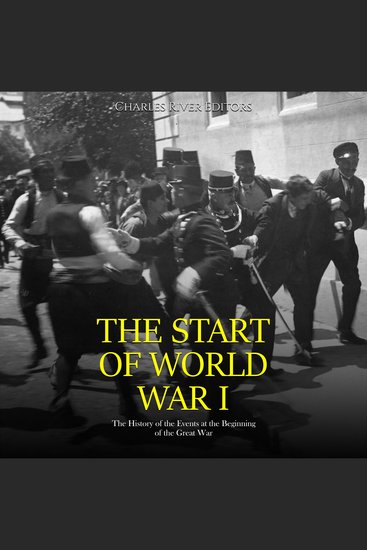
    	 The final straw came June 28, 1914, when a Serbian assassinated Archduke Franz Ferdinand, the heir to the throne of Austria-Hungary, in Sarajevo, Bosnia. Austria-Hungary immediately issued ultimatums to Serbia. When they declared war on Serbia July 28, 1914, Russia mobilized for war as well. The Germans mobilized in response to Russia on July 30, and the French, still smarting from the Franco-Prussian War, mobilized for war against Germany. The British also declared war on Germany on August 4. Thus, in the span of one week, six nations had declared war, half of which had no interest in the Balkans.  
    	Needless to say, the First World War came at an unfortunate time for those who would fight in it. After an initial period of relatively rapid maneuver during which the German forces pushing through Belgium and the French and British forces attempting to stymie them made an endless series of abortive flanking movements that extended the lines to the sea, a stalemate naturally tended to develop. The infamous trench lines soon snaked across the French and Belgian countryside, creating an essentially futile static slaughterhouse whose sinister memory remains to this day, but if trench warfare was an inevitability during the war, it is only because the events leading up to the initial battles were quite different.
    Ver libro