Rejoignez-nous pour un voyage dans le monde des livres!
Ajouter ce livre à l'électronique
Grey
Ecrivez un nouveau commentaire Default profile 50px
Grey
Abonnez-vous pour lire le livre complet ou lisez les premières pages gratuitement!
All characters reduced
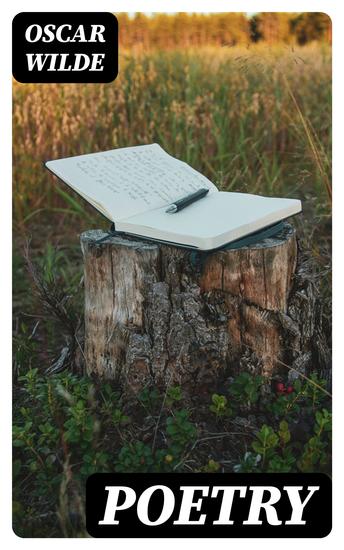
Poetry - Enriched edition - cover

Poetry - Enriched edition

Oscar Wilde

Maison d'édition: DigiCat

  • 0
  • 0
  • 0

Synopsis

In "Poetry," Oscar Wilde showcases a masterful blend of aestheticism and profound introspection, encapsulating his belief in the beauty of form and the depths of human emotion. The collection traverses themes of love, longing, nature, and the poignant duality of joy and sorrow, all articulated through Wilde's lush, rhythmic verse. His artistic style mirrors the late 19th-century literary movement known for its emphasis on elegance, wit, and the pursuit of beauty, positioning Wilde as a luminary of his time, whose works continue to resonate with readers drawn to lyrical craftsmanship and insightful reflection. Oscar Wilde, a quintessential figure of the fin-de-siècle period, embodied the spirit of artistic rebellion and intellectual exploration. His experiences with societal norms, personal struggles, and aesthetic beliefs profoundly influenced his writing, allowing him to weave intricate narratives that reveal the complexities of human experience. His own life, marked by both brilliance and tragedy, imparts a unique depth to his poetry, inviting readers to reflect on the paradoxes of existence and the quest for aesthetic truth. This anthology is highly recommended for scholars and casual readers alike, offering an exquisite entry into Wilde's poetic genius. Those seeking to explore the marriage of beauty and existential inquiry will find themselves enchanted by the vivid imagery and emotional honesty that characterize Wilde's work. "Poetry" is a timeless exploration of the human condition, a must-read for anyone who appreciates the art of language.

In this enriched edition, we have carefully created added value for your reading experience:
- A comprehensive Introduction outlines these selected works' unifying features, themes, or stylistic evolutions.
- The Author Biography highlights personal milestones and literary influences that shape the entire body of writing.
- A Historical Context section situates the works in their broader era—social currents, cultural trends, and key events that underpin their creation.
- A concise Synopsis (Selection) offers an accessible overview of the included texts, helping readers navigate plotlines and main ideas without revealing critical twists.
- A unified Analysis examines recurring motifs and stylistic hallmarks across the collection, tying the stories together while spotlighting the different work's strengths.
- Reflection questions inspire deeper contemplation of the author's overarching message, inviting readers to draw connections among different texts and relate them to modern contexts.
- Lastly, our hand‐picked Memorable Quotes distill pivotal lines and turning points, serving as touchstones for the collection's central themes.
Disponible depuis: 11/10/2022.
Longueur d'impression: 210 pages.

D'autres livres qui pourraient vous intéresser

  • The Boy at the Back of the Class - cover

    The Boy at the Back of the Class

    Onjali Q. Raúf

    • 0
    • 0
    • 0
    'Nobody would get in this boat unless they had to. Me and my family, we had to.'
    When they learn that Ahmet came to the UK after fleeing his own war‑torn country, his classmates have 'The Greatest Idea in the World' – a magnificent plan to reunite Ahmet with his family. What follows is an unexpected and often hilarious adventure, all topped off with a terrific twist.
    Based on the best-selling and award-winning novel by Onjali Q. Raúf, this stage adaptation of The Boy at the Back of the Class is a joyful and heartfelt testament to the power of friendship, and a reminder that everyone needs a place to call home.
    Nick Ahad's adaptation was first performed in a co-production between the Rose Theatre, Kingston, and Children's Theatre Partnership in 2024, directed by Monique Touko, and was revived on a tour of the UK in 2026.
    Voir livre
  • Timon of Athens - cover

    Timon of Athens

    William Shakespeare

    • 0
    • 0
    • 0
    The Life of Timon of Athens is a play by William Shakespeare about the fortunes of an Athenian named Timon (and probably influenced by the philosopher of the same name, as well), generally regarded as one of his most obscure and difficult works. Originally grouped with the tragedies, it is generally considered such, but some scholars group it with the problem plays. The play has caused considerable debate among scholars. It is oddly constructed, with several lacunae (gaps) and for this reason is often described as unfinished, multi-authored, and/or experimental. No precise date of composition can be given and, while most place it as close but prior to the late romances, theories posited have ranged broadly from Shakespeare's first work to his last. It is usually grouped with the tragedies (as in the First Folio), though some scholars have placed it with the problem comedies despite the death of its title character. Source material includes Plutarch's "Life of Alcibiades" and Lucian's dialogue, Timon the Misanthrope. The play had not been published prior to its inclusion in the First Folio (1623). (Summary by Wikipedia)Cast:Apemantus: Martin GeesonAlcibiades: Marty KrisCaphis; Soldier: David NicolCupid; Timandra; Third Senator; Varro's Servant: Elizabeth KlettFirst Bandit; First Varro's Servant; Lucullus: Delmar H. DolbierFirst Lady; Phrynia: Sandra GFirst Lord; Others: Lars RolanderFirst Senator: Bruce PirieFirst Servant: Elaine WebbFlaminius: thebicyclethiefFlavius: Peter BishopFool; Titus; Ventidius: Amy GramourFourth Lord; Lucius Servant; Others: Max KörlingeHortensius; Jeweller: Timothy FergusonLucilius: TriciaGMerchant; Servilius: Sebastian StephensonMessenger; Page: ChyAnne DonnellPainter; Second Stranger; Others: Nigel BoydellPoet; Third Stranger; Others: Bob GonzalezSecond Bandit; Sempronius: Ric FSecond Lord; Others: David GoldfarbSecond Senator; Old Athenian; Third Servant; Isadore's Servant; Others: Algy PugSecond Servant; Second Varro's Servant: John FrickerThird Bandit; Philotus: Ron AltmanThird Lord; Others: DublinGothicTimon: Barty BegleyNarrator: KristingjAudio edited by: Algy Pug
    Voir livre
  • Nocturne - cover

    Nocturne

    Rachel Lawson

    • 0
    • 0
    • 0
    Poetry of the night
    Voir livre
  • Paradise Lost (version 2) - cover

    Paradise Lost (version 2)

    John Milton

    • 0
    • 0
    • 0
    As Vergil had surpassed Homer by adapting the epic form to celebrate the origin of the author’s nation, Milton developed it yet further to recount the origin of the human race itself and, in particular, the origin of and the remedy for evil; this is what he refers to as “things unattempted yet in prose or rhyme.”After a statement of its purpose, the poem plunges, like its epic predecessors, into the midst of the action, shockingly bringing to the front the traditional visit to the underworld, for Satan’s malice is the mainspring of the negative action.  But at the center of the poem lies the triumph by the Son of God over the angelic rebels, which counteracts Satan’s evil design.  To preview this pattern, the fallen angels’ council in hell is counterbalanced by a council in heaven, in which the Son offers himself as a scapegoat for mankind long before the original sin has been committed.With this background, the narrator introduces us to Eden and our “Grand Parents.”  Satan is detected spying on them and is expelled from the garden, after which God sends an angel to tutor Adam and Eve in the history of the heavenly war that has led to the present situation.  At Adam's request, the heavenly guest then recounts the creation of the visible world, explaining also the proper nature of development, whereby all things proceed from lower to higher by refining that which nourishes them.Satan, however, returning in the form of a snake, offers Eve an evolutionary shortcut in the form of a magical food capable of endowing her with super powers.  He claims it has conferred on him both reason and speech.  Since Eve is suffering at the moment from a fancied slight to her moral strength, she allows herself to forget her recent lesson and yields to this temptation.  Adam, unable to imagine life without Eve (and failing to explore alternatives to sin), accepts the fruit from her and eats as well. Satan’s triumph is short-lived, for although hell and the world of mankind are now linked by a broad highway, he and his followers are humiliated in hell by being turned involuntarily into snakes every year.Whatever their reasons, both Adam and Eve have disobeyed their Maker’s sole command, and both are condemned to mortality and expulsion from the garden, but before they leave they are vouchsafed another history lesson, this time of the world to come: the progress of sin, the Savior’s coming, and the growth of the church.
    Voir livre
  • The Rape of the Lock - cover

    The Rape of the Lock

    Alexander Pope

    • 0
    • 0
    • 0
    The Rape of the Lock is a mock-heroic narrative poem written by Alexander Pope, first published anonymously in Lintot's Miscellany in May 1712 in two cantos (334 lines), but then revised, expanded and reissued under Pope's name on March 2, 1714, in a much-expanded 5-canto version (794 lines). The final form was available in 1717 with the addition of Clarissa's speech on good humour. The poem satirizes a petty squabble by comparing it to the epic world of the gods. It was based on an incident recounted by Pope's friend, John Caryll. Arabella Fermor and her suitor, Lord Petre, were both from aristocratic recusant Catholic families at a period in England when under such laws as the Test Act, all denominations except Anglicanism suffered legal restrictions and penalties (for example Petre could not take up his place in the House of Lords as a Catholic). Petre, lusting after Arabella, had cut off a lock of her hair without permission, and the consequent argument had created a breach between the two families. Pope, also a Catholic, wrote the poem at the request of friends in an attempt to "comically merge the two." He utilized the character Belinda to represent Arabella and introduced an entire system of "sylphs," or guardian spirits of virgins, a parodied version of the gods and goddesses of conventional epic. (Summary by Wikipedia)
    Voir livre
  • Sonnet 073 - cover

    Sonnet 073

    William Shakespeare

    • 0
    • 0
    • 0
    To celebrate Shakespeare’s birthday, LibriVox volunteers bring you ten different recordings of Sonnet 73. This was the weekly poetry project for the week of April 23rd, 2006.(Summary by Annie Coleman)
    Voir livre