Junte-se a nós em uma viagem ao mundo dos livros!
Adicionar este livro à prateleira
Grey
Deixe um novo comentário Default profile 50px
Grey
Assine para ler o livro completo ou leia as primeiras páginas de graça!
All characters reduced
Intentions - cover
LER

Intentions

Oscar Wilde

Editora: CLXBX

  • 0
  • 0
  • 0

Sinopse

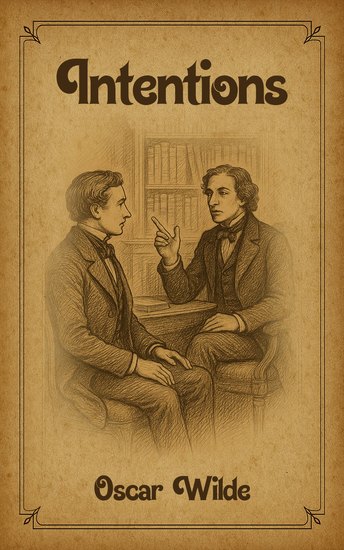
Intentions is a brilliant and provocative collection of essays in which Oscar Wilde articulates his most influential ideas on art, aesthetics, and criticism. First published in 1891, this landmark work reveals Wilde not only as a master storyteller and dramatist, but also as one of the sharpest and most original literary thinkers of the Victorian era.

The book consists of four major essays—"The Decay of Lying," "Pen, Pencil and Poison," "The Critic as Artist," and "The Truth of Masks." Written in Wilde's signature style—witty, paradoxical, and elegantly ironic—these essays challenge conventional beliefs about art, morality, realism, and the role of the critic. Wilde argues boldly that art should not imitate life, but rather that life imitates art, and that beauty and imagination are far more important than factual accuracy or moral instruction.

Through sparkling dialogue and incisive analysis, Wilde defends the philosophy of Aestheticism, asserting that art exists for its own sake. He elevates criticism to an art form in itself, celebrating subjective interpretation, intellectual freedom, and creative expression. At the same time, Wilde playfully dismantles Victorian seriousness, exposing the limitations of moralism and the dangers of rigid realism.

Intentions is both intellectually stimulating and endlessly entertaining. Wilde's essays remain remarkably modern, anticipating many ideas central to contemporary literary theory, cultural criticism, and artistic discourse. His language is rich with epigrams and memorable observations that reward careful reading and reflection.

Essential reading for students, scholars, and lovers of classic literature, Intentions offers a profound insight into Oscar Wilde's artistic philosophy and enduring legacy. It is a book that challenges readers to rethink the nature of art, truth, and beauty—and to embrace imagination as the highest form of reality.
Disponível desde: 09/02/2026.
Comprimento de impressão: 206 páginas.


Outros livros que poderiam interessá-lo

  • Islamic Empires of India The: The History of the Muslim Dynasties that Ruled India Before the British - cover

    Islamic Empires of India The:...

    Editors Charles River

    • 0
    • 0
    • 0
    India has been the location of many different empires throughout its long history. The Indus Valley Civilization was home to one of the world’s first civilizations more than 5,000 years ago, and despite India’s tradition of cultural and political pluralism, several rulers attempted to place the entire Sub-Continent under the rule of one dynasty or government with a dominant religion. Most of these would-be rulers were far from successful, although a few came close, setting the template for later conquerors. 
    The religion of Islam had entered India centuries earlier through merchants and missionaries, but, in the 10th century, warrior bands of Muslims began establishing themselves permanently in what is today Pakistan. From their permanent strongholds, these Muslim warriors of Turkish descent raided northern India, eventually capturing the city of Delhi and establishing what would become the Delhi Sultanate.  
    The Delhi Sultanate was comprised of five dynasties that expanded their borders, and Islam, at sword point, but also through diplomacy and trade. The Delhi Sultanate became known as a state that welcomed the expertise of foreigners, no matter their religion, and promoted the welfare of its citizens through a host of social programs. Eventually, the Delhi Sultanate grafted ideas and inspiration from India’s pre-Islamic past with those of Islam to create a state that was quite unique and powerful. 
    The Mughals, a group with Turkish and Mongolian roots, used gunpowder weapons to sweep into northern India, topple the existing Islamic dynasty in Delhi, and eventually subject most of India to their rule. The term “gunpowder empire” was originally coined by Russian scholar V. V. Bartold and popularized by American historians William McNeil and Marshall Hodgson in the mid-20th century to describe the Islamic Ottoman, Safavid, and Mughal empires, which they claimed came to power through gunpowder.
    Ver livro
  • Empowered Living - How to Take Full Control of Your Life - cover

    Empowered Living - How to Take...

    Caleb David

    • 0
    • 0
    • 0
    Here are the requested items:Book Description"Empowered Living: How to Take Full Control of Your Life" is a life-changing guide that empowers you to break free from limitations, overcome self-doubt, and unlock your full potential. This transformative book provides you with the tools, strategies, and mindset shifts necessary to take control of your life, make intentional decisions, and create a future that aligns with your values and goals.Through practical exercises, real-life examples, and inspiring stories, you'll learn how to cultivate self-awareness, develop a growth mindset, and build resilience. You'll discover how to set healthy boundaries, prioritize your well-being, and create a supportive network of relationships.Whether you're feeling stuck, struggling with anxiety or self-doubt, or simply seeking a more fulfilling life, "Empowered Living" will provide you with the roadmap you need to achieve success and happiness on your own terms. Take the first step towards an empowered life today and discover the freedom, confidence, and joy that comes with living life on purpose.
    Ver livro
  • The Life Crime and Capture of John Wilkes Booth - cover

    The Life Crime and Capture of...

    George Alfred Townsend

    • 0
    • 0
    • 0
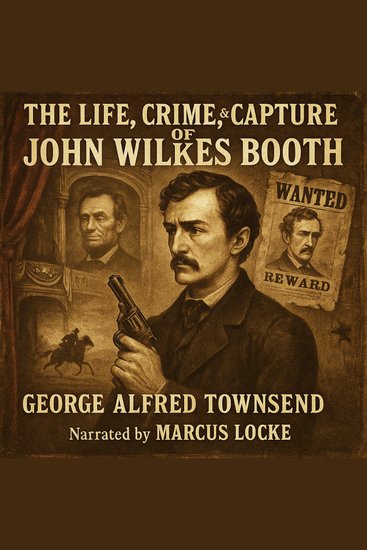
    On the night of April 14, 1865, the nation reeled in horror as President Abraham Lincoln was assassinated at Ford’s Theatre by the famed actor John Wilkes Booth. In this gripping 19th-century account, journalist George Alfred Townsend delivers a detailed and chilling narrative of Booth’s descent into infamy, the conspiracy that rocked the nation, and the relentless manhunt that followed. 
    Townsend captures the atmosphere of the capital in mourning, the calculated nature of Booth’s crime, and the tragic unraveling of his fate and that of his fellow conspirators. With vivid prose and a journalist’s eye for detail, this is not just a retelling—it’s an immersive chronicle of one of America’s most shocking and consequential crimes. 
    Perfect for listeners fascinated by true crime, Civil War history, or political intrigue, this audiobook brings one of the darkest chapters in American history to life.
    Ver livro
  • A Rare Recording of Anne Sexton Reading Her Poem "Wanting To Die" - cover

    A Rare Recording of Anne Sexton...

    Anne Sexton

    • 0
    • 0
    • 0
    Anne Sexton, born Anne Gray Harvey, (November 9, 1928 - October 4, 1974) was an American poet known for her highly personal, confessional verse. She won the Pulitzer Prize for poetry in 1967 for her book Live or Die. Her poetry details her long battle with bipolar disorder, suicidal tendencies, and intimate details from her private life, including relationships with her husband and children, whom she physically and sexually assaulted.
    Ver livro
  • D-DAY - The Epic Story of the Allied Invasion of Normandy - cover

    D-DAY - The Epic Story of the...

    Days of History

    • 0
    • 0
    • 0
    Attention all history enthusiasts! The highly anticipated second and final book in our D-Day series "Storming the Beaches" is now available! 
     - And it's a must-read for anyone interested in one of the most pivotal moments in history. 
    In this book, you'll discover the incredible stories behind the advancement up the beach, the assault on the bluffs, and the heroic efforts of the Pointe du Hoc Rangers.  
    You'll experience the intense moments of the inland advancement and gain insight into the planning and execution that led to the end of D-Day. 
    You'll gain a deeper understanding of the courage and sacrifice of the brave soldiers who fought on the beaches of Normandy. You'll be transported back in time and witness the pivotal moments that shaped the outcome of the war. 
    Order your copy today and experience the riveting journey from the advancement up the beach to the final moments of D-Day. 
    Ver livro
  • Persian Wars and the Punic Wars The: The History of the Ancient Greek and Roman Victories that Preserved Western Civilization - cover

    Persian Wars and the Punic Wars...

    Editors Charles River

    • 0
    • 0
    • 0
    The Ancient Greeks have long been considered the forefathers of modern Western civilization, but the Golden Age of Athens and the spread of Greek influence across much of the known world only occurred due to one of the most crucial battles of antiquity: the Battle of Marathon. In 491 B.C., following a successful invasion of Thrace over the Hellespont, the Persian emperor Darius sent envoys to the main Greek city-states, including Sparta and Athens, demanding tokens of earth and water as symbols of submission, but Darius didn’t exactly get the reply he sought. According to Herodotus in his famous Histories, “Xerxes however had not sent to Athens or to Sparta heralds to demand the gift of earth, and for this reason, namely because at the former time when Dareios had sent for this very purpose, the one people threw the men who made the demand into the pit and the others into a well, and bade them take from thence earth and water and bear them to the king.”  
    In the wake of Thermopylae, the Athenians watched in horror as Xerxes’ troops plundered the defenseless city, set it aflame, and razed the Acropolis. However, the Athenians remained belligerent, in part because according to the oracle at Delphi, “only the wooden wall shall save you.” Indeed, this would prove true when Themistocles managed to lure the Persian fleet into the straits of Salamis.  
    Although the Romans gained the upper hand in the wake of the First Punic War, Hannibal brought the Romans to their knees for over a decade during the Second Punic War. While military historians are still amazed that he was able to maintain his army in Italy near Rome for nearly 15 years, scholars are still puzzled over some of his decisions, including why he never attempted to march on Rome in the first place. After the serious threat Hannibal posed during the Second Punic War, the Romans didn’t wait much longer to take the fight to the Carthaginians in the Third Punic War.
    Ver livro