Rejoignez-nous pour un voyage dans le monde des livres!
Ajouter ce livre à l'électronique
Grey
Ecrivez un nouveau commentaire Default profile 50px
Grey
Abonnez-vous pour lire le livre complet ou lisez les premières pages gratuitement!
All characters reduced
Tuvalu Sinking - cover

Tuvalu Sinking

Orin Brightfield

Traducteur A AI

Maison d'édition: Publifye

  • 0
  • 0
  • 0

Synopsis

Tuvalu Sinking explores the existential threat climate change poses to the island nation of Tuvalu, focusing on the environmental, social, and political challenges of a nation facing potential disappearance. It vividly illustrates how rising sea levels, driven by global warming, are impacting the country. One striking insight is that Tuvalu's plight exemplifies the broader vulnerabilities of Small Island Developing States (SIDS) and the urgent need for international climate action. The book presents the scientific evidence of climate change in Tuvalu, the human impact on its citizens, and an analysis of global responses.

 
The book progresses from introducing Tuvalu's geography and culture to examining the scientific evidence of sea-level rise. It highlights the social and economic consequences for Tuvaluan communities, such as threats to food security and cultural heritage. The analysis extends to international climate agreements, assessing their effectiveness and proposing steps to aid Tuvalu. It emphasizes that the crisis is not just environmental but a moral one, demanding immediate emissions reductions and support for vulnerable populations confronting displacement and environmental crisis.

 
This book uniquely blends scientific rigor with the personal stories of Tuvaluans, providing an interdisciplinary perspective on climate change. It serves as a warning about the consequences of inaction, urging global cooperation and offering insights for policymakers, environmental advocates, and anyone interested in understanding climate change's impact on vulnerable communities and the ethical obligations tied to this current event.
Disponible depuis: 20/03/2025.
Longueur d'impression: 66 pages.

D'autres livres qui pourraient vous intéresser

  • Who’s the Devil: the Other or the West? - cover

    Who’s the Devil: the Other or...

    Régis Le Sommier

    • 0
    • 0
    • 0
    “We’ve spent nine trillion dollars bombing the Middle East like mad. We’ve sown death there, including our own. And what has it gotten us? Nothing.” 
    Donald Trump, November 1, 2024. 
    
    The figure of the devil has haunted our collective consciousness since the dawn of time. He structures our societies, whether religious or secular. Sometimes, the devil has been a friend before being “demonized”. Sometimes, by force of circumstance, he has become an ally. And sometimes, the devil must be eliminated to mask or even justify the errors of our societies. 
    Thus, during the Second World War, we made a pact with Stalin to bring down a devil deemed more formidable: Hitler. In Northern Ireland, the British ended up talking with representatives of the IRA, just as the French did a few years earlier with the Algerian FLN. Recently, the Americans negotiated with the Taliban, another terrorist group, before handing over the keys to Afghanistan. Saddam Hussein, Muammar Gaddafi and Bashar al-Assad were friends of the West before the latter precipitated their downfall, even if it meant causing chaos in their countries.
    Régis Le Sommier has been a war reporter for 27 years, and has himself interviewed a number of infamous figures. His aim is to revisit the concept of the devil in the light of recent and current conflicts, in order to answer one question: shouldn’t the deleterious consequences of geopolitics conducted “in the name of good” lead us to doubt the validity of the actions taken by our governments, even today, against those they like to refer to as devils?
    Voir livre
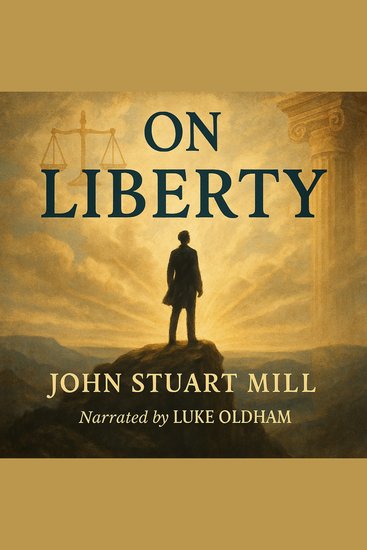
  • On Liberty - cover

    On Liberty

    John Stuart Mill

    • 0
    • 0
    • 0
    On Liberty by John Stuart Mill is a powerful and enduring philosophical essay that explores the nature and boundaries of individual freedom in society. Written in 1859 during a period of political and intellectual upheaval, Mill makes an impassioned case for the sanctity of personal liberty—arguing that individuals should be free to act, think, and express themselves as they choose, so long as they do not harm others. 
    Mill’s central thesis, often referred to as the "harm principle," remains one of the cornerstones of liberal political thought: that the only justification for societal or governmental interference in a person’s life is to prevent harm to others. With remarkable clarity, he examines the relationship between authority and autonomy, tackling issues like free speech, individuality, moral policing, and the role of dissent in democratic society. 
    Narrated with depth and thoughtfulness by Luke Oldham, this audiobook brings to life one of the most influential works in political philosophy—a timeless defense of freedom and a clarion call for the courage to think for oneself.
    Voir livre
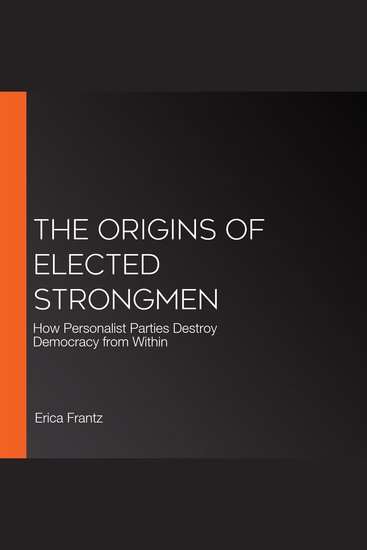
  • The Origins of Elected Strongmen - How Personalist Parties Destroy Democracy from Within - cover

    The Origins of Elected Strongmen...

    Erica Frantz, Andrea...

    • 0
    • 0
    • 0
    Since the end of World War II, democracies typically fell apart by coup d'état or through force. Today, however, they are increasingly eroding at the hands of democratically elected incumbents, who seize control by slowly chipping away at democratic institutions. To better understand these developments, this book examines the role of personalist political parties, or parties that exist primarily to further their leader's career as opposed to promote a specific policy platform. Using original data capturing levels of personalism in the parties of democratically elected leaders from 1991 to 2020, The Origins of Elected Strongmen shows that the rise of personalist parties around the globe is facilitating the decline of democracy. 


    Personalist parties lack both the incentive and capacity to push back against a leader's efforts to expand executive power. As such, leaders backed by personalist parties are more likely to succeed in their efforts to dismantle institutional constraints on their rule. Such attacks on state institutions, in turn, reverberate throughout society, deepening political polarization and weakening supporters' commitment to democratic norms of behavior. In these ways, ruling party personalism erodes horizontal and vertical constraints on a leader, ultimately degrading democracy and raising the risk of democratic failure.
    Voir livre
  • Global Warming - The Great Deception - cover

    Global Warming - The Great...

    Guy K Mitchell Jr.

    • 0
    • 0
    • 0
    WALL STREET JOURNAL BESTSELLER 
     
    Global Warming: The Great Deception-The Triumph of Dollars and Politics Over Science and Why You Should Care is the definitive work on the subject of anthropogenic (man-made) global warming. 
     
    Guy Mitchell, a businessman with the mind of a scientist, takes a holistic approach and combines scientific analysis with an in-depth review of the political and economic aspects of the subject. He uses proven science and scientific facts to refute every claim of the climate alarmists and proponents of the man-made global warming hypothesis. He exposes the true reasons that the UN, certain politicians, and global investment firms promote global warming fraud. His analysis is an unbiased, scientifically based, insightful, no-holds-barred approach to the subject. 
     
    Mitchell employs his keen sense of business acumen to expose the real drivers behind the claims of man-made global warming: research funding, politics, and global economics. Over $1 trillion worldwide has been spent on global warming research with nothing of substance to show for it. Certain politicians in the US and Western Europe embrace the fraudulent hypothesis with no apparent understanding of the science or the socioeconomic impact that the abandonment of fossil fuels would have on the world economy or the reliability of the power grids that drive it. 
     
    Why do the U.N. and certain politicians in the U.S. and Western Europe continue to promote the fraudulent global warming hypothesis? It is all about the money - money for research and to affect socio-economic change. For many politicians, it is all about the power - the power to control the lives of the electorate. Power is the ultimate narcotic. And money follows power in politics.
    Voir livre
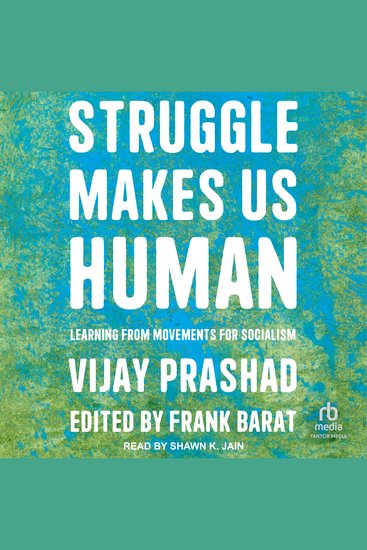
  • Struggle Makes Us Human - Learning from Movements for Socialism - cover

    Struggle Makes Us Human -...

    Vijay Prashad

    • 0
    • 0
    • 0
    An incisive and inspiring call to look beyond capitalism to chart a road map for a planet ravaged by pandemics, climate crisis, and wars. 


    Prompted by trenchant questions by international solidarity organizer Frank Barat, renowned author and activist Vijay Prashad shows that the path toward hope and liberation lies in looking closely at myriad, under covered struggles being waged all across the world by workers in countries such as India, Kenya, Peru, Tunisia, and Argentina. A marvelously global but grassroots perspective. 


    Prashad also examines pressing topics such as debt cancellation, a wealth tax, austerity, the pandemic, the arms industry, the climate crisis, socialism, working-class social movements and much more.
    Voir livre
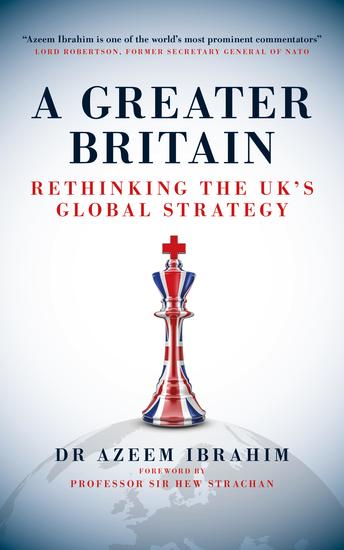
  • A Greater Britain - Rethinking the UK's Global Strategy - cover

    A Greater Britain - Rethinking...

    Azeem Ibrahim

    • 0
    • 0
    • 0
    Britain is no longer the great power it once was. Caught between an unmoored America and a fractured Europe, it confronts rising authoritarian challenges from China and Russia, while its domestic debates drift into abstract moralising. Lacking a coherent vision for the future, the country risks sliding further into managed decline, its global relevance steadily eroding.
    Yet such a trajectory is not inevitable. In this clear-eyed assessment of Britain's economic, ideological and strategic vulnerabilities, Azeem Ibrahim identifies the essential building blocks of renewal. He outlines a programme of reforms that will allow a genuinely independent Britain to capitalise on its core strengths. After all, as a lean and specialised nuclear power with one of the world's most sophisticated intelligence networks, as well as world-class universities and a cultural reach second only to the US, the UK can still shape global affairs.
    A Greater Britain argues that a clear strategic anchor and bold leadership are needed if the UK is to convert its advantages into real influence. By formulating a pioneering Knowledge Power Doctrine, the book offers a global strategy for a once powerful nation, providing nothing short of a roadmap back to British greatness.
    Voir livre