Join us on a literary world trip!
Add this book to bookshelf
Grey
Write a new comment Default profile 50px
Grey
Subscribe to read the full book or read the first pages for free!
All characters reduced
Gerrymandering Effects - cover

Gerrymandering Effects

Onyx Alderwood

Translator A AI

Publisher: Publifye

  • 0
  • 0
  • 0

Summary

Gerrymandering Effects explores how the strategic drawing of electoral district boundaries impacts political power and fair representation in the United States. The book reveals how gerrymandering can distort election results and entrench partisan advantages. It delves into the historical evolution of this practice, from its early forms to its modern, technologically advanced applications, highlighting how statistical analysis and case studies demonstrate its effects on political competition and polarization. A key insight is how advanced mapping technologies have exacerbated the problem, enabling more precise and effective gerrymandering strategies. The book examines real-world case studies to demonstrate the practical effects of gerrymandering on election outcomes and legislative representation. It also explores potential solutions and reforms, like independent redistricting commissions. It approaches the topic by introducing redistricting principles, analyzing case studies, and delving into legal challenges. The book progresses through chapters that cover the techniques used, the legal battles fought, and the reforms proposed.
Available since: 02/15/2025.
Print length: 67 pages.
Other books that might interest you

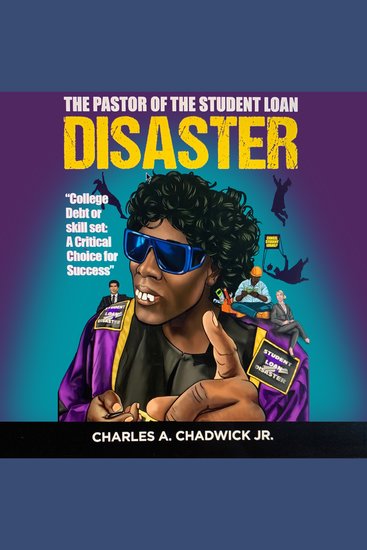
  • The Pastor of the Student Loan Disaster - "College Debt or Skill Set: A Critical Choice for Success" - cover

    The Pastor of the Student Loan...

    Charles A. Chadwick Jr.

    • 0
    • 0
    • 0
    So, you’re thinking about getting a degree. But do you truly know what lies ahead? 
    Author and financial coach Charles A. Chadwick Jr. does—and he’s lived it. In College Debt or Skill Set: A Critical Choice for Success, Charles takes you behind the scenes of the college hustle, sharing how he paid for two degrees without external help and slashed his costs by 40% using one powerful strategy: a skill set. 
    Told through the empowering sermons of The Pastor of the Student Loan Disaster, this audiobook mixes real-life experience with actionable advice to help you make smarter choices. Whether you're a student, parent, or job seeker, this guide helps you: 
    ✅ Cut college costs and limit student debt 
    🔧 Discover how learning a trade can multiply your income 
    🚀 Explore high-paying careers that don’t require a traditional degree 
    💡 Rethink what success really means in a world drowning in student loans 
    This audiobook is filled with the same practical wisdom that made Charles’s other books—like Chadwick’s Cultivated Circumstances , Chadwick’s College Checklist and The Student Loaners Are You a Winner or a Loser—essential reads for financially conscious students. 
    If you're tired of the "college equals success" myth and ready to build a future with less debt and more opportunity, let The Pastor show you the way. The decision is yours—college debt or skill set? No Need to fear the Pastor is here!
    Show book
  • Unwritten History Lincoln A Dark & Dangerous Vision - Learning From Renegade Scholar Lerone Bennett Jr - cover

    Unwritten History Lincoln A Dark...

    Geoffrey Giuliano

    • 0
    • 0
    • 0
    Lincoln's connection to black history may go much further than his role in slavery. In the 2001 book 'Black People and Their Place in History', historian Leroy Vaughn, alleges that Lincoln’s father was African American and his mother had Ethiopian ethnicity, both of which may have explained his “very dark skin and coarse hair.” The fact is his rivals campaigned using propaganda that depicted Lincoln as “Abraham Africanus the First,” an African man.It is claimed that Abraham Lincoln, who became America’s 16th President in 1860, was a Melungeon; a person of European, African-American and Native American ancestry.But beyond even that thoughtful historical proposition the late scholar Lerone Bennet Jr. sees America's most beloved president in a very different light to how he has been portrayed throughout time. Bennet hit a nerve in his research and writing on Lincoln. His book, 'Forced into Glory: Abraham Lincoln's White Dream', questions Lincoln's role as the "Great Emancipator". The work was described by one reviewer as a "flawed mirror." It was further criticized by historians of the Civil War period as faulty.In his introduction, Bennett wrote:"The idea of the book is simple: Everything you think you know about Lincoln and race is wrong. Every schoolchild, for example, knows the story of "the great emancipator" who freed Negroes with a stroke of the pen out of the goodness of his heart. The real Lincoln ... was a conservative politician who said repeatedly that he believed in white supremacy. Not only that: He opposed the basic principle of the Emancipation Proclamation until his death and was literally forced – Count Adam Gurowski said he was literally whipped – "into the glory of having issued the Emancipation Proclamation," which Lincoln drafted in such a way that it did not in and of itself free a single slave."Bennett's critics, including historians as well as political scientists, believe he ignores Lincoln's political and moral growth during the course
    Show book
  • Politics and the English Language - cover

    Politics and the English Language

    George Orwell

    • 0
    • 0
    • 0
    This audiobook is narrated by an AI Voice.   
    MOST people who bother with the matter at all would admit that the English language is in a bad way, but it is generally assumed that we cannot by conscious action do anything about it. Our civilization is decadent, and our language—so the argument runs—must inevitably share in the general collapse. It follows that any struggle against the abuse of language is a sentimental archaism, like preferring candles to electric light or hansom cabs to aeroplanes. Underneath this lies the half-conscious belief that language is a natural growth and not an instrument which we shape for our own purposes. 
    Now, it is clear that the decline of a language must ultimately have political and economic causes: it is not due simply to the bad influence of this or that individual writer. But an effect can become a cause, reinforcing the original cause and producing the same effect in an intensified form, and so on indefinitely. A man may take to drink because he feels himself to be a failure, and then fail all the more completely because he drinks. It is rather the same thing that is happening to the English language. It becomes ugly and inaccurate because our thoughts are foolish, but the slovenliness of our language makes it easier for us to have foolish thoughts. The point is that the process is reversible. Modern English, especially written English, is full of bad habits which spread by imitation and which can be avoided if one is willing to take the necessary trouble. If one gets rid of these habits one can think more clearly, and to think clearly is a necessary first step towards political regeneration: so that the fight against bad English is not frivolous and is not the exclusive concern of professional writers. I will come back to this presently, and I hope that by that time the meaning of what I have said here will have become clearer. Meanwhile, here are five specimens of the English language as it is now habitually written.
    Show book
  • Technocracy Explained - The Role of Technological Expertise in Government and Policy-Making - cover

    Technocracy Explained - The Role...

    Arlo Holders

    • 0
    • 0
    • 0
    Technocracy is a concept that has evolved over time, yet its core principles remain focused on the idea that governance should be driven by scientific knowledge and technical expertise rather than political ideologies or populist sentiments. The term "technocracy" was first introduced in the early 20th century by engineers and economists who believed that the efficient management of resources and societal development could only be achieved through the application of scientific principles. Technocrats argued that political leaders, often with little to no understanding of complex systems, were ill-equipped to make decisions that could optimize society’s functioning, particularly in times of rapid industrialization and technological advancement. 
    The origins of technocracy can be traced back to the industrial revolution, when technological innovations began reshaping economies and societies. However, the movement gained significant traction in the early 1930s during the Great Depression, a period of economic turmoil that called into question traditional governance models. During this time, scholars like Howard Scott and engineers from the Technocratic Movement in the United States called for the establishment of a technocratic society where engineers, scientists, and other experts would manage the economy based on data-driven decision-making rather than political influence. They believed that such a system would eliminate inefficiencies, social inequalities, and the corruption they associated with political governance.
    Show book
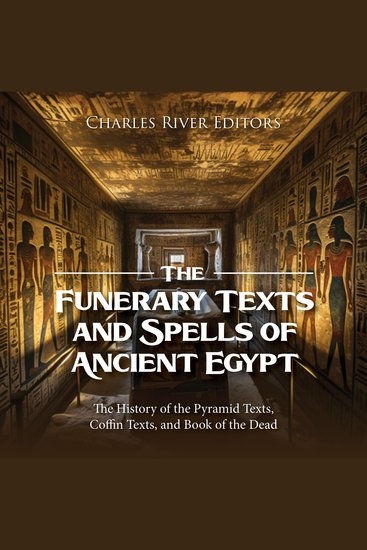
  • Funerary Texts and Spells of Ancient Egypt The: The History of the Pyramid Texts Coffin Texts and Book of the Dead - cover

    Funerary Texts and Spells of...

    Editors Charles River

    • 0
    • 0
    • 0
    In addition to being ubiquitous parts of daily life, Egyptian religion and mythology were also complex, and while Egyptian society was polytheistic like other ancient civilizations, that’s where the comparisons end. Religion was so pervasive that it heavily influenced funerary practices and the belief in an afterlife, and deities like Osiris and Isis (who are still well known today) had become so firmly ingrained that even the Ptolemaic pharaohs, who considered themselves purely Greek, embraced Egyptian deities and assimilated the Greek and Egyptian cultures. In fact, Cleopatra often had herself depicted as Isis.  
    Given the abundance of funerary artifacts that have been found within the sands of Egypt, it sometimes seems as though the Egyptians were more concerned with the matters of the afterlife than they were with matters of the life they experienced from day to day. This is underscored most prominently by the pyramids, which have captured the world’s imagination for centuries. The pyramids of Egypt are such recognizable symbols of antiquity that for millennia, people have made assumptions about what they are and why they exist, without full consideration of the various meanings these ancient symbolic structures have had over the centuries. Generations have viewed them as symbols of a lost past, which in turn is often portrayed as a world full of romance and mystery. This verbal meaning has become associated with the structures through the tourism industry, where intrigue obviously boosts ticket sales. In fact, the Egyptian pyramids are so old that they were also drawing tourists even in ancient times. In antiquity, the Great Pyramid of Giza was listed as one of Seven Ancient Wonders of the World, and it is the only one still surviving today. 
    Show book
  • White Lies - Critical Race Theory and Racism as a Problem of not Being White Rejecting Responsibility for the State of Race Relations and Seldom Admitting White Privilege - cover

    White Lies - Critical Race...

    Jim Colajuta

    • 0
    • 0
    • 0
    It's past time for us to break down obstacles to success and education for people of color, speak out against global social injustices, and stop hiding behind the cliché, "I'm white, I can't speak out on the race." In our thoughts, acts, and words, we must be deliberately anti-racist. Someone who claims to be anti-racist may not laugh at a racist joke or remain silent when they hear a racist remark, but this does not make them anti-racist. One of the numerous issues with racism is that it manifests itself in various ways. It has institutional and structural roots, is based on colonial history, and has been passed down through the generations like an unsightly relic. It's outspoken, red-faced, and enraged, willing to assault you on the street. In the absence of representation, in the 'banter' and 'harmless' comments, in the twitching fingers of white people who can't stop themselves from stroking Black people's hair. Racism is multi-faceted and nuanced, and many people aren't even aware that they have racist attitudes. In this book, you will read about critical race theory and racism as a problem of not being white, rejecting responsibility, and seldom admitting white privilege
    Show book