Join us on a literary world trip!
Add this book to bookshelf
Grey
Write a new comment Default profile 50px
Grey
Subscribe to read the full book or read the first pages for free!
All characters reduced
Pilgrim Roads - cover

Pilgrim Roads

Olivia Thompson

Translator A AI

Publisher: Publifye

  • 0
  • 0
  • 0

Summary

Pilgrim Roads embarks on a journey through the history, spirituality, and cultural impact of pilgrimages across the globe. It examines why millions undertake challenging journeys to sacred sites, exploring how these routes shape religious identity and foster cultural exchange. Pilgrimage is a deeply rooted practice, and the book highlights its role in inspiring personal transformation.

 
Did you know that pilgrimage routes often influenced the development of art, architecture, and literature? Or that these routes have evolved significantly over time, reflecting changing social and religious landscapes? The book uncovers the spiritual significance of key pilgrimage sites, such as the Camino de Santiago, the Hajj, and the Shikoku Pilgrimage, within their historical contexts. It considers the social and political factors influencing their rise and decline.

 
Each chapter progresses from exploring the ancient roots of pilgrimage to discussing modern phenomena, including tourism's impact and technological influences. Pilgrim Roads offers a comprehensive overview, making it valuable for anyone interested in the enduring power of faith and the search for meaning through travel.
Available since: 02/27/2025.
Print length: 54 pages.
Other books that might interest you

  • Famous Landmarks of Ancient Rome - cover

    Famous Landmarks of Ancient Rome

    Editors Charles River

    • 0
    • 0
    • 0
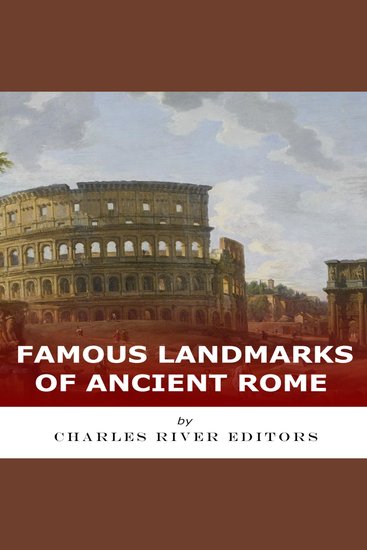
    When the Colosseum was built in the late 1st century A.D., the Romans, who were known for their architectural acumen, managed to amaze themselves. Martial, a Roman poet writing during the inauguration of the Colosseum, clearly believed the Colosseum was so grand a monument that it was even greater than the other Wonders of the Ancient World, which had been written about and visited endlessly by the Romans and Greeks in antiquity. Indeed, although the Wonders were wondrous to behold, the Colosseum was a spectacular achievement in architecture, something new and innovative, and therefore an amazing “Wonder” in its own way.  
    For well over a thousand years, the Forum was the scene of intense construction, as well as social, political, and commercial activity, making the Forum a boon for the study of Roman history, even though some buildings in the Forum are of such importance that they cannot be disassembled in order to discover the older layers underneath and thus find more evidence about the origins of this area. Ultimately, the Forum transformed from being a backwater used for grazing livestock into the religious and political center of Roman life, and it has long been an inspiration for subsequent generations, influencing the Renaissance, Romanticism, and even Fascism.  
    	Although Roman roads may not have attained the glamorous status of other inventions, their influence is just as profound; roads provide essential communication and transport lines for any country – throughout the hundreds of years when Rome was ascendant in the ancient world, the roads they built held together first their republic and then their empire into a cohesive unit. Since the Appian Way was first built in 312 BC, it has inspired poets, slaves, and conquerors, and Mark Antony, Spartacus, Hannibal, and Horace are just a few of the notable historical personalities who travelled on the Appian Way. 
    Show book
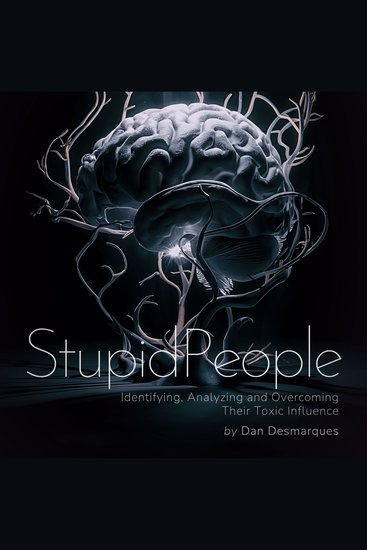
  • Stupid People - Identifying Analyzing and Overcoming Their Toxic Influence - cover

    Stupid People - Identifying...

    Dan Desmarques

    • 0
    • 0
    • 0
    Do you sometimes feel that you are constantly surrounded by people who make terrible decisions that negatively affect you and your life? If so, you're not alone! In The Stupid People, we take a deep dive into the psychology and behavior of people who exhibit confusing and destructive behaviors. This insightful book reveals the reasons behind the manipulative tactics used by stupid people and their impact on social interactions, communication, and even violence and abuse. But don't worry-the book also offers practical strategies to help you improve your decision-making, build better relationships, and overcome your fear of change. By uncovering and working through the root causes of stupidity, you can navigate relationships with difficult people with greater ease and clarity. Beyond practical tips, the book helps readers tap into their own strengths and abilities to communicate effectively and set healthy boundaries. Ultimately, by understanding the psychology behind difficult people, we can all live happier and more fulfilling lives.
    Show book
  • Unveiling the Secrets of Your Inner Cells for Modern Healing - "Discover powerful audio lessons that unveil your inner cells for modern healing and optimal wellness" - cover

    Unveiling the Secrets of Your...

    Jasper Merrick

    • 0
    • 0
    • 0
    Unveiling the Secrets of Your Inner Cells for Modern Healing 
    ⭐⭐ A Simplified Guide with Insights ⭐⭐ 
    Are you eager to enhance your life and fully understand the transformative healing within your inner cells?  
    Searching for a comprehensive resource that provides everything you need to unlock your potential and discover those life-changing insights?  
    Your quest ends here! 
    This guide is your ultimate companion for deepening your understanding, applying your newfound knowledge, and engaging in practical exercises. With this resource, you’ll be well-equipped for success. 
    Updated for the Latest Healing Insights. 
    Key features of this enriched guide: 
    - In-depth exploration of transformative healing insights. 
    - Comprehensive breakdown of how to unlock your potential. 
    - Effective strategies for self-discovery and personal growth. 
    Our guide stands out with its thorough coverage, essential for your journey toward healing. Concepts are not just touched upon; they are explored in detail. 
    Please note that this guide is not affiliated with any official healing organization and serves as an independent resource for your benefit. 
    Crafted with a clear structure and accessible language, our guide ensures smooth transitions between topics. Say farewell to confusing terminology and embrace clear, precise, and accurate content. 
    So, why wait? Click the BUY NOW button, secure your guide, and embark on your journey towards unlocking the secrets of your inner cells for modern healing!  
    Unveiling the Secrets of Your Inner Cells for Modern Healing.
    Show book
  • The Genius of Lies - cover

    The Genius of Lies

    François Noudelmann

    • 0
    • 0
    • 0
    Is it a contradiction, a lie, a madness, a freedom to affirm a theory and live the opposite? 
    Rousseau writes a treatise on education thanks to the abandonment of his five children, Kierkegaard composes religious texts while living as a libertine, Beauvoir founds the philosophy of feminism while enjoying a servile relationship with her American lover, Foucault exalts the courage of truth and organizes the secrecy of his Aids, Deleuze hates traveling and becomes the philosopher of nomadism.
    Who are we when we think? Several, no doubt, as shown by the thinkers who invent multiple personalities through their theories. Instead of denouncing their errors or hypocrisy, François Noudelmann studies the most complex lie, the one towards oneself, through the anxieties, fugues, and metamorphoses of these double-sided philosophers.
    Show book
  • Rules - A Short History of What We Live By - cover

    Rules - A Short History of What...

    Lorraine Daston

    • 0
    • 0
    • 0
    Rules order almost every aspect of our lives. They set our work hours, dictate how we drive and set the table, tell us whether to offer an extended hand or cheek in greeting, and organize the rites of life, from birth through death. We may chafe under the rules we have, and yearn for ones we don't, yet no culture could do without them. In Rules, historian Lorraine Daston traces their development in the Western tradition and shows how rules have evolved from ancient to modern times. Drawing on a rich trove of examples, including legal treatises, cookbooks, military manuals, traffic regulations, and game handbooks, Daston demonstrates that while the content of rules is dazzlingly diverse, the forms that they take are surprisingly few and long-lived. 


    Daston uncovers three enduring kinds of rules: the algorithms that calculate and measure, the laws that govern, and the models that teach. She illustrates how rules can change—how supple rules stiffen, or vice versa, and how once bothersome regulations become everyday norms. Rules have been devised for almost every imaginable activity and range from meticulous regulations to the laws of nature. Daston probes beneath this variety to investigate when rules work and when they don't, and why some philosophical problems about rules are as ancient as philosophy itself while others are as modern as calculating machines.
    Show book
  • World English Bible Book 15 The: Ezra - cover

    World English Bible Book 15 The:...

    Various Authors

    • 0
    • 0
    • 0
    The Book of Ezra is the fifteenth book. It is a book of the Hebrew Bible; which formerly included the Book of Nehemiah in a single book, commonly distinguished in scholarship as Ezra-Nehemiah. The two became separated with the first printed rabbinic bibles of the early 16th century, following late medieval Latin Christian tradition. Composed in Hebrew and Aramaic, its subject is the Return to Zion following the close of the Babylonian captivity, and it is divided into two parts, the first telling the story of the first return of exiles in the first year of Cyrus the Great (538 BC) and the completion and dedication of the new Temple in Jerusalem in the sixth year of Darius I (515 BC), the second telling of the subsequent mission of Ezra to Jerusalem and his struggle to purify the Jews from marriage with non-Jews. Together with the Book of Nehemiah, it represents the final chapter in the historical narrative of the Hebrew Bible.
    Show book