Join us on a literary world trip!
Add this book to bookshelf
Grey
Write a new comment Default profile 50px
Grey
Subscribe to read the full book or read the first pages for free!
All characters reduced
Stay In Costa Rica - cover

Stay In Costa Rica

Olivia Parker

Publisher: Publifye

  • 0
  • 0
  • 0

Summary

"Stay in Costa Rica" offers a comprehensive exploration of Costa Rica's healthcare system and lifestyle benefits for retirees and older adults considering relocation. This thorough guide examines how this peaceful Central American nation has become a premier destination for medical tourism and retirement, combining high-quality healthcare with affordable living costs.

 
The book uniquely demonstrates how Costa Rica's healthcare outcomes often rival those of developed nations while maintaining significantly lower costs, supported by both public and private healthcare options accessible to expatriates. The work progresses systematically through practical considerations, from initial healthcare access and insurance requirements to geographic considerations for optimal medical facility access.

 
Drawing from World Health Organization data and firsthand accounts from relocated seniors, it provides detailed cost comparisons between U.S. and Costa Rican healthcare services, while addressing crucial aspects of community integration and long-term lifestyle sustainability. Particular attention is given to the healthcare-rich regions like the Central Valley and coastal communities, where medical infrastructure is well-established.

 
Beyond healthcare, the book delves into Costa Rica's remarkable social stability - operating without a standing army since 1948 - and its environmental policies that contribute to resident well-being. It takes a balanced, data-driven approach while maintaining an accessible narrative style, addressing practical concerns such as language barriers in medical settings and managing chronic conditions. This comprehensive resource helps readers make informed decisions about combining quality healthcare access with an engaging lifestyle change in one of the world's most stable democracies.
Available since: 01/08/2025.
Print length: 148 pages.

Other books that might interest you

  • Inca Empire - The Builders of Machu Picchu and Masters of the Andes - cover

    Inca Empire - The Builders of...

    Rolf Hedger

    • 0
    • 0
    • 0
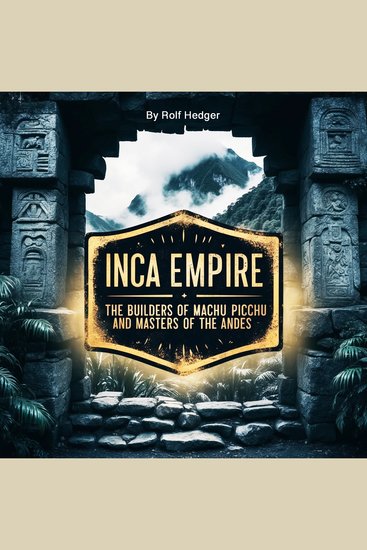
    The story of the Inca Empire begins with a mix of myth and history, deeply rooted in the Andean highlands of South America. According to Inca legend, the empire’s origins trace back to the Sun God, Inti, who sent his son, Manco Cápac, to establish a kingdom on Earth. Manco Cápac and his sister-wife Mama Ocllo emerged from the waters of Lake Titicaca, tasked with finding the place where the sun would set forever. Guided by this divine mission, they journeyed through the Andes, eventually founding the city of Cusco, which would become the heart of the Inca Empire. This mythic narrative blended with historical elements, shaping the early identity of the Incas as a people divinely chosen and destined for greatness. 
    The rise of the Inca Empire began in earnest during the 12th century, but it wasn’t until the 15th century that the Inca began their ambitious expansion under the leadership of Pachacuti. Before this period, the Inca were a small ethnic group living in the valley of Cusco, a modest settlement by the standards of the Andean world. The powerful Wari and Tiwanaku civilizations had already left their marks on the region, and other neighboring cultures, such as the Chanka and the Nazca, vied for dominance in the highlands. However, it was the strategic leadership and military genius of the early Inca rulers that laid the foundation for what would become the largest empire in pre-Columbian America. 
    Manco Cápac, the first Sapa Inca (the title for the emperor), established the social and political framework that would support future conquests. He was followed by a line of rulers who solidified Cusco’s position as the seat of power, but it wasn’t until Pachacuti’s reign that the Inca’s ambitions expanded beyond their small kingdom. Under Pachacuti’s rule, the Inca adopted a highly organized and disciplined military structure, which allowed them to conquer surrounding territories and absorb them into their growing empire.
    Show book
  • Backpack Jacket Surfboard - My Journey Across America Then and Now - cover

    Backpack Jacket Surfboard - My...

    Graham Broyd

    • 0
    • 0
    • 0
    Backpack, Jacket, Surfboard is an adventure memoir, a time capsule, and an unfiltered look at the joys, risks, and revelations of a cross-country road trip—then and now.
    Show book
  • Early American Civilizations - Foundations of Culture (3 in 1) - cover

    Early American Civilizations -...

    Rolf Hedger

    • 0
    • 0
    • 0
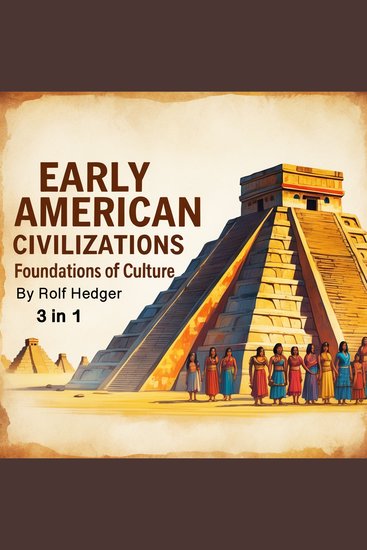
    This bundle explores the origins and cultural impact of three of the earliest and most influential civilizations in the Americas: the Caral-Supe, Chavín, and Olmec. This book uncovers the remarkable achievements of these ancient societies, from the monumental pyramids of Caral-Supe, one of the oldest urban centers in the world, to the religious and artistic innovations of the Chavín civilization in the Andes.  
    It also delves into the Olmec civilization, often considered the "mother culture" of Mesoamerica, known for its colossal stone heads and early writing system.  
    Through their advancements in architecture, agriculture, religion, and trade, these civilizations laid the foundation for the great empires that followed. Perfect for history enthusiasts, this book provides a fascinating look at the beginnings of complex societies in the Americas.
    Show book
  • Transform Through Travel - Connecting Across Cultures - cover

    Transform Through Travel -...

    Robert Maisel

    • 0
    • 0
    • 0
    This captivating and compelling combination of anecdotes and inspiration will leave you yearning to explore the world. Through this book, Maisel colorfully depicts how travel can be used as a vehicle for transformation and growth. Through personal examples, he shows how travel has changed his life. And how it can do the same for you.
    Show book
  • The Wari Empire - Pre-Incan Conquerors and the Engineers of South America - cover

    The Wari Empire - Pre-Incan...

    Rolf Hedger

    • 0
    • 0
    • 0
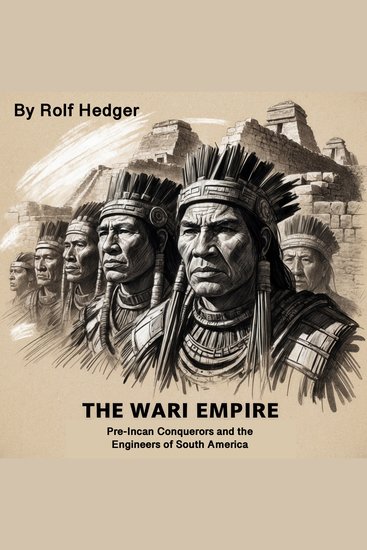
    The Wari Empire emerged as one of the most influential pre-Incan civilizations in the Andean region, setting the foundation for future Andean states, including the Inca. Its origins can be traced back to the highlands of present-day Peru, where early societies laid the groundwork for its rise. The unique combination of environmental adaptation, cultural influences, and political innovation allowed the Wari to establish a powerful state that would dominate much of the central Andes for centuries. 
    Before the Wari civilization took shape, the Andean region was home to various cultures that contributed to its development. Among these, the Chavín culture, which thrived from around 900 to 200 BCE, played a crucial role in spreading religious and artistic traditions that later influenced Wari art and iconography. The Nazca civilization, known for its intricate geoglyphs and advanced irrigation techniques, also left an imprint on Wari agricultural and engineering practices. However, it was the lesser-known Huarpa culture of the Ayacucho Valley that provided the most direct influence on early Wari society. The Huarpa people developed small-scale irrigation systems, terraced farming, and distinct ceramic styles, all of which became defining features of Wari civilization. 
    Sometime between 500 and 600 CE, the Wari began to expand beyond their heartland in the Ayacucho region. This expansion was driven by both environmental necessity and strategic ambition. The high-altitude valleys of the central Andes provided fertile land for agriculture, but they were also subject to fluctuating climatic conditions. To mitigate these challenges, Wari elites developed large-scale irrigation systems and storage facilities, ensuring food security for growing populations. This ability to manage resources effectively gave them an advantage over neighboring groups, allowing them to assert dominance through both diplomacy and military conquest.
    Show book
  • 100 Facts About Croatia - English to Spanish - cover

    100 Facts About Croatia -...

    Science-Based Language Learning Lab

    • 0
    • 0
    • 0
    Introduction to the 100 Somethings Language Learning Series 
     
    Welcome to a revolutionary approach to language learning! This series helps you master Spanish by intertwining it with compelling topics like Croatia. Each book centers on a theme (art, science, history) and presents 100 carefully chosen facts in both English and Spanish. 
     
    How It Works: 
     
    - Each fact is first introduced in Spanish, encouraging you to interpret it. 
     
    - The following page provides the fact in English and then repeats it in Spanish, aiding comprehension and memorization. 
     
    - The second half flips this order—English first, then Spanish, and English again—helping you practice translation in both directions for better mastery. 
     
    Benefits: 
     
    - Concise Learning: Focuses on one-sentence facts to ensure every word learned is impactful and directly related to your interests, making them easier to remember. 
     
    - Reinforcement: Alternating languages for each fact naturally strengthens vocabulary and grammar. 
     
    - Engagement: Learning vocabulary through topics you're passionate about keeps the process dynamic and relevant. 
     
    - Dual Knowledge: You enrich your understanding of a specific subject while learning a new language. 
     
    This series is tailored for learners who thrive on clear, targeted information, making it both educational and enjoyable. Whether you’re a beginner or expanding your linguistic skills, this series promises an effective and engaging educational journey. Embrace these 100 facts and let your passions drive your progress in mastering a new language!
    Show book