Join us on a literary world trip!
Add this book to bookshelf
Grey
Write a new comment Default profile 50px
Grey
Subscribe to read the full book or read the first pages for free!
All characters reduced
Taste Bud Mechanics - cover

Taste Bud Mechanics

Olivia Clarke

Translator A AI

Publisher: Publifye

  • 0
  • 0
  • 0

Summary

Taste Bud Mechanics explores the fascinating science behind our sense of taste, diving into how taste receptors on our tongues detect flavors and transmit this information to the brain. The book uncovers the intricate molecular biology of taste, explaining how we perceive sweet, sour, salty, bitter, and umami. Notably, individual differences in taste perception are significantly influenced by genetics, as evidenced by the TAS2R gene family that affects our sensitivity to bitter compounds, revealing why some people are more averse to certain foods than others. The book meticulously maps the neural pathways involved in taste, from the initial activation of taste receptor cells to the higher cortical areas responsible for taste perception and emotional responses. By integrating findings from molecular biology, neuroscience, and genetics, it provides a holistic view of how our taste preferences and aversions are shaped. Beginning with the basic anatomy and physiology of the taste system, the book progresses to the neurobiology of taste and culminates in an exploration of the genetic determinants of taste variation. This unique approach bridges the gap between scientific research and everyday experience, making the complexities of taste accessible to a broad audience.
Available since: 03/04/2025.
Print length: 72 pages.


Other books that might interest you

  • Beat the Bots - A Writer's Guide to Surviving and Thriving in the Age of AI - cover

    Beat the Bots - A Writer's Guide...

    Jane K. Cleland

    • 0
    • 0
    • 0
    Beat the Bots offers science-based creativity techniques that guide you through the writing process to unlock your imagination and create compelling stories that resonate with emotional truth in ways AI can’t match. 
      
    Even though artificial intelligence is based on a technology called “machine learning,” computers can’t learn to be creative—but you can. This book will show you the way. AI is, by definition, derivative, not creative. It can’t bring rational judgment to determine the quality or value of its work. When you bring those capabilities to your writing, your stories will touch readers’ hearts and minds. 
      
    Just as real food is better for us than processed food, and actual social interactions are more meaningful than social media, when it comes to writing your story, artificial intelligence can’t replicate your individual human intelligence, imagination, and sensibility. Technical wizardry can’t tell your story. Only you can do that. Your uniqueness is what separates you from a chatbot, and explains why you can’t be replaced by an algorithm. You’ll succeed because you’re human, not in spite of it. 
      
    Through engaging FAQs, invaluable “Pro Tips,” and “AI Weighs In” revelations, you’ll be able to apply the writing lessons and creativity tactics to all aspects of storytelling, bringing your distinctive vision and voice to your projects in ways AI simply can’t. Thought-provoking, science-based guided exercises challenge you to apply each chapter’s lessons to your own writing. Whether you’re writing a novel, literary nonfiction, or a memoir, you’ll be able to write stories that are fresh and compelling—your stories—and those are the books that publishers want and readers crave. That’s how you’ll beat the bots.
    Show book
  • Beginner’s Mindfulness Guide – Daily Habits for Calm Clarity & Focused Living - cover

    Beginner’s Mindfulness Guide –...

    Bob Babsons

    • 0
    • 0
    • 0
    This audiobook is narrated by an AI Voice.   
    Beginner’s Mindfulness Guide – Daily Habits for Calm, Clarity & Focused Living is your simple, step-by-step introduction to mindfulness that helps you slow down, clear your mind, and live with greater presence. Whether you're new to mindfulness or seeking a gentler way to reduce stress and regain focus, this guide offers easy daily habits you can start using right away. 
    Inside, you’ll discover: 
    What mindfulness really is—and how it improves mental and emotional well-being 
    Simple breathing exercises and grounding techniques you can do anywhere 
    Daily routines to help you manage stress, stay present, and improve focus 
    Mindful habits for better sleep, deeper relationships, and a calmer mind 
    Tips to make mindfulness a consistent, rewarding part of your lifestyle 
    Beginner’s Mindfulness Guide makes it easy to bring more peace, clarity, and intentionality into your everyday life—one mindful habit at a time.
    Show book
  • Atomic Habits Evolved - The Neuroscience of Habit Loops and Proven Strategies to Break Bad Routines Build Positive Change and Master Your Daily Life - cover

    Atomic Habits Evolved - The...

    Dr. Aris Thorne

    • 0
    • 0
    • 0
    Unlock the science of lasting change and take control of your daily life with Atomic Habits, Evolved. 
    Dr. Aris Thorne delves into the fascinating neuroscience of habit loops, revealing how these neurological pathways dictate our routines. This groundbreaking book goes beyond simple tips, offering proven, science-backed strategies to break free from negative habits and build positive ones that stick. Imagine mastering your mornings, boosting your productivity, and achieving your goals, all by understanding the hidden power of your habits. 
    Perfect for readers of Atomic Habits and anyone seeking practical, neuroscience-based self-improvement, this book provides the roadmap to re-engineer your routines and master your daily life. 
     
    Show book
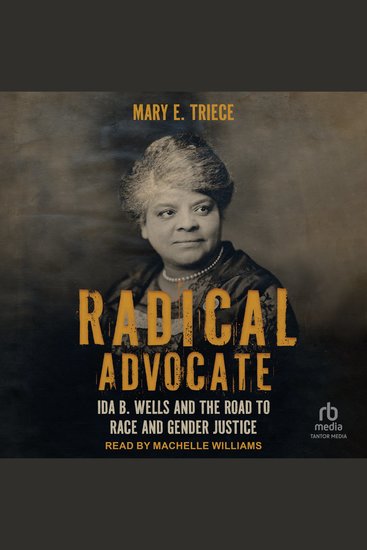
  • Radical Advocate - Ida B Wells and the Road to Race and Gender Justice - cover

    Radical Advocate - Ida B Wells...

    Mary E. Triece

    • 0
    • 0
    • 0
    Born into the brutal reality of slavery, Ida B. Wells rose to become an audacious journalist, teacher, and activist for racial and gender justice. In Radical Advocate, Mary E. Triece examines the rhetorical strategies employed by Wells to challenge deeply rooted systems of oppression, strategies that remain powerful and relevant today. 
     
    Triece introduces the concept of "radical embodied advocacy" to give an account of Wells's unique position as a Black woman whose personal encounters with white violence were palpable, experienced physically and mentally. White men lynched Wells's friends and threatened her own life, forcing her into exile after destroying the very press on which she wrote and edited. From this perspective, Wells understood lynching as linked to white economic and political control. Through a close analysis of Wells's speeches, writings, and journalism, Triece reveals how Wells pioneered a form of "intersectional journalism" that centered the voices of those marginalized by race, gender, and class. 
     
    Triece underscores the epistemic challenges faced by marginalized advocates and the importance of their perspectives in shaping social change. Radical Advocate positions Wells as a prophetic figure whose insights into the systemic nature of racism remain profoundly relevant in today's world.
    Show book
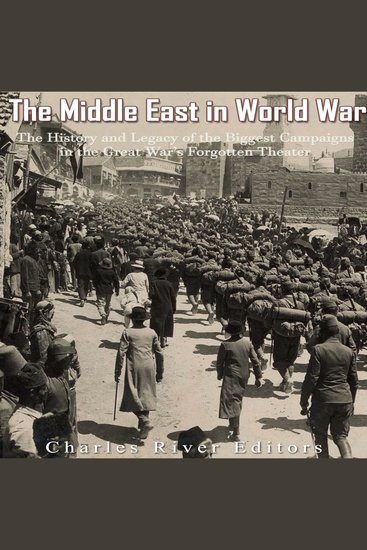
  • Middle East in World War I The: The History and Legacy of the Biggest Campaigns in the Great War’s Forgotten Theater - cover

    Middle East in World War I The:...

    Editors Charles River

    • 0
    • 0
    • 0
    World War I, also known in its time as the “Great War” or the “War to End all Wars”, was an unprecedented holocaust in terms of its sheer scale. Fought by men who hailed from all corners of the globe, it saw millions of soldiers do battle in brutal assaults of attrition which dragged on for months with little to no respite. Tens of millions of artillery shells and untold hundreds of millions of rifle and machine gun bullets were fired in a conflict that demonstrated man’s capacity to kill each other on a heretofore unprecedented scale, and as always, such a war brought about technological innovation at a rate that made the boom of the Industrial Revolution seem stagnant.  
    	Most books and documentaries about the First World War focus on the carnage of the Western Front, where Germany faced off against France, the British Empire, and their allies in a grueling slugfest that wasted millions of lives. The shattered landscape of the trenches has become symbolic of the war as a whole, and it is this experience that everyone associates with World War I, but that front was not the only experience. There was the more mobile Eastern Front, as well as mountain warfare in the Alps and scattered fighting in Africa and the Far East. 
    	Then there was the Middle Eastern Front, fought across the Levant and Mesopotamia, which captured the imagination of the European public. There, the British and their allies fought the Ottoman Turkish Empire under harsh desert conditions hundreds of miles from home, struggling for possession of places most people only knew from the Bible and the Koran.
    Show book
  • How Media Ownership Matters - cover

    How Media Ownership Matters

    Rodney Benson, Julie Sedel,...

    • 0
    • 0
    • 0
    Does it matter who owns and funds the media? As journalists and management consultants set off in search of new business models, there's a pressing need to understand anew the economic underpinnings of journalism and its role in democratic societies. 


    How Media Ownership Matters provides a fresh approach to understanding news media power, moving beyond the typical emphasis on market concentration or media moguls. Through a comparative analysis of the US, Sweden, and France, as well as interviews of news executives and editors and an original collection of industry data, this book maps and analyzes four ownership models: market, private, civil society, and public. Highlighting the effects of organizational logics, funding, and target audiences on the content of news, the authors identify both the strengths and weaknesses various forms of ownership have in facilitating journalism that meets the democratic ideals of reasoned, critical, and inclusive public debate. Ultimately, How Media Ownership Matters provides a roadmap to understanding how variable forms of ownership are shaping the future of journalism and democracy.
    Show book