Junte-se a nós em uma viagem ao mundo dos livros!
Adicionar este livro à prateleira
Grey
Deixe um novo comentário Default profile 50px
Grey
Assine para ler o livro completo ou leia as primeiras páginas de graça!
All characters reduced
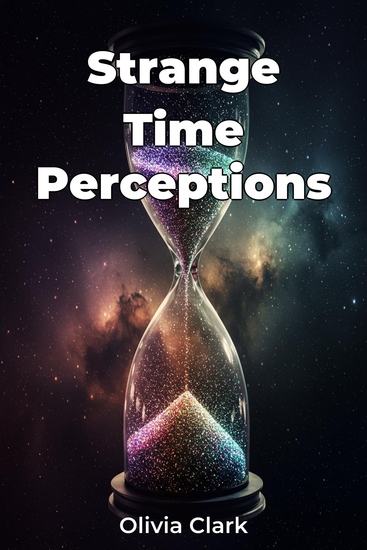
Strange Time Perceptions - cover
LER

Strange Time Perceptions

Olivia Clarke

Tradutor A Ai

Editora: Publifye

  • 0
  • 0
  • 0

Sinopse

Strange Time Perceptions explores the subjective experience of time, revealing how our brains construct this fundamental aspect of reality. The book highlights that our perception isn't fixed but is shaped by emotions, attention, and cognitive processes, such as how moments of crisis can seem to stretch on, demonstrating temporal distortion. It delves into the neuroscience behind our internal chronometer, examining brain regions like the basal ganglia and prefrontal cortex that contribute to our sense of timing.

 
The book progresses by first establishing the psychological and neurological basis of time perception. It then investigates specific phenomena like time dilation and the influence of memory, offering insights into how daily routines affect our subjective experience. Finally, the book explores practical applications, such as stress management and improved cognitive performance.

 
By synthesizing findings from psychology, neuroscience, and biology, Strange Time Perceptions provides a comprehensive understanding of this complex phenomenon, making it valuable to anyone interested in the workings of the human mind.
Disponível desde: 03/04/2025.
Comprimento de impressão: 66 páginas.


Outros livros que poderiam interessá-lo

  • Cycles - The Science of Periods Why They Matter and How to Nourish Each Phase - cover

    Cycles - The Science of Periods...

    FNP Amy J. Hammer

    • 0
    • 0
    • 0
    There is no one-size-fits-all guide to your cycle. But registered nurse Amy Hammer arms you with a strong foundation in physiology and hormonal health, explores historical and sociocultural aspects of women's health, and reimagines the phases of the menstrual cycle as aligning with the four seasons to provide a detailed guide for living well. 


    Also included are nutritive recipes, supportive movement practices, and self-care rituals and recipes to guide you through each phase of the menstrual cycle and of life. 


    Become in tune with your internal rhythm, reclaim the meaning of self-care, and cultivate optimal health for every season of life. This comprehensive, body-literate guide includes: 


    ● 40 nutrient-dense, menstrual-phase specific recipes that support hormonal, emotional, cognitive, gut, and overall health. 


    ● The science behind menstrual cycles and how hormonal fluctuation impacts your brain, breasts, skin, and weight. 


    ● How to track your cycle using fertility awareness methods, allowing you to naturally and effectively avoid or pursue pregnancy. 


    ● Supportive full-body movement, self-care, and nutrition tips that optimize physiological and hormonal health.
    Ver livro
  • Deforestation - The Silent Crisis Threatening Our Planet’s Survival - cover

    Deforestation - The Silent...

    Marcus Kline

    • 0
    • 0
    • 0
    Forests are among the Earth’s most precious resources, spanning vast landscapes and serving as critical lifelines for countless species, including humanity. Their towering trees and dense undergrowth form a complex ecosystem that sustains biodiversity, provides essential resources, and regulates the natural processes that make life possible. Yet, beneath this quiet resilience, forests face an ongoing crisis. The relentless clearing of these vital ecosystems, known as deforestation, has become one of the greatest threats to our planet’s delicate balance.  
      
    Deforestation is the systematic removal of forested areas for purposes such as agriculture, logging, mining, and urban development. While forests have been cleared throughout history to make way for human settlements and progress, the scale of destruction in modern times far surpasses anything seen before. Once regarded as boundless, forests are now disappearing at a rate that defies imagination. Landscapes that took centuries to form can be leveled in days, leaving behind scars that may take generations to heal—if they ever do.  
      
    Forests are far more than clusters of trees; they are intricate systems where every plant, animal, and microorganism plays a role in sustaining life. When a forest is lost, its inhabitants—many of which are found nowhere else on Earth—are left without refuge. Fragile ecosystems collapse, species are driven toward extinction, and the harmony that once thrived among living organisms begins to unravel. But the consequences extend far beyond the forest’s borders. Rivers dry up as watersheds lose their protective canopies, soils erode without the roots that once anchored them, and communities dependent on forests for food, medicine, and shelter face an uncertain future. 
    Ver livro
  • Cybersecurity - Detailed explanation - cover

    Cybersecurity - Detailed...

    Bright Mills

    • 0
    • 0
    • 0
    Cybersecurity is the practice of protecting systems, networks, and programs from digital attacks that aim to access, change, or destroy sensitive information, extort money from users, or interrupt normal business processes. In the modern digital world, where every aspect of personal life, business, and government is connected through information technology, the importance of cybersecurity has grown exponentially. 
    This comprehensive exploration of cybersecurity provides a deep understanding of the concepts, technologies, practices, and challenges in the field. It covers the history and evolution of cybersecurity, common types of cyber threats (such as malware, phishing, ransomware, and DDoS attacks), critical cybersecurity principles (like confidentiality, integrity, and availability), and the various domains involved, including network security, application security, information security, and operational security. 
    It further examines cybersecurity frameworks and standards, risk management strategies, the role of cryptography, security policies, and incident response procedures. Real-world case studies are analyzed to highlight the consequences of cyber-attacks and the lessons learned. The final sections address cybersecurity in emerging technologies (like AI, IoT, and cloud computing), international regulations, and the future of global cybersecurity. 
    This guide is ideal for students, professionals, and anyone interested in understanding the mechanisms, tools, and importance of defending digital infrastructure in the 21st century.
    Ver livro
  • The History of Urbanization - From Ancient Cities to Modern Metropolises - cover

    The History of Urbanization -...

    Lyric Vale

    • 0
    • 0
    • 0
    Urbanization refers to the process through which cities and towns grow as a result of the migration of people from rural areas and the expansion of urban areas. It is a phenomenon that has shaped human history for thousands of years, influencing every aspect of society from economics to culture and beyond. As populations increase, the desire for better living conditions, access to employment, and social interaction has led individuals to seek opportunities in urban centers. Over time, these cities evolve to accommodate larger populations, evolving into complex hubs of commerce, culture, and technology. 
    The roots of urbanization trace back to the early agricultural revolution, which enabled humans to produce food more efficiently and settle in one place. This change allowed small villages to grow into the first cities, creating more permanent centers of human life. As civilizations advanced, cities became focal points for trade, governance, religion, and culture. Each of these elements played a crucial role in promoting further urban development, as settlements began to specialize in various industries, services, and functions that drew people from surrounding rural regions. 
    Historically, urbanization was most prominent in ancient civilizations such as Mesopotamia, Egypt, and later, Greece and Rome. These early cities, though primitive by modern standards, laid the foundations for the urban environments we know today. Greek and Roman cities were carefully planned, with infrastructures like roads, aqueducts, and public spaces that contributed to their growth and sustainability. In more recent centuries, urbanization expanded rapidly during the Industrial Revolution, driven by advances in technology, industry, and transportation. Factories, railroads, and new employment opportunities in cities attracted millions of people, transforming landscapes and social structures in profound ways.
    Ver livro
  • Data-Intensive Applications - Mastering Data-Intensive Applications Design Scale and Optimization - cover

    Data-Intensive Applications -...

    James Ferry

    • 0
    • 0
    • 0
    In an era dominated by big data, mastering the art of building and maintaining data-intensive applications is crucial for any technology professional. "Mastering Data-Intensive Applications: Design, Scale, and Optimization" is a comprehensive guide that delves into the architectures, technologies, and practices essential for handling massive datasets efficiently and reliably. 
    This book begins by defining what makes an application data-intensive and explores the key challenges such as scalability, reliability, efficiency, and maintainability. Readers will learn about various storage options—from traditional relational databases to innovative NoSQL solutions—and understand when and how to use them effectively. The discussion extends to data distribution techniques, including partitioning and replication, essential for building fault-tolerant systems that can scale. 
    Further chapters focus on the nuts and bolts of data-intensive operations, including indexing, search, caching, batch and stream processing, and data integration. Each topic is covered with clear explanations, practical examples, and real-world case studies to demonstrate the application of these technologies in today’s leading companies. 
    Security and compliance are not overlooked; the book provides a thorough overview of the necessary practices to keep data secure and applications compliant with global regulations. Additionally, readers are equipped with strategies for scalability and performance tuning, helping them to improve existing systems and build efficient new systems from the ground up. 
    "Mastering Data-Intensive Applications" is an invaluable resource for software engineers, system architects, data scientists, and IT managers. Whether you are looking to deepen your existing knowledge or venturing into the field of data-intensive applications for the first time, this book offers the insights and tools needed to excel in this dynamic field. 
     
    Ver livro
  • Terra Incognita - Probing the Secrets of the Earth's Most Bewildering Isle - cover

    Terra Incognita - Probing the...

    John Harpoon

    • 0
    • 0
    • 0
    To document the unknown is to navigate a delicate and often treacherous path. It is an undertaking that demands curiosity and courage, tempered by discipline and respect for the subject at hand. When the unknown takes the form of a remote, enigmatic island, the challenges multiply, and the journey becomes as much about understanding ourselves as it is about uncovering the mysteries of the place. 
    One of the primary obstacles is the inherent unpredictability of the venture. An island untouched by mainstream exploration holds its secrets tightly. Its terrain might defy navigation, its climate could shift without warning, and its ecosystems may present risks to even the most prepared. In such circumstances, even the best-laid plans can unravel, requiring constant adaptation. To face these uncertainties is to embrace the idea that success is not guaranteed, and setbacks are part of the process. 
    Another challenge lies in balancing observation with interpretation. A place this unique invites wonder and speculation, but separating fact from fiction is essential. Legends, often steeped in cultural heritage, must be approached with sensitivity, while scientific observations require rigorous validation. There is always the temptation to romanticize the unknown, but doing so risks misrepresenting the truth. The challenge, then, is to honor both the scientific integrity of the exploration and the intangible allure that makes the island so captivating.
    Ver livro