Join us on a literary world trip!
Add this book to bookshelf
Grey
Write a new comment Default profile 50px
Grey
Subscribe to read the full book or read the first pages for free!
All characters reduced
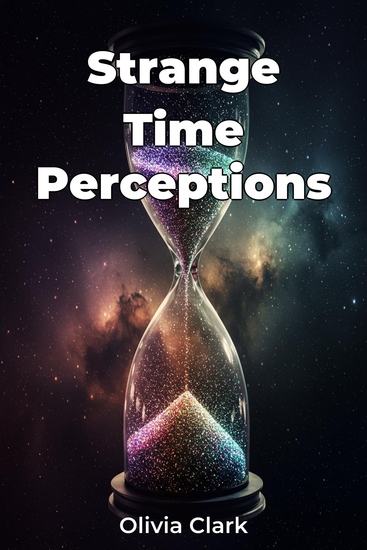
Strange Time Perceptions - cover

Strange Time Perceptions

Olivia Clarke

Translator A Ai

Publisher: Publifye

  • 0
  • 0
  • 0

Summary

Strange Time Perceptions explores the subjective experience of time, revealing how our brains construct this fundamental aspect of reality. The book highlights that our perception isn't fixed but is shaped by emotions, attention, and cognitive processes, such as how moments of crisis can seem to stretch on, demonstrating temporal distortion. It delves into the neuroscience behind our internal chronometer, examining brain regions like the basal ganglia and prefrontal cortex that contribute to our sense of timing.

 
The book progresses by first establishing the psychological and neurological basis of time perception. It then investigates specific phenomena like time dilation and the influence of memory, offering insights into how daily routines affect our subjective experience. Finally, the book explores practical applications, such as stress management and improved cognitive performance.

 
By synthesizing findings from psychology, neuroscience, and biology, Strange Time Perceptions provides a comprehensive understanding of this complex phenomenon, making it valuable to anyone interested in the workings of the human mind.
Available since: 04/03/2025.
Print length: 66 pages.

Other books that might interest you

  • Göbekli Tepe and Karahan Tepe: The History of Neolithic Anatolia’s Mysterious Religious Sites - cover

    Göbekli Tepe and Karahan Tepe:...

    Charles River Editors

    • 0
    • 0
    • 0
    Despite the fact some Neolithic communities grew to considerable sizes, they’re typically not considered when people think of the first ancient civilizations or the first major cities, so when German archaeologists discovered the archaeological site of Göbekli Tepe in southeastern Turkey in the 1990s, it created an academic firestorm that is still raging. Far from being just another settlement, Göbekli Tepe has been described as the world’s first temple and perhaps one of the locations where human civilization began. Subsequent archaeological work at Göbekli Tepe has revealed that the site was a spiritual center for the local population during a time when humans were undergoing a transition as hunter-gatherers in the Paleolithic Period to a more sedentary lifestyle in the Neolithic Period, more than 10,000 years ago. Further research in the disciplines of anthropology, religion, and history indicate that the activity at Göbekli Tepe subsequently set the tone for elements of Neolithic and Bronze Age religion and ideology in the Near East, especially in Anatolia (roughly equivalent with modern Turkey).  
    Likewise, archaeologists have been able to determine when Karahan Tepe was built, possibly how long it was occupied, and that it was probably related to the larger, better-known site of Göbekli Tepe, but several important questions remain. What was the purpose of Karahan Tepe? Was Karahan Tepe a permanent or semi-permanent settlement? What was the background of the people who built the site, and how long did it take them to build it?  
    Karahan Tepe was just one of many sites in ancient modern Turkey, and as part of a greater complex, Karahan Tepe represents one of the earliest known attempts to build a complex society, so understanding more about the site can tell historians about how the process worked. 
    Show book
  • People Power Change - Organizing for Democratic Renewal - cover

    People Power Change - Organizing...

    Marshall Ganz

    • 0
    • 0
    • 0
    At a moment in which our everyday practice of democracy has atrophied, and political, economic, and technological forces have weakened our capacity for collective action, People, Power, Change is a once-in-a-generation book for anyone who wants to create real and lasting change. 
     
    Marshall Ganz is one of the world’s leading authorities on democratic leadership, organizing, and action and this book is the culmination of his decades of teaching, research, and practice. In People, Power, Change Ganz offers students, educators, and organizers access to the craft he has learned, adapted, and shared over the last half-century of creating effective collective action. It is not a blueprint, but a road map.  
     
    Ganz explores the values, ideas, and craft core to the practice of organizing and offers an actionable framework for how to actually do it. He focuses the book on the creation and substance of relationships, the fuel of values and narrative, the resources and power of strategy, the necessity of structure, and the accountability of action. Across these five organizing practices, Ganz weaves in his personal experiences from a lifetime of organizing in iconic social movements and campaigns to illustrate how collective action actually works and to build the practices and skills that must be developed to do it with intention and with success. 
     
    “If there was ever a moment when this message needed to be heard, this is it! Read it, and then get to work!”—Bill McKibben, founder of 350.org and Third Act 
     
    This audiobook contains a supplemental PDF.
    Show book
  • Memory - A Very Short Introduction 2nd Edition - cover

    Memory - A Very Short...

    Jonathan K. Foster

    • 0
    • 0
    • 0
    How can we remember certain events from our childhood as if they happened yesterday and then forget we did last week? Why does our memory seem to work well at some times but not at others? What happens when it goes wrong? Can memory be improved or manipulated by psychological techniques, or even 'brain implants'? How does memory grow and change as we age? And what of so-called 'recovered' memories? 
     
    This Very Short Introduction brings together the latest research in neuroscience and psychology to address these important questions around the science of memory. It weaves case studies, anecdotes, and even literature and philosophy into its explanations of how memory works and why we can't live without it. This edition includes major updates that take into account recent developments in our understanding of memory, especially in areas such as sleep and healthy aging.
    Show book
  • Crucibles - How Formidable Rites of Passage Shape the World’s Most Elite Organizations - cover

    Crucibles - How Formidable Rites...

    James R. McNeal, J. Eric Smith

    • 0
    • 0
    • 0
    Throughout human history, civilizations have stratified their citizens, often by establishing royal, priestly, executive, or warrior castes. Many who have achieved elite-level power joined their civilizations' premier organizations not through birthright or sociopolitical attainment, but rather by completing codified rites of passage that demonstrated their exceptional physical, spiritual, or psychological capabilities, and their deep commitment to their cultures. 


    Crucibles: History's Most Formidable Rites of Passage explores fourteen elite organizations, with a special emphasis on the onerous trials designed to cull initiates from aspirants. It analyzes the underlying commonalities of such trials, describing how they work, why people are willing to subject themselves to such rigors, and how such tests benefit or harm the organizations that require them. 


    Crucibles distills both positive and negative perspectives on tests and trials into actionable concepts which may be deployed in modern business, social, academic, or political spheres. In a time where there is a long-overdue focus on the ethical roles and responsibilities of cultural gatekeepers, Crucibles stands as a valuable resource for leaders and managers seeking to convert historic practices into useful, moral, and legal modern policies.
    Show book
  • The Enneagram of the Soul - A 40-Day Spiritual Companion for the 9 Types - cover

    The Enneagram of the Soul - A...

    Nhien Vuong

    • 0
    • 0
    • 0
    A guide to your spiritual journey of transformation using the Enneagram.   “The Enneagram of the Soul invites us on a journey of profound self-discovery.” —from the foreword by Russ Hudson, bestselling coauthor of The Wisdom of the Enneagram  The Enneagram of the Soul is inspired by over two decades of inner and outer work with the Enneagram by leading expert Nhien Vuong. Nhien provides a path to wholeness for the self, enabling the reader to be steered gently yet firmly away from the trap of solely identifying with their personality type, so they can live more fully from their divine nature.   This book is divided into two parts. Part 1 shares nine Enneagram-informed principles that guide one’s journey of transformation using the Enneagram, nine contemplative practices to propel and support the transformational process, and nine prayers to lend heart to the journey. Part 2 offers forty activations, which consist of very brief questions, reminders, or practices on forty different themes customized for each of the nine Enneagram personality types. When we begin to access the wholeness of all nine Enneagram energies working in concert, we experience a greater sense of inner peace, purpose, and fulfillment.   “An important and uniquely useful contribution to the Enneagram literature in that she provides a pathway for the types, built around practices and principles.” —Beatrice Chestnut, author of The Enneagram Guide to Waking Up
    Show book
  • It's Too Late Now - The Autobiography of a Writer - cover

    It's Too Late Now - The...

    A. Milne

    • 0
    • 0
    • 0
    With characteristic self-deprecating humour, A.A. Milne recalls the formative events of his life: from a blissfully happy childhood to the writing of Winnie-the-Pooh and Christopher Robin. 
     
    ––––––––––––– 
     
    In his classic memoirs A. A. Milne, with his characteristic self-deprecating humour, recalls a blissfully happy childhood in the company of his brothers, and writes with touching affection about his father whom he adored. 
     
    From Westminster School he won a scholarship to Cambridge University where he edited the university magazine, Granta. He then went out into the world, determined to be a writer. He was assistant editor at Punch Magazine and enjoyed great success with his novels, plays and stories. And of course he is best remembered for his children's novels and verses featuring Winnie-the-Pooh and Christopher Robin. 
     
    This is both an account of how a writer was formed and a charming period piece on literary life – Milne met countless famous authors including H. G. Wells, J. M Barrie of Peter Pan fame and Rudyard Kipling. 
     
    ––––––––––––– 
     
    * Praise for It’s Too Late Now * 
     
    ‘A funny book, beautifully written’ NEIL GAIMAN 
     
    ‘A fascinating and insightful read into one of the greatest authors’ INDEPENDENT 
     
    ‘Warm and candid’ NEW YORK TIMES
    Show book