Begleiten Sie uns auf eine literarische Weltreise!
Buch zum Bücherregal hinzufügen
Grey
Einen neuen Kommentar schreiben Default profile 50px
Grey
Jetzt das ganze Buch im Abo oder die ersten Seiten gratis lesen!
All characters reduced
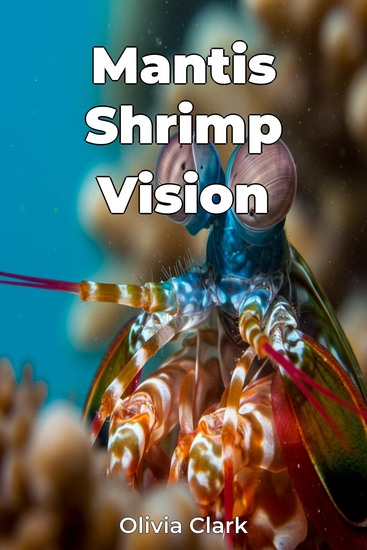
Mantis Shrimp Vision - cover

Mantis Shrimp Vision

Olivia Clarke

Übersetzer A Ai

Verlag: Publifye

  • 0
  • 0
  • 0

Beschreibung

Mantis Shrimp Vision unveils the extraordinary sensory world of mantis shrimp, creatures possessing visual systems that dwarf human capabilities. These marine animals boast up to twelve photoreceptor types, far exceeding our mere three, potentially unlocking vastly more complex color discrimination. The book explores how these unique optical designs and their polarized light vision evolved, driven by the ecological pressures of their diverse environments.

 
The book balances scientific rigor with accessibility, integrating ecological, behavioral, and evolutionary perspectives to provide a comprehensive analysis. Beginning with an overview of color vision and essential background in optics and neuronal processing, the book progresses to detail the anatomy of the mantis shrimp eye, focusing on the midband region responsible for their exceptional color perception.

 
It delves into the physiological mechanisms of color processing, drawing from diverse research and collaborative studies. While debates continue regarding the functional role and neural mechanisms of their vision, this exploration offers valuable insights into sensory ecology, evolutionary biology, and potential applications in novel imaging technologies.
Verfügbar seit: 27.02.2025.
Drucklänge: 58 Seiten.

Weitere Bücher, die Sie mögen werden

  • Stock Market Investing Audio Book for Beginners - Money Making How To Guide for New Entrepreneurs - cover

    Stock Market Investing Audio...

    Brian Mahoney

    • 0
    • 0
    • 0
    END MONEY WORRIES! 
    Stock Market Investing Audio Book for Beginners 
    Money Making How To Guide for New Entrepreneurs 
    Introduction 
    Chapter 1	How to begin stock market investing 
    Chapter 2	Getting Started 
    Chapter 3	Top Investment Strategies 
    Chapter 4	How to minimize the risk of losing money 
    Chapter 5	Stock Market terms for beginners 
    Chapter 6	Financial Independence Retire Early 
    Conclusion 
    If you are always wanted to take part in the Stock Market but did not have the time to learn, now is the time to get started with this quick and easy audio book for beginners. It has everything you need to get started on the path to the exciting world of stock market investing.  
    For less than the cost of 1 movie ticket you could have the knowledge to change your life financially! So purchase this amazing audio book today! 
    Don't wait... You'll wait your life away!
    Zum Buch
  • Introduction to Solid State Physics - The Basics of Solid State Physics - cover

    Introduction to Solid State...

    Mark Hedges

    • 0
    • 0
    • 0
    Crystal structure and bonding are fundamental to understanding the physical properties of solid materials. A crystal is a solid material whose atoms, ions, or molecules are arranged in a highly ordered, repeating pattern extending in all three spatial dimensions. The smallest repeating unit of this structure is called the unit cell. The unit cell defines the crystal’s lattice parameters, including the edge lengths a,b,ca, b, c and the angles between them α,β,γ\alpha, \beta, \gamma. The crystal lattice is generated by translating the unit cell along its edges, forming the complete crystalline structure. 
    Crystals are classified according to their symmetry into seven crystal systems: cubic, tetragonal, orthorhombic, monoclinic, triclinic, hexagonal, and rhombohedral. Each system is characterized by specific symmetry elements such as mirror planes, rotation axes, and inversion centers. The Bravais lattices describe the 14 distinct lattice types that can fill three-dimensional space using translational symmetry. The atomic positions within a unit cell are described by fractional coordinates relative to the lattice vectors. In a face-centered cubic (FCC) lattice, atoms are located at the corners and the centers of the faces of the cube, while in a body-centered cubic (BCC) lattice, an additional atom is placed at the center of the cube.
    Zum Buch
  • Distributed Ledger Technology - Navigating the Future of Decentralized Systems - cover

    Distributed Ledger Technology -...

    SAM CAMPBELL

    • 0
    • 0
    • 0
    “Distributed Ledger Technology" is the definitive guide for anyone looking to grasp the complex world of distributed ledger technology (DLT). 
    Key features of the book include:Understanding the Basics: An introduction to the fundamental concepts of distributed ledgers, including the technology's origins, how it works, and key terminology.Blockchain and Beyond: A deep dive into blockchain, the most recognized form of DLT, and an exploration of other types of distributed ledgers, highlighting their unique features and applications.Cryptography in DLT: An explanation of the role of cryptography in ensuring the security and integrity of transactions on a distributed ledger.Consensus Mechanisms: A detailed look at how distributed networks achieve agreement on the validity of transactions, covering various consensus mechanisms such as Proof of Work, Proof of Stake, and others.Smart Contracts: An introduction to smart contracts, self-executing contracts with the terms of the agreement directly written into code, and their potential to automate and streamline processes.DLT in Practice: Examination of real-world applications of DLT across various sectors, showcasing how this technology is being used to solve longstanding issues and create new opportunities.Challenges and Considerations: Discussion of the challenges facTing DLT adoption, including scalability, regulatory hurdles, and privacy concerns, along with potential solutions.The Future of DLT: Insights into emerging trends, future applications, and the potential societal impacts of widespread DLT adoption. 
    This book will deepen your understanding and spark your imagination about the possibilities of a more decentralized and transparent digital future.
    Zum Buch
  • In Praise of Floods - The Untamed River and the Life It Bring - cover

    In Praise of Floods - The...

    James C. Scott

    • 0
    • 0
    • 0
    James C. Scott reframes rivers as alive and dynamic, revealing the consequences of treating them as resources for our profit Rivers, on a long view, are alive. They are born; they change; they shift their channels; they forge new routes to the sea; they move both gradually and violently; they can teem (usually) with life; they may die a quasi-natural death; they are frequently maimed and even murdered. It is the annual flood pulse—the brief time when the river occupies the floodplain—that gives a river its vitality, but it is human engineering that kills it, suppressing the flood pulse with dams, irrigation, siltation, dikes, and levees. In demonstrating these threats to the riverine world, award-winning author James C. Scott examines the life history of a particular river, the Ayeyarwady (Irrawaddy) of Burma, the heartland and superhighway of Burman culture. Scott opens our understanding of rivers to encompass their entirety—tributaries, wetlands, floodplains, backwaters, eddies, periodic marshlands, and the assemblage of life forms dependent on rivers for their existence and well-being. For anyone interested in the Anthropocene and the Great Acceleration, rivers offer a striking example of the consequences of human intervention in trying to control and domesticate a natural process, the complexity and variability of which we barely understand.
    Zum Buch
  • A Taste for Poison - Eleven Deadly Molecules and the Killers Who Used Them - cover

    A Taste for Poison - Eleven...

    Neil Bradbury Ph.D.

    • 0
    • 0
    • 0
    This program includes an epilogue and acknowledgements read by the author“A fascinating tale of poisons and poisonous deeds which both educates and entertains.” --Kathy ReichsAs any reader or listener of murder mysteries can tell you, poison is one of the most enduring—and popular—weapons of choice for a scheming murderer. It can be slipped into a drink, smeared onto the tip of an arrow or the handle of a door, even filtered through the air we breathe. But how exactly do these poisons work to break our bodies down, and what can we learn from the damage they inflict?In a fascinating blend of popular science, medical history, and true crime, Dr. Neil Bradbury explores this most morbidly captivating method of murder from a cellular level. Alongside real-life accounts of murderers and their crimes—some notorious, some forgotten, some still unsolved—are the equally compelling stories of the poisons involved: eleven molecules of death that work their way through the human body and, paradoxically, illuminate the way in which our bodies function.Drawn from historical records and current news headlines, A Taste for Poison weaves together the tales of spurned lovers, shady scientists, medical professionals and political assassins to show how the precise systems of the body can be impaired to lethal effect through the use of poison. From the deadly origins of the gin & tonic cocktail to the arsenic-laced wallpaper in Napoleon’s bedroom, A Taste for Poison leads listeners on a fascinating tour of the intricate, complex systems that keep us alive—or don’t.A Macmillan Audio production from St. Martin's Press
    Zum Buch
  • The Gambler's Fallacy - Believing Past Events Influence Future Probabilities - cover

    The Gambler's Fallacy -...

    William Rands

    • 0
    • 0
    • 0
    The Gambler's Fallacy, also known as the Monte Carlo fallacy, is a common cognitive bias in which individuals believe that past events can influence future random outcomes. It is particularly evident in gambling scenarios, where players wrongly assume that a string of bad or good luck must be followed by a reversal. The core principle of the fallacy lies in the misinterpretation of probability. In reality, the odds of a specific event occurring remain constant, regardless of what happened in the past. This misunderstanding can lead to poor decision-making and increased risks. 
    The roots of the Gambler's Fallacy can be traced back to the early days of gambling, particularly in games of chance such as roulette. A notable historical example occurred in 1913 at the Monte Carlo casino, where the ball in a roulette wheel landed on black 26 times in a row. Spectators, believing the outcome was due for a change, began betting heavily on red. However, the fallacy is that each spin of the wheel is an independent event, and the probability of landing on red or black remains the same, regardless of previous outcomes. This phenomenon was named after the casino, where many people lost large sums due to their misguided beliefs. 
    In the context of games like roulette or coin flips, every spin or toss is independent, with no memory of past results. A fair coin, for example, has a 50% chance of landing heads or tails on each toss. However, when gamblers fall prey to the Gambler's Fallacy, they believe that if the coin lands heads several times in a row, the chances of tails increase with each successive flip. This misunderstanding can be disastrous, especially when it leads to reckless betting behavior.
    Zum Buch