Join us on a literary world trip!
Add this book to bookshelf
Grey
Write a new comment Default profile 50px
Grey
Subscribe to read the full book or read the first pages for free!
All characters reduced
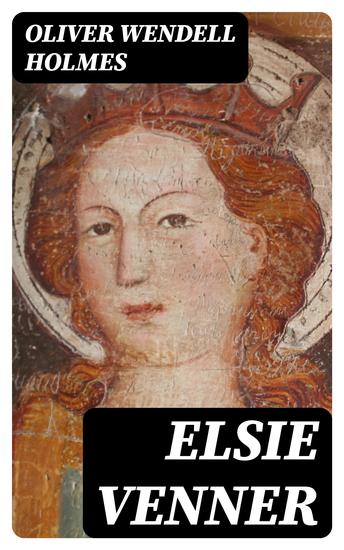
Elsie Venner - cover

Elsie Venner

Oliver Wendell Holmes

Publisher: DigiCat

  • 0
  • 0
  • 0

Summary

"Elsie Venner," a novel published in 1861 by Oliver Wendell Holmes, weaves a rich tapestry of romance, psychology, and moral philosophy set against the backdrop of New England society. Known for its intricate narrative style, Holmes employs a detailed and introspective lens, exploring the complexities of human nature through the protagonist, Elsie, who embodies both innocence and innate ferocity. The book's unique exploration of the connection between character and environment, coupled with its innovative use of vivid imagery and symbolism, places it within the tradition of American Transcendentalism while critically engaging with themes of gender and identity that would resonate in later literature. Oliver Wendell Holmes, a prominent figure in American literature and medicine, was deeply influenced by his own experiences as a physician and his keen observations of society and human behavior. His background in both the literary and medical fields provided a unique perspective on the psychological implications of morality and social expectations, often reflected in his writing. Holmes's ability to bridge these two seemingly disparate worlds enabled him to craft a narrative that delves into the intricacies of mental states and societal pressures. "Elsie Venner" is a must-read for those seeking an insightful examination of character and societal norms in 19th-century America. With its profound psychological insights and nuanced character development, the novel invites readers to reflect on the nature of humanity and the influence of one's environment, making it a timeless piece for scholars and casual readers alike.
Available since: 09/15/2022.
Print length: 345 pages.

Other books that might interest you

  • The Awakening - cover

    The Awakening

    Kate Chopin

    • 0
    • 0
    • 0
    Experience the timeless beauty of one of America's great literary works with "The Awakening" by Kate Chopin, now available in "The Sound of Classics" series. Expertly narrated by Elizabeth Mitchell, this audiobook brings to life the story of Edna Pontellier and her journey of self-discovery, set against the backdrop of 19th century Louisiana. Mitchell's nuanced and captivating delivery captures every detail of Chopin's lyrical prose, taking listeners on a journey through the innermost thoughts and emotions of the unforgettable protagonist. Published by The Sounding Page, this audiobook is a stunning tribute to the power of language and the beauty of great literature. Whether you are a longtime fan of "The Awakening" or discovering it for the first time, this audiobook is the perfect way to experience the enduring appeal of this classic American work.
    Show book
  • Magic Shop The (Unabridged) - cover

    Magic Shop The (Unabridged)

    H. G. Wells

    • 0
    • 0
    • 0
    Out for a walk in London one day, Gip and his father happen upon a magic shop. At Gip's urging, the two go in - and things grow more and more curious by the minute. Counters, store fixtures, and mirrors seem to move around the room, and the shopkeeper is most mysterious of all. Gip is thrilled by all he sees, and his father is at first amused, but when things become stranger and sinister father is no longer sure where reality ends and illusion begins. Fantastical illustrations underscore the macabre atmosphere of the tale, make this a perfect book read aloud together again and again.
    Show book
  • Æpyornis Island - From their pens to your ears genius in every story - cover

    Æpyornis Island - From their...

    H G Wells

    • 0
    • 0
    • 0
    Herbert George Wells was born on September 21st, 1866 at Atlas House, 46 High Street, Bromley, Kent. He was the youngest of four siblings and his family affectionately knew him as ‘Bertie’.  
    The first few years of his childhood were spent fairly quietly, and Wells didn’t display much literary interest until, in 1874, he accidentally broke his leg and was left to recover in bed, largely entertained by the library books his father regularly brought him. Through these Wells found he could escape the boredom and misery of his bed and convalescence by exploring the new worlds he encountered in these books.  
    From these humble beginnings began a career that was, after several delays, to be seen as one of the most brilliant of modern English writers.    
    Able to write comfortably in a number of genres he was especially applauded for his science fiction works such as The Time Machine and War of the Worlds but his forays into the social conditions of the times, with classics such as Kipps, were almost as commercially successful.  His short stories are miniature masterpieces many of which bring new and incredible ideas of science fiction to the edge of present day science fact.  Wells also received four nominations for the Nobel Prize in Literature 
    Despite a strong and lasting second marriage his affairs with other women also brought the complications of fathering other children.  His writings and work against fascism, as well as the promotion of socialism, brought him into increasing doubts with and opposition to religion.  His writings on what the world could be in works, such as A Modern Utopia, are thought provoking as well as being plausible, especially when viewed from the distressing times they were written in. 
    His diabetic condition pushed him to create what is now the largest Diabetes charity in the United Kingdom.  Wells even found the time to run twice for Parliament. 
    It was a long, distinguished and powerfully successful career by the time he died, aged 79, on August 13th, 1946.
    Show book
  • Little Women - cover

    Little Women

    Louisa May Alcott

    • 0
    • 0
    • 0
    Little Women is a coming-of-age novel written by American novelist Louisa May Alcott, originally published in two volumes in 1868 and 1869. The story follows the lives of the four March sisters—Meg, Jo, Beth, and Amy—and details their passage from childhood to womanhood. Loosely based on the lives of the author and her three sisters, it is classified as an autobiographical or semi-autobiographical novel.
    Show book
  • HorrorBabble's Subterranean Terror - 10 Stories of the Dark Places Beneath Us - cover

    HorrorBabble's Subterranean...

    Robert Bloch, Edmond Hamilton,...

    • 0
    • 0
    • 0
    A collection of horror stories set in shadowy caverns, crypts, and other undesirable hollows. 
    Contents: 
    Far Below by Robert Barbour Johnson (Weird Tales, June-July 1939) 
    The story of dreadful creatures burrowing up into the New York subway. 
    The Creeper in the Crypt by Robert Bloch (Weird Tales, July 1937) 
    An unusual case of kidnapping in witch-haunted Arkham. 
    The Secret in the Tomb by Robert Bloch (Weird Tales, May 1935) 
    A man answers an inexplicable summons from beyond the grave. 
    Murder in the Grave by Edmond Hamilton (Weird Tales, February 1935) 
    A night of terror ten feet below the surface of the ground. 
    The Thing in the Cellar by David H. Keller (Weird Tales, March 1932) 
    The tale of a terrified little boy, and his fear of what might be lurking in the basement. 
    It Walks by Night by Henry Kuttner (Weird Tales, December 1936) 
    A ghastly horror that stalked through the crypts beneath an old graveyard. 
    The Graveyard Rats by Henry Kuttner (Weird Tales, March 1936) 
    A cemetery caretaker must exterminate a colony of monstrous rats. 
    The People of the Pit by Abraham Merritt (All-Story Weekly, January 1918) 
    An individual descended much too deeply into the heart of the Earth. 
    The Epiphany of Death by Clark Ashton Smith (The Fantasy Fan, July 1934) 
    A shocking revelation in the catacombs of Ptolemides. 
    The Seed from the Sepulchre by Clark Ashton Smith (Weird Tales, October 1933) 
    In the Venezuelan jungle, a diabolical plant lived on human life.
    Show book
  • Frankenstein - cover

    Frankenstein

    Mary Shelley

    • 0
    • 0
    • 0
    Frankenstein tells the story of Victor Frankenstein, a young scientist who creates a sapient creature in an unorthodox scientific experiment. Shelley started writing the story when she was 18, and the first edition was published anonymously in London on 1 January 1818, when she was 20. Her name first appeared in the second edition, which was published in Paris in 1821.Shelley travelled through Europe in 1815, moving along the river Rhine in Germany, and stopping in Gernsheim, 17 kilometres (11 mi) away from Frankenstein Castle, where, two centuries before, an alchemist had engaged in experiments.[note She then journeyed to the region of Geneva, Switzerland, where much of the story takes place. Galvanism and occult ideas were topics of conversation for her companions, particularly for her lover and future husband Percy B. Shelley. In 1816 Mary, Percy and Lord Byron had a competition to see who could write the best horror story. After thinking for days, Shelley was inspired to write Frankenstein after imagining a scientist who created life and was horrified by what he had made.Though Frankenstein is infused with elements of the Gothic novel and the Romantic movement, Brian Aldiss has argued for regarding it as the first true science-fiction story. In contrast to previous stories with fantastical elements resembling those of later science fiction, Aldiss states, the central character "makes a deliberate decision" and "turns to modern experiments in the laboratory" to achieve fantastic results. The novel has had a considerable influence on literature and on popular culture; it has spawned a complete genre of horror stories, films, and plays.Since the publication of the novel, the name "Frankenstein" has often been used, erroneously, to refer to the monster, rather than to his creator/father.
    Show book