Join us on a literary world trip!
Add this book to bookshelf
Grey
Write a new comment Default profile 50px
Grey
Subscribe to read the full book or read the first pages for free!
All characters reduced
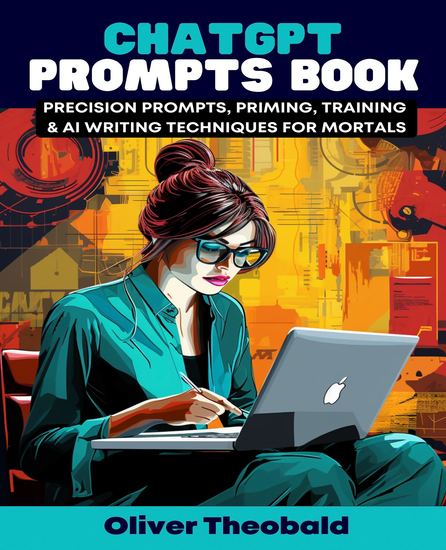
ChatGPT Prompts Book - Precision Prompts Priming Training & AI Writing Techniques for Mortals - cover

ChatGPT Prompts Book - Precision Prompts Priming Training & AI Writing Techniques for Mortals

Oliver Theobald

Publisher: Packt Publishing

  • 0
  • 0
  • 0

Summary

The course embarks on an enlightening journey through the world of ChatGPT, starting from the very basics of understanding what ChatGPT is, to delving deep into the mechanics of crafting precision prompts that unlock its full potential. From the outset, you'll be introduced to the foundational elements that make ChatGPT an indispensable tool for a wide range of applications, setting the stage for a comprehensive exploration of its capabilities.

As we progress, the course meticulously unfolds the layers of prompt writing techniques, priming strategies, and training methodologies that are designed to enhance your interaction with AI. You'll learn how to craft prompts for common use cases, navigate the nuances of content creation, translation tasks, and personalized tutoring, all while leveraging ChatGPT's advanced AI art capabilities.

The course culminates by focusing on practical applications and exploring advanced prompt training and role prompting techniques. This final stretch is designed to solidify your understanding and empower you with the confidence to employ ChatGPT across various scenarios, from professional content writing to creative explorations.
Available since: 02/28/2024.
Print length: 104 pages.

Other books that might interest you

  • Trolling Ourselves to Death - Democracy in the Age of Social Media (Oxford Studies in Digital Politics) - cover

    Trolling Ourselves to Death -...

    Jason Hannan

    • 0
    • 0
    • 0
    Almost forty years ago, Neil Postman argued that television had brought about a fundamental transformation to democracy. By turning entertainment into our supreme ideology, television had recreated public discourse in its image and converted democracy into show business. In Trolling Ourselves to Death, Jason Hannan builds on Postman's classic thesis, arguing that we are now not so much amusing, as trolling ourselves to death. 


    Contrary to the popular view of the troll as an exclusively anonymous online prankster, Hannan asserts that trolls have emerged from the cave, so to speak. Trolls now include politicians, performers, patriots, and protesters. What was once a mysterious phenomenon limited to the darker corners of the Internet has since gone mainstream, eroding our public culture and changing the rules of democratic politics. 


    Synthesizing media ecology with historical materialism, Hannan explores the disturbing rise of political unreason in the form of mass trolling and sheds light on the proliferation of disinformation, conspiracy theory, "cancel culture," and digital violence. Taking inspiration from Robert Brandom's innovative reading of Georg Wilhelm Friedrich Hegel, Trolling Ourselves to Death makes a case for building "a spirit of trust" to curb the epidemic of mass distrust that feeds the plague of political trolling.
    Show book
  • Mining - The Technology and Engineering of Mining - cover

    Mining - The Technology and...

    Daniel Shore

    • 0
    • 0
    • 0
    Mining is the process of extracting valuable minerals or other geological materials from the earth. It involves various techniques such as drilling, blasting, and excavation to access deposits underground or from the surface. These minerals can include coal, metals, gemstones, and oil shale, among others. Mining plays a crucial role in supplying raw materials for various industries, from construction to manufacturing, but it also poses environmental and social challenges that require careful management and regulation.
    Show book
  • Augmented Reality and Virtual Reality - Exploring Digital Worlds - cover

    Augmented Reality and Virtual...

    Craig Dames

    • 0
    • 0
    • 0
    Augmented Reality (AR) and Virtual Reality (VR) have transformed the way we interact with digital environments, offering immersive experiences that blend the real and virtual worlds. While both technologies enhance perception, they do so in fundamentally different ways. AR overlays digital elements onto the real world, enriching reality with interactive, computer-generated enhancements. VR, on the other hand, creates fully immersive digital environments, transporting users into a completely virtual space where physical surroundings disappear. 
    The evolution of AR and VR has been a fascinating journey, driven by advancements in computing power, graphics rendering, and sensor technology. Early experiments in virtual reality can be traced back to the 1960s, with devices like the Sensorama and the first head-mounted displays. However, it wasn’t until the 2010s that VR technology became widely accessible, thanks to companies like Oculus, HTC, and Sony. AR’s development followed a different trajectory, gaining mainstream attention with mobile applications like Pokémon GO and smart glasses designed for enterprise use. 
    One of the key distinctions between AR and VR is their method of user interaction. AR enhances real-world experiences without replacing them, allowing users to see both physical and digital elements simultaneously. This has led to widespread adoption in fields such as retail, education, and healthcare. VR, in contrast, immerses users in entirely synthetic environments, making it ideal for gaming, training simulations, and remote collaboration. The level of immersion is influenced by factors such as display resolution, field of view, motion tracking, and haptic feedback, all of which contribute to a sense of presence within a virtual space.
    Show book
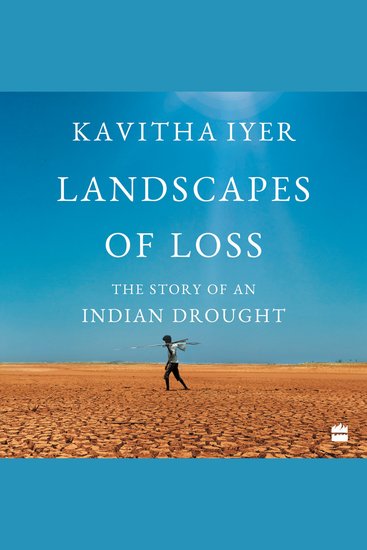
  • Landscapes of Loss - The Story of an Indian Drought - cover

    Landscapes of Loss - The Story...

    Kavitha Iyer, Shivani Vakil Savant

    • 0
    • 0
    • 0
    WINNER OF THE TATA LITERATURE LIVE FIRST BOOK AWARD (NON-FICTION) 2021 
     
    Maharashtra, India's richest state by GDP, has its eyes set on becoming the country's first trillion-dollar economy by 2025. At the same time, Marathwada -- a historically backward part of the state adjoining the distressed Vidarbha region -- has seen a surge in farmer suicides. 
    At the heart of the crisis is a cyclical drought that has persisted for almost a decade. Relief packages and loan waivers have not reversed the trend. On the contrary, the stories of dystopia grow more tragic every year as thousands of farmer families flee to the big cities, while those who stay back are plagued by bad credit and crop loss. 
    Landscapes of Loss tells the story of Marathwada through the accounts of its people: marginal farmers, Dalits, landless labourers, farm widows and children. It lays bare the complex factors that have brought the region to this pass -- a story representative, in many ways, of the agrarian unrest in large parts of rural India.
    Show book
  • Underworld The: Book Summary & Analysis - cover

    Underworld The: Book Summary &...

    Briefly Summaries

    • 0
    • 0
    • 0
    This is a concise summary and analysis of The Underworld , by Susan Casey.
     
    It is not the original book and is not affiliated with or endorsed by Susan Casey.
     
    Ideal those seeking a quick and insightful overview.
    
     
    The Underworld takes readers on an exhilarating exploration of the mysterious and often dangerous world beneath the surface of the ocean. The book delves into the lives of marine creatures, underwater explorers, and scientists who study the deep sea, shedding light on the wonders and perils of this largely unexplored realm. Through vivid storytelling and scientific insights, it highlights the significance of the ocean's depths in shaping life on Earth.
    Show book
  • Peak of the Devil: 100 Questions About Peak Oil Answered - cover

    Peak of the Devil: 100 Questions...

    Chip Haynes

    • 0
    • 0
    • 0
    What’s that peak oil thing you keep jabbering on about? 
    “Peak oil” is the phrase used to describe the point where the world’s oil supply, well, peaks. A fairly easy concept there. It’s the best we can do, and the best we will ever do, when it comes to pumping conventional crude oil out of the ground. After peak oil, it’s all downhill, production-wise. 
    Too many people think that peak oil means that the oil is going to run out, and that’s not quite right. The oil will not run out. Not ever. It will, over time, get increasingly rare and probably expensive (before it’s worthless), but there will always be at least a little bit of oil for us to use. Well, for someone to use. Probably not you and me, unless I sell a whole shipload of books. No pressure.
    Show book