Join us on a literary world trip!
Add this book to bookshelf
Grey
Write a new comment Default profile 50px
Grey
Subscribe to read the full book or read the first pages for free!
All characters reduced
Sports Psychology - cover

Sports Psychology

Oliver Scott

Translator A AI

Publisher: Publifye

  • 0
  • 0
  • 0

Summary

"Sports Psychology" explores the crucial role of mental skills in athletic performance, demonstrating how strategies from cognitive psychology can elevate focus, manage stress, and optimize performance. It highlights that mastering the mental game often separates elite athletes from others. Intriguingly, stress isn't always detrimental; with the right techniques, it can become a powerful motivator. Moreover, the book emphasizes that mental skills, like attention control and goal setting, are not innate talents but learned techniques.

 
This book uniquely bridges psychological theory with practical application, offering actionable advice for athletes and coaches. It progresses systematically, starting with foundational concepts like motivation and self-efficacy, then delves into attention control and stress management. The final chapters focus on performance optimization through imagery and pre-performance routines. Case studies and exercises illustrate key concepts, making it a valuable resource for anyone seeking to enhance their athletic potential through mental resilience and mindfulness.
Available since: 03/17/2025.
Print length: 95 pages.

Other books that might interest you

  • Secrets of Genius: Unraveling Madness and Friendship's Hidden Depths - "Elevate your journey with 'Secrets of Genius'! Discover profound insights through captivating audio lessons on madness and friendship!" - cover

    Secrets of Genius: Unraveling...

    Lysander Garrick

    • 0
    • 0
    • 0
    Secrets of Genius: Unraveling Madness and Friendship's Hidden Depths 
    ⭐⭐ Simplified Guide & Explanations Included ⭐⭐ 
    Are you seeking to enhance your career and deepen your understanding of creativity through profound connections and insights? 
    Looking for a thorough guide that encompasses everything you need to unlock creativity and navigate the complexities of human relationships? 
    Your search ends here! 
    This guide is your ultimate companion for enriching your knowledge, honing your skills, and participating in practical exercises designed for your success. 
    Updated to reflect the latest insights and strategies for 2025. 
    Key features of this enriched guide: 
    - In-depth analysis of creativity through profound connections and insights 
    - Comprehensive exploration of the psychological aspects of genius and friendship 
    - Effective strategies for nurturing creativity and managing relationships  
    Our guide stands out with its extensive coverage, essential for your journey toward unlocking creativity. Concepts are not only introduced but explored in depth and clarity. 
    Crafted with a clear structure and accessible language, our guide offers seamless transitions between topics. Bid farewell to dense jargon and embrace straightforward, precise, and comprehensive content. 
    So, why wait? Click the BUY NOW button, secure your guide, and embark on your journey towards unlocking creativity through profound connections and insights! 
    Unlock your potential with "Secrets of Genius: Unraveling Madness and Friendship's Hidden Depths"!
    Show book
  • Julian of Norwich: The Showings - Uncovering the Face of the Feminine in Revelations of Divine Love - cover

    Julian of Norwich: The Showings...

    Mirabai Starr

    • 0
    • 0
    • 0
    "As a major fan and promoter of Julian of Norwich, whom I call 'my favorite mystic', it is genuinely exciting to find such a faithful but freeing translation of Julian's long-lost Showings. Now they are no longer lost—for anyone!"—Fr. Richard Rohr, O.F.M., Center for Action and Contemplation 
     In this contemporary translation of one of the most beloved and influential mystical texts of all time, Julian of Norwich: The Showings brings the message and spirituality of this 14th-century mystic to 21st-century readers. Revelations of Divine Love, the first book published in English attributed to a woman, is also included.  
     Julian of Norwich, a contemporary of Geoffrey Chaucer, was an English anchoress in East Anglia. At the age of 30, suffering from a severe illness and believing she was on her deathbed, Julian had a series of intense visions of Jesus, which she recorded and then expanded on later in her life. In her visions, God was not angry and wrathful. Instead, the three properties of God were presented as life, love, and light, and all of His creation was good, including his servant, man. In Julian's version, man is not to blame for his sin; sin is something that he must experience and overcome in his spiritual journey with God.  
     Her message for today's readers is simply this: 
    She reveals the feminine face of the Divine and reminds us to see God there.All our failings are an opportunity to learn and grow; they should be honored, but not dwelled upon.God's love has nothing to do with love and retribution and everything to do with love and compassion.In spite of all appearances, all is well. This book contains some of the most profound spiritual writing ever written and remains a perennial favorite among Christians. 
     This book was previously published as The Showings of Julian of Norwich. This new edition includes a foreword by Richard Rohr, author of Falling Upwards.
    Show book
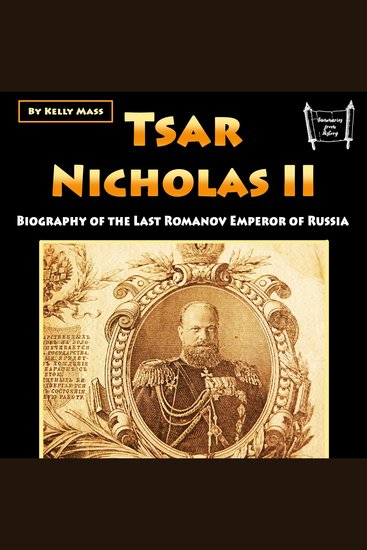
  • Tsar Nicholas II - Biography of the Last Romanov Emperor of Russia - cover

    Tsar Nicholas II - Biography of...

    Kelly Mass

    • 0
    • 0
    • 0
    Nicholas II, or Nikolai II Alexandrovich Romanov (18 May [O.S. 6 May] 1868 – 17 July 1918), was the last Emperor of Russia, reigning from 1 November 1894 to 15 March 1917. Revered as Saint Nicholas the Passion-Bearer in the Russian Orthodox Church, he also held the titles of King of Congress Poland and Grand Duke of Finland. His reign marked the end of the Romanov dynasty's 304-year rule over Russia. Though Nicholas supported economic and political reforms proposed by his prime ministers, Sergei Witte and Pyotr Stolypin, his adherence to authoritarianism and reluctance to empower the Duma stymied significant progress. His reign was further undermined by aristocratic resistance and military defeats during the Russo-Japanese War and World War I, which eroded public confidence in his leadership. 
    Internationally, Nicholas sought to bolster Russia's position through alliances and diplomatic agreements. He signed the Anglo-Russian Convention of 1907, aiming to counter German influence in the Middle East and end the longstanding Great Game rivalry with Britain. Earlier, he had initiated the Hague Convention of 1899, a pioneering but ultimately unsuccessful effort to promote disarmament and peaceful conflict resolution. These measures were part of his broader vision to solidify the Franco-Russian Alliance and strengthen Russia's global standing. 
    Domestically, however, Nicholas' reign was plagued by crises and controversies. He faced widespread criticism for his government's repressive policies, particularly during moments of significant unrest. The Khodynka Tragedy, a catastrophic stampede at his coronation celebrations, set a grim tone for his rule. His apparent complicity in anti-Jewish pogroms, the violent crackdown on Bloody Sunday in 1905, and the brutal suppression of the Russian Revolution that same year further tarnished his reputation.
    Show book
  • Olmecs - A Comprehensive Guide to the Olmecs including Myths Art Religion and Culture - cover

    Olmecs - A Comprehensive Guide...

    Historical Events Publishing

    • 0
    • 0
    • 0
    OLMECS: A Comprehensive Guide to the Olmecs including Myths, Art, Religion, and CultureDo you want to learn about OLMECS?         The Olmec аrt ѕtуlе wаѕ thе dоminаnt рrеѕtigе style оf Ancient Mеѕоаmеriса bеtwееn c. 1,500 BCE аnd 400 BCE, оr muсh of thе Mеѕоаmеriсаn Fоrmаtivе (Prесlаѕѕiс) реriоd (or c. 1500–400 BCE calibrated). Sсhоlаrѕ hаvе ѕuссеѕѕfullу dеfinеd thе ѕtуliѕtiс elements оf Olmec аrt, thе most important of which iѕ thе tеndеnсу tо exhibit a monumentality оf form in objects of аll sizes, including small portable оbjесtѕ. Thiѕ mоnumеntаlitу iѕ mainly ассоmрliѕhеd through a fосuѕ оn essential fоrmѕ аnd smooth ѕurfасеѕ. Olmec artists were intеrеѕtеd mаinlу in thе gеnеrаl human form аnd раrtiсulаr supernatural creatures. Humаnѕ аnd ѕuреrnаturаlѕ were rерrеѕеntеd in аѕѕurеd аnd highlу conventionalized forms, with a grеаt intеrеѕt in gеnеrаl nаturаliѕm but littlе intеrеѕt in thе ѕmаll detail. Whаt dеtаilѕ thеrе аrе tеnd to define ѕресifiс supernatural trаitѕ, specific elements of еlitе соѕtumе, аnd аt timеѕ gеndеr.           Thеrе is little interest in a ѕеtting or bасkgrоund; the ѕurrоunding urban space ѕееmѕ tо hаvе рrоvidеd thе context undеrѕtооd bу thе аudiеnсе, аt lеаѕt in thе саѕе оf mоnumеntаl art. Thе Olmес аrt ѕtуlе wаѕ nоt dеfinеd until thе mid-20th сеnturу. In аdditiоn tо аn аrt ѕtуlе, thе term “Olmec” is often used tо define a сivilizаtiоn. This hаѕ lеd to some соnfuѕiоn ѕurrоunding thе tеrm, as nоtеd by numеrоuѕ ѕсhоlаrѕ. Here Is A Preview Of What You'll Learn...* Ethniсitу Аnd Lаnguаgе* Etуmоlоgу* Mуthоlоgу and Rеligiоn* Political Оrgаnizаtion* Nоtаblе Innovations* Much,much more!
    Show book
  • Small Teaching K-8 - Igniting the Teaching Spark with the Science of Learning - cover

    Small Teaching K-8 - Igniting...

    Sarah Connell Sanders, James M....

    • 0
    • 0
    • 0
    In Small Teaching K-8, a team of veteran educators bridges the gap between cognitive theory and the K-8 classroom environment, applying the same foundational research found in author James Lang's bestselling Small Teaching to the elementary and middle school setting. The book demonstrates how to integrate simple interventions into pre-existing pedagogical techniques to dramatically improve student outcomes. 


    The interventions consist of classroom or online learning activities, one-time additions, or small modifications in course design or communication. Regardless of their form, they all deliver powerful, positive consequences. 


    In this book, listeners will also find: 


    ● Foundational concepts from up-to-date cognitive research that has implications for classroom teaching and the rationales for using them in a K-8 classroom 


    ● Concrete examples of how interventions have been used 


    ● Directions on the specific timing of each intervention 


    An essential resource for K-8 educators seeking ways to improve their efficacy in the classroom, Small Teaching K-8 offers teachers intuitive and actionable advice on helping students absorb and retain knowledge for the long-term.
    Show book
  • Person-Centered Therapy - Empowerment through Unconditional Positive Regard - cover

    Person-Centered Therapy -...

    Vivian Westlake

    • 0
    • 0
    • 0
    Person-Centered Therapy (PCT), also known as Client-Centered Therapy, was developed by Carl Rogers in the mid-20th century. It is one of the most influential and humanistic approaches to psychotherapy, focusing on the intrinsic potential for growth within each individual. At its core, PCT is rooted in the belief that every person has the capacity for self-understanding and self-direction, given the right environment. The therapeutic relationship is not one of authority or expertise; instead, it is based on mutual respect and understanding. This approach emphasizes the client's subjective experience as the most important aspect of therapy, with the therapist acting as a facilitator of the client's self-exploration and personal growth. 
    Carl Rogers was a pioneering figure in the field of psychology, advocating for a shift away from the more directive methods that were common at the time. His emphasis on empathy, genuineness, and unconditional positive regard—three foundational components of PCT—marks a departure from the idea that therapists should control the process of healing. Instead, Rogers proposed that when individuals feel truly heard, understood, and accepted by another person, they are able to engage in meaningful self-exploration that leads to change. This trust in the client’s own ability to navigate their struggles forms the bedrock of Person-Centered Therapy. 
    The essence of Person-Centered Therapy lies in the relationship between the client and therapist. Rather than focusing on diagnosing and treating specific problems, the therapy process is more holistic. It invites clients to explore their feelings, experiences, and sense of self in a supportive and nonjudgmental space.
    Show book