Join us on a literary world trip!
Add this book to bookshelf
Grey
Write a new comment Default profile 50px
Grey
Subscribe to read the full book or read the first pages for free!
All characters reduced
Ocean Tides Sing - cover

Ocean Tides Sing

Oliver Scott

Translator A AI

Publisher: Publifye

  • 0
  • 0
  • 0

Summary

Ocean Tides Sing examines the profound impact of modernization on Polynesian fishing communities, focusing on how traditional maritime traditions intersect with tourism and technology. These island nations face challenges balancing cultural preservation with economic development, particularly as motorboats alter traditional fishing practices and tourism places strain on marine ecosystems. The book highlights how these communities are adapting to maintain their livelihoods and cultural identities amidst ecological concerns.

 
The book explores the evolution of Polynesian fishing, the socio-economic impact of tourism, and ecological consequences. It contrasts historical fishing techniques, deeply connected to the ocean, with the effects of motorized vessels and market-driven economies. By analyzing these intertwined issues through ethnographic research, interviews, and environmental data, Ocean Tides Sing proposes ways to integrate traditional knowledge, modern technology, and responsible tourism for sustainable development.

 
Structured in three parts, the book begins by establishing the historical and cultural context of Polynesian fishing. It then investigates the impact of motorboats and tourism through specific island case studies, analyzing economic data and social dynamics. Finally, it synthesizes these findings to suggest strategies for community empowerment, ecological stewardship, and cultural heritage preservation.
Available since: 02/27/2025.
Print length: 70 pages.
Other books that might interest you

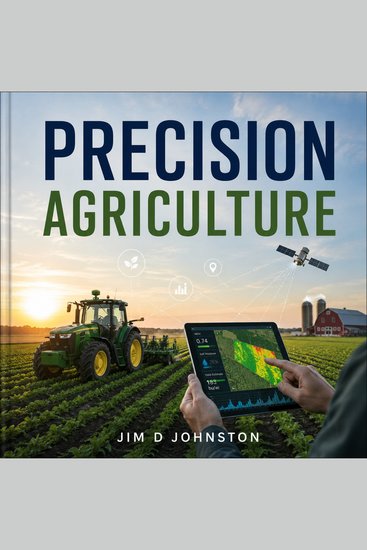
  • Precision Agriculture - cover

    Precision Agriculture

    Jim D Johnston

    • 0
    • 0
    • 0
    Discover how advanced technologies are transforming modern farming by enabling smarter decisions, higher productivity, and more sustainable agricultural practices. 
    Precision Agriculture is a comprehensive introduction to the innovative methods and technologies that help farmers optimize crop production, reduce waste, and improve resource management. By leveraging data, sensors, GPS, drones, artificial intelligence, and automated systems, precision agriculture enables more accurate and efficient farming operations than ever before. 
    This practical guide explains the principles, tools, and real-world applications of precision farming, making it ideal for students, agricultural professionals, researchers, entrepreneurs, and technology enthusiasts interested in the future of food production. 
    Inside, you will discover:The fundamentals of precision agriculture and smart farmingGPS, GIS, and location-based technologies in agricultureRemote sensing, drones, and satellite imaging applicationsIoT sensors for soil, water, weather, and crop monitoringData analytics and artificial intelligence in agricultural decision-makingVariable rate technology (VRT) and resource optimization techniquesPrecision irrigation and nutrient management strategiesAgricultural automation, robotics, and autonomous machinerySustainability, environmental impact, and climate-smart farming practicesReal-world case studies and future trends in digital agriculturePrecision Agriculture provides the knowledge and practical insights needed to understand and implement data-driven farming practices that increase productivity, profitability, and sustainability.
    Show book
  • Richard the Lionheart - A Life from Beginning to End - cover

    Richard the Lionheart - A Life...

    Hourly History

    • 0
    • 0
    • 0
    You might have heard of King Richard—the Lionhearted, the “good king” in the tales of Robin Hood. But what do you really know about this twelfth-century ruler of England? Do you know why he left England, or why he was taken prisoner by another sovereign as he tried to return? Did you know Richard had other brothers besides the famed scoundrel, Prince John? Have you heard tales of Richard not only as a missing king but as a leader who rode boldly into battle alongside his knights? 
    In this book, you’ll learn the actual story of King Richard, a king who may not have been exactly “good,” but was certainly brave, charismatic, and dashing—a historical character with a story to remember.
    Show book
  • Madras (Chennai) 1977 78 - Public Talk 6 - Can the brain renew itself? - cover

    Madras (Chennai) 1977 78 -...

    J. Krishnamurti

    • 0
    • 0
    • 0
    In this penetrating public talk, J. Krishnamurti explores the many pressures that shape and burden the human mind: fear, ambition, authority, tradition, conflict and the constant demand to become something other than we are. 
    He asks whether the brain can ever be completely free from psychological pressure—not through escape, discipline or belief, but through a clear understanding of thought itself. With characteristic insight, Krishnamurti invites the listener to observe how conditioning operates and to discover whether true freedom can arise through direct perception. 
    A profound enquiry into the nature of consciousness, inner conflict and the possibility of living with clarity, intelligence and freedom.
    Show book
  • Trash - A Poor White Journey - cover

    Trash - A Poor White Journey

    Cedar Monroe, Liz Theoharis

    • 0
    • 0
    • 0
    Every day across the US, 66 million poor white people pay the price for failing whiteness. In this sweeping debut, activist and chaplain Cedar Monroe writes indelibly about and for poor white people: about unlearning the American dream, untangling from white supremacy, and working for liberation alongside other poor folks. 


    Monroe introduces us to people who are poor and unhoused in a small town in Washington, who eke out a living on land that once provided timber for the nation. On the banks of the Chehalis River, we meet residents of the largest homeless encampment in the country, who face sweeps and evictions and are targeted by vigilantes before bringing their case to federal court. We watch a community grapple with desperation, government neglect, and its own racism. 


    Capitalism and colonialism have stolen land from Indigenous people, forced workers into dangerous jobs, and then left them to die when their labor was no longer needed. But what would happen if poor white folks rejected the empty promises of white supremacy and embraced solidarity with other poor people? What if they joined the resistance to the system that is, slowly or quickly, killing us all? Trash asks us to see anew the peril in which poor white people live and the choices we all must make.
    Show book
  • The Abyss Stares Back - Encounters with Deep-Sea Life (Volume 72) (Posthumanities) - cover

    The Abyss Stares Back -...

    Stacy Alaimo

    • 0
    • 0
    • 0
    As we see the catastrophic effects of the Anthropocene proliferate, advanced technologies also grant us greater access to the furthest reaches of the world's oceans, facilitating the discovery of countless new species. Stacy Alaimo explores the influence this newfound intimacy with the deep sea might have on our broader relationship to the nonhuman world. While many images of these abyssal creatures circulate as shallow clickbait, aesthetic representations can be enticing lures for speculating about their lives. 
     
    The Abyss Stares Back analyzes a diverse range of scientific, literary, and artistic accounts of deep-sea exploration. As she focuses on oft-overlooked creatures of the deep, Alaimo shows how depictions of the deep seas have been enmeshed in long colonial histories and racist constructions of a threatening abyss. 
     
    Drawing on feminist environmentalism, posthumanism, science and technology studies, and Indigenous and non-Western perspectives, Alaimo details how our understanding of science is fundamentally altered by aesthetic encounters with these otherworldly life forms. She argues that, although the deep sea is often thought of as a lifeless void, our increasing devastation of this realm underscores our ethical obligation to protect the biodiverse life in the depths. When the abyss stares back, it demands recognition.
    Show book
  • A Rare Recording of Anne Sexton Reading Her Poem "Wanting To Die" - cover

    A Rare Recording of Anne Sexton...

    Anne Sexton

    • 0
    • 0
    • 0
    Anne Sexton, born Anne Gray Harvey, (November 9, 1928 - October 4, 1974) was an American poet known for her highly personal, confessional verse. She won the Pulitzer Prize for poetry in 1967 for her book Live or Die. Her poetry details her long battle with bipolar disorder, suicidal tendencies, and intimate details from her private life, including relationships with her husband and children, whom she physically and sexually assaulted.
    Show book