Join us on a literary world trip!
Add this book to bookshelf
Grey
Write a new comment Default profile 50px
Grey
Subscribe to read the full book or read the first pages for free!
All characters reduced
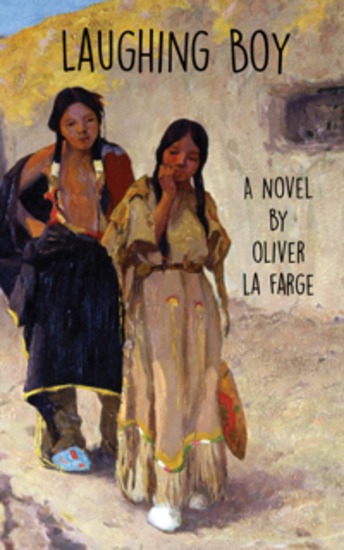
Laughing Boy (Classicus Edition) - cover

Laughing Boy (Classicus Edition)

Oliver La Farge

Publisher: Classicus

  • 0
  • 0
  • 0

Summary

Published in 1929, Laughing Boy by Oliver La Farge is a tender and evocative exploration of cultural identity, love, and resilience in the face of change. Set in the early 20th century, the novel provides a vivid portrayal of Navajo life during a period when traditional ways were increasingly threatened by external pressures and assimilationist policies.
     The story follows Laughing Boy, a proud and traditional Navajo man skilled in the arts of silversmithing and deeply connected to his heritage. When he meets Slim Girl, a fellow Navajo raised in an Anglo-American boarding school, their romance blooms, but it is fraught with challenges. Slim Girl, shaped by her experiences outside the Navajo community, longs to reconcile the cultural values she was taught with the traditions of her people. Their love becomes a microcosm of the broader cultural struggles faced by Indigenous peoples during this era, as they navigate the pull between preserving their identity and adapting to a changing world.
     La Farge, an anthropologist as well as a writer, brings a keen eye for detail and a genuine respect for Navajo culture to his work. However, the novel is not without controversy. Written by a non-Native author, Laughing Boy raises important questions about authenticity, representation, and the ethical dimensions of storytelling. Critics and readers have debated its depiction of Navajo characters and culture, examining the ways in which the novel reflects both the limitations and the aspirations of its time.
     Awarded the Pulitzer Prize for Fiction in 1930, Laughing Boy endures as a complex and multifaceted work. It invites readers to reflect on themes of love, belonging, and cultural survival while grappling with the legacies of colonization and assimilation. For modern audiences, the novel serves as both a historical artifact and a starting point for deeper engagement with Indigenous voices and perspectives.
Available since: 01/14/2025.

Other books that might interest you

  • Mateo Falcone - cover

    Mateo Falcone

    Prosper Mérimée

    • 0
    • 0
    • 0
    There are stories that strike like a bullet—swift, precise, and inescapable. Mateo Falcone is one of them.
    In the sun-scorched Corsican wilderness, where honor is measured in blood and a man's word is as unyielding as the mountains, a moment of hesitation can seal one's fate. A fugitive seeking refuge, a child faced with an impossible choice, a father whose sense of justice knows no mercy—Mérimée paints a world where tradition rules with an iron grip, and betrayal, no matter how small, does not go unanswered.
    There are no heroes here, no villains—only the weight of an unwritten law, passed down through generations, and the chilling certainty of what must come next. A tale as sharp as a knife's edge, Mateo Falcone lingers in the mind long after the final page, leaving behind the echo of a single gunshot and the question: what price does honor demand?
    Show book
  • Emma - cover

    Emma

    Jane Austen

    • 0
    • 0
    • 0
    Emma, by Jane Austen, is a novel about youthful hubris and the perils of misconstrued romance. The story takes place in the fictional village of Highbury and the surrounding estates of Hartfield, Randalls, and Donwell Abbey and involves the relationships among individuals in those locations consisting of "3 or 4 families in a country village". The novel was first published in December 1815 while the author was alive, with its title page listing a publication date of 1816. As in her other novels, Austen explores the concerns and difficulties of genteel women living in Georgian–Regency England; she also creates a lively comedy of manners among her characters and depicts issues of marriage, gender, age, and social status.
    Before she began the novel, Austen wrote, "I am going to take a heroine whom no one but myself will much like." In the first sentence, she introduces the title character as "Emma Woodhouse, handsome, clever, and rich." Emma is spoiled, headstrong, and self-satisfied; she greatly overestimates her own matchmaking abilities; she is blind to the dangers of meddling in other people's lives; and her imagination and perceptions often lead her astray.
    Emma, written after Austen's move to Chawton, was the last novel to be completed and published during her life, as Persuasion, the last novel Austen wrote, was published posthumously.
    This novel has been adapted for several films, many television programmes, and a long list of stage plays. It is also the inspiration for several novels.
    Show book
  • Two Tales from Stephen Crane - The Open Boat An Episode of War - cover

    Two Tales from Stephen Crane -...

    Stephen Crane

    • 0
    • 0
    • 0
    Stephen Crane was an American novelist, poet and journalist. Crane is noted for his early employment of naturalism, a literary style in which characters face realistically portrayed and often bleak circumstances, but Crane added impressionistic imagery and biblical symbolism to the austere realism. Here are two of his most famous stories, The Open Boat and An Episode of War.
    Show book
  • Les Misérables: Volume 4: The Idyll in the Rue Plumet and the Epic in the Rue St Denis - Book 7: Slang (Unabridged) - cover

    Les Misérables: Volume 4: The...

    Victor Hugo

    • 0
    • 0
    • 0
    Victor-Marie Hugo (26 February 1802 - 22 May 1885) was a French poet, novelist, essayist, playwright, and dramatist of the Romantic movement. During a literary career that spanned more than sixty years, he wrote abundantly in an exceptional variety of genres: lyrics, satires, epics, philosophical poems, epigrams, novels, history, critical essays, political speeches, funeral orations, diaries, and letters public and private, as well as dramas in verse and prose.
    BOOK 7: SLANG: Pigritia is a terrible word. It engenders a whole world, la pègre, for which read theft, and a hell, la pègrenne, for which read hunger.
    Show book
  • A Wagner Matinee - From their pens to your ears genius in every story - cover

    A Wagner Matinee - From their...

    Willa Cather

    • 0
    • 0
    • 0
    Willa Sibert Cather had Welsh ancestry but like her parents Charles and Mary, was born in Virginia, on 7th December 1873.  Despite strong roots in the community, Willa was 9, when the family moved to Nebraska, to work the rich soil and avoid TB of which there were numerous outbreaks in Virginia.   
    The vastness and drama of the Nebraska prairie and its’ extreme weather conditions as well as the many diverse cultures of the local families proved to be a major influence on her and can be evidenced in much of her later writing.   
    Her first writing was for the local journal when she was at the University of Nebraska and later became the managing editor of the student newspaper.    
    In 1896 she obtained work for a woman’s magazine in Pittsburgh and soon after became a regular contributor to the Pittsburgh Leader and wrote poetry and short stories for the Library, another local publication.   
    Her first collection of short stories, ‘The Troll Garden’, was published in 1905 and contains several of her most famous including ‘A Wagner Matinee’ and ‘Paul's Case.’ As a writer Cather was now taking immense strides forward.   
    Between 1913 and 1918 Cather wrote her Prairie Trilogy: ‘O Pioneers!’, ‘The Song of the Lark’, and ‘My Ántonia’ and in 1922 the Pulitizer Prize was hers for her novel ‘One of Ours’ set during WWI.  
    Acknowledged as one of America's greatest writers’ further honours flowed. In 1943 she was elected a Fellow of the American Academy of Arts and Sciences. The following year Cather received the gold medal for fiction from the National Institute of Arts and Letters.  
    A determinedly private person, Cather destroyed many old drafts, personal papers, and letters. Her will would also restrict the ability of scholars to quote from personal papers that remained. 
    On 24th April 1947, Willa Siebert Cather died of a cerebral haemorrhage at her Manhattan home. She was 73.
    Show book
  • The Canterville Ghost - cover

    The Canterville Ghost

    Oscar Wilde

    • 0
    • 0
    • 0
    "What happens when a centuries-old ghost meets a modern family that simply refuses to be scared?"
    
    For three hundred years, Sir Simon de Canterville has been the pride of the British supernatural world, haunting his ancestral home with bloodstains and rattling chains. But his reign of terror comes to a screeching halt when the Otis family, a group of pragmatic and unimpressed Americans, moves in. Armed with "Pinkerton's Champion Stain Remover" and "Rising Sun Lubricator" for his squeaky chains, the Otises treat the ghost not as a nightmare, but as a nuisance. In this brilliant satire, Oscar Wilde pits old-world tradition against new-world practicality, leading to a conclusion that is as moving as it is witty.
    
    The Comedy of Terrors: The humor lies in the ghost's growing frustration. Sir Simon takes his "haunting" as a serious profession, and his inability to frighten the rambunctious Otis twins leads to a hilarious reversal where the ghost becomes the victim of the living. It is a masterclass in the "Comedy of Manners."
    
    A Touch of True Redemption: Beyond the laughs, the story shifts gears when the young Virginia Otis encounters the weary ghost. Her compassion leads to a beautiful and poetic finale, exploring themes of forgiveness, death, and the power of love to bridge the gap between two worlds.
    
    Why It Is a Timeless Favorite: The Canterville Ghost is perfect for readers of all ages. It offers the biting social commentary Wilde is famous for, wrapped in a fast-paced, entertaining plot that moves from slapstick comedy to profound allegory in just a few pages.
    
    Meet the world's most frustrated phantom. Purchase "The Canterville Ghost" today.
    Show book