Unisciti a noi in un viaggio nel mondo dei libri!
Aggiungi questo libro allo scaffale
Grey
Scrivi un nuovo commento Default profile 50px
Grey
Iscriviti per leggere l'intero libro o leggi le prime pagine gratuitamente!
All characters reduced
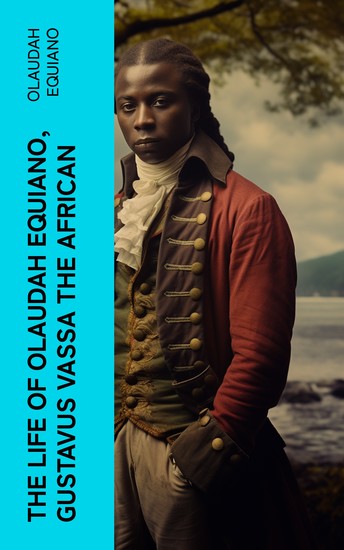
The Life of Olaudah Equiano Gustavus Vassa the African - cover

The Life of Olaudah Equiano Gustavus Vassa the African

Olaudah Equiano

Casa editrice: e-artnow

  • 0
  • 0
  • 0

Sinossi

"The Life of Olaudah Equiano" is one of the earliest-known examples of published writing by an African writer and the first influential slave narrative of what became a large literary genre. Equiano's autobiography helped in the creation of the Slave Trade Act 1807 which ended the African slave trade for Britain and its colonies.  Olaudah Equiano (c. 1745 – 1797), known in his lifetime as Gustavus Vassa was a freed slave of Igbo extraction from the eastern part of present-day Nigeria, who supported the British movement to end the slave trade.
Disponibile da: 14/12/2023.
Lunghezza di stampa: 185 pagine.

Altri libri che potrebbero interessarti

  • Ghostwriter - cover

    Ghostwriter

    Meredith Carson

    • 0
    • 0
    • 0
    The circumstances surrounding the bizarre photograph initially inspiring Meredith Carson to ghostwrite Jack Wagoner’s horrifying account are now included in this audiobook and remain unexplained. When Meredith Carson accepted the task of ghostwriting the frightening narrative you are about to hear, she had no idea how that decision would affect her. Miss Carson shared with other members of the World Codex Staff that, at times, while transcribing Jack Wagoner’s spellbinding story, she felt like Agent Starling from THE SILENCE OF THE LAMBS. Meredith Carson’s unnerving experience documenting Wagoner’s struggle for survival in the Klamath Mountains and the subsequent events is astonishing.
    Mostra libro
  • Homer and Classic Psychology - cover

    Homer and Classic Psychology

    Friedrich Nietzsche

    • 0
    • 0
    • 0
    "Homer and Classical Psychology" by Friedrich Nietzsche is a philosophical work that delves into the psychological insights found within the writings of Homer, particularly in "The Iliad" and "The Odyssey." Nietzsche explores the characterizations, motivations, and behaviors of the epic heroes and how they reflect fundamental aspects of human psychology. Through his analysis, Nietzsche provides a deeper understanding of both Homer's works and the nature of human consciousness.
    Mostra libro
  • South - the story of shackleton’s last expedition 1914–1917 - cover

    South - the story of...

    Ernest Shackleton

    • 0
    • 0
    • 0
    Embark on a journey of unparalleled resilience and human spirit with Ernest Shackleton's Endurance expedition. In the icy grip of the Antarctic, Shackleton and his crew set out in 1914 on a quest to traverse the frozen continent. Yet, fate had other plans. As the Endurance became ensnared in the crushing embrace of pack ice, the expedition transformed into a breathtaking saga of survival against insurmountable odds. 
    Amidst the desolate white expanse, Shackleton's leadership emerged as a beacon of hope. With unwavering determination, he navigated his crew through treacherous conditions, fostering an unbreakable bond of camaraderie in the face of despair. Battling frostbite, starvation, and the constant threat of the elements, each member of the expedition found within themselves an extraordinary reserve of courage. 
    Against a backdrop of relentless adversity, Shackleton's Endurance expedition transcends mere exploration, becoming a testament to the indomitable human spirit. It's a tale that captivates the imagination, evoking the triumph of the human will against nature's most formidable forces. Prepare to be enthralled by a narrative of resilience, fortitude, and the enduring power of the human spirit in the face of the unknown.
    Mostra libro
  • Unruly Desires - American Sailors and Homosexualities in the Age of Sail - cover

    Unruly Desires - American...

    William Benemann

    • 0
    • 0
    • 0
    In its voracious hunger to fill its decks and spars with the bodies of strong young sailors, the nineteenth century US Navy and the commercial maritime industry welcomed eccentrics, criminals, outcasts, and misfits into a community of the marginalized, one that held very different values and expectations than the towns and villages from which the young men fled, a community that offered a tentative refuge to men who were sexually attracted to other men. 


    Drawing from biographies and autobiographies, diaries, newspapers, government reports, Congressional hearings, religious tracts, pornography, ships' logs, medical treatises, maritime fiction, court-martial reports, personal letters and business correspondence, Benemann provides an in-depth examination of nineteenth century LGBTQ culture as it developed at sea and in America's port cities.
    Mostra libro
  • The Second Coming of Napoleon - What If France Had Won at Waterloo? - cover

    The Second Coming of Napoleon -...

    Marcus Draysun

    • 0
    • 0
    • 0
    The Battle of Waterloo, fought on June 18, 1815, is widely regarded as one of history’s most decisive conflicts. It marked the end of Napoleon Bonaparte’s reign and the beginning of a new European order. However, had the battle played out differently—had Napoleon emerged victorious—France and the world would have been set on an entirely new course. 
    A French victory at Waterloo was not an impossibility. Napoleon, despite being outnumbered, was still a military genius who had orchestrated countless triumphs before. His strategy depended on dividing and defeating the Anglo-Allied and Prussian forces separately before they could fully unite. For much of the battle, the French had the upper hand, with their artillery hammering British lines and their cavalry sowing chaos among enemy ranks. 
    One key turning point was the delayed arrival of Marshal Grouchy and his troops. Had Grouchy pursued and effectively neutralized the Prussian forces under Blücher, Napoleon would have been able to concentrate his full strength on Wellington’s forces, likely forcing them into retreat. With the British lines collapsing and no reinforcements arriving, the battlefield could have been transformed from a site of French defeat into one of Napoleon’s most remarkable victories.
    Mostra libro
  • Persia and Islam: The History of the Islamic Empires that have Ruled Persia Since the Middle Ages - cover

    Persia and Islam: The History of...

    Editors Charles River

    • 0
    • 0
    • 0
    As the Persian Empire’s power makes clear, Persia has been a crucial area throughout history, and thus it has been fought over incessantly, watching empires rise and fall. For most of the past 1,400 years, Islamic powers have struggled for supremacy in the region.  
    The split between the two forms of Islam was already in the process of forming upon the death of the Prophet Muhammad. Muhammad had constructed around himself not only a potent new religious movement but also a powerful young state called the Ummah (the "Community" for lack of a better translation). Belonging to the Islamic faith also meant belonging to the Ummah, which was governed by its own laws and had many of its own institutions. 	Amid the upheaval in the Islamic world following Muhammad’s death, the Umayyad Caliphate lasted for less than a century, but in that time it managed to become one of the most influential of the major caliphates established following him. Its official existence was from 661-750, and the rulers were the male members of the Umayyad dynasty, roughly translated from Arabic as the “Sons of Umayyah.” Its primary base of power was in Syria following the creation of a dynastic, hereditary rule headed by one of Syria’s long-lasting governors, Muawiya ibn Abi Sufyan. 
    	The Ottoman Empire and Safavids would also vie for power in Persia after the caliphates, and the Ottomans in particular spent several centuries expanding their empire’s size, power, and influence, bumping up against Eastern Europe and becoming one of the world’s most important geopolitical players. It was a rise that would not truly start to wane until the 19th century.  Preserving its mixed heritage, coming from both its geographic position rising above the ashes of the Byzantine Empire and the tradition inherited from the Muslim Conquests, the Ottoman Empire lasted more than six centuries.
    Mostra libro