Join us on a literary world trip!
Add this book to bookshelf
Grey
Write a new comment Default profile 50px
Grey
Subscribe to read the full book or read the first pages for free!
All characters reduced
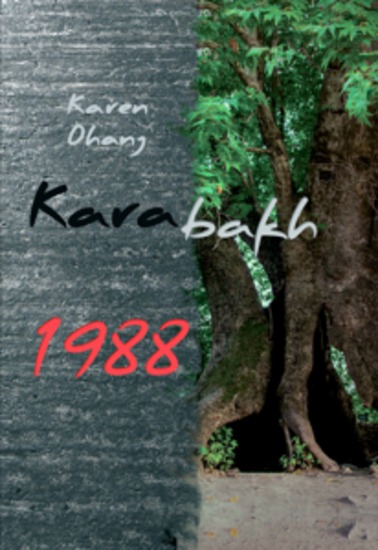
Karabakh 1988 - cover

Karabakh 1988

Ohanj Karen

Publisher: Edit Print

  • 0
  • 0
  • 0

Summary

The book-epopee is an account of the Karabakh movement which became the starting point of the independence of Armenian and Nagorno Karabakh.Written in belle-letters and publistic genre, the novel-epopee Karabakh 1988 describes the struggle of the Armenian nation fro reunification and historical justice.Author Karen Ohanj (Ohanjanyan): An acclaimed writer and poet in Artsakh, a public figure, a laureate of international awards for Pease and Human Rights, Doctor of Philosophy, Professor
Available since: 03/01/2025.
Print length: 320 pages.

Other books that might interest you

  • Johnny Cash: A short biography - 5 Minutes: Short on time - long on info! - cover

    Johnny Cash: A short biography -...

    5 Minutes, 5 Minute Biographies,...

    • 0
    • 0
    • 0
    Johnny Cash, country music legend: Life and works in a short biography! Everything you need to know, brief and concise. Infotainment, education and entertainment at its best!
    Show book
  • Culinary Jailbreak - The Remarkable Tale of Freedom Won with an Unexpected Concoction - cover

    Culinary Jailbreak - The...

    John Harpoon

    • 0
    • 0
    • 0
    In the depths of confinement, where the walls are more than just bricks and mortar but a constant reminder of lost opportunities, an unexpected force emerged: food. This story is not just about escape in the traditional sense, but about breaking free from the psychological and emotional prisons that can often be more suffocating than physical ones. It is a testament to the unyielding human spirit, its capacity for creativity and resilience even in the most stifling of conditions. 
    Incarceration is a test of endurance. Every day is marked by repetition, isolation, and the stripping away of autonomy. It’s easy to feel like hope is a distant dream, slipping further away with each passing hour. But in the midst of despair, something remarkable happened—a plan was forged in the most unlikely of places: the prison kitchen. It was here, in a space designed to merely nourish the body, that a group of individuals came to realize the power of food as a vehicle for something greater: freedom. 
    The idea didn’t start as a grand blueprint or a well-thought-out escape plan. It began with the simple, shared joy of creating something from limited ingredients, turning mundane meals into small acts of rebellion. The kitchen, a place that was simultaneously a site of routine and surveillance, became a sanctuary for ingenuity. It was a space where culinary skills, often honed outside the confines of prison walls, found new purpose in the service of something far more important than sustenance—it became the key to unlocking doors that seemed forever closed.
    Show book
  • Deep Reading - Practices to Subvert the Vices of Our Distracted Hostile and Consumeristic Age - cover

    Deep Reading - Practices to...

    Julie Ooms, Rachel B. Griffis,...

    • 0
    • 0
    • 0
    This book helps readers develop practices that will result in deep, formative, and faithful reading so they can contribute to the flourishing of their communities and cultivate their own spiritual and intellectual depth. 


    The authors present reading as a remedy for three prevalent cultural vices—distraction, hostility, and consumerism—that impact the possibility of formative reading. Informed by James K. A. Smith's work on "the spiritual power of habit," Deep Reading provides resources for engaging in formative and culturally subversive reading practices that teach readers how to resist vices, love virtue, and desire the good. 


    Rather than emphasizing the spiritual benefits of reading specific texts such as Dante's Divine Comedy or Adventures of Huckleberry Finn, the authors focus on the practice of reading itself. They examine practices many teachers, students, and avid readers employ—such as reading lists, reading logs, and discussion—and demonstrate how such practices can be more effectively and intentionally harnessed to result in deepreading. The practices apply to any work that is meant to be read deeply.
    Show book
  • Right and Reason: Ethics in Theory and Practice - cover

    Right and Reason: Ethics in...

    Austin Fagothey

    • 0
    • 0
    • 0
    What makes right right and wrong wrong? What is moral obligation, and where does it come from? Why is lying never right? Why is divorce always wrong? Why is abortion always wrong? What are the various moral systems acceptable within Catholicism, and what are their merits? When is it moral to kill another person—if ever? Do animals have rights? What is the origin of the State? Who has the right to educate? Is capital punishment ethical? Is there a right to work? What is a just wage? What is a just war? What is the principle of double effect? Are suicide and euthanasia against Natural Law or only Divine Law? Is there even a Natural Law?The above questions cover a smattering of ethical fields and subjects, which range literally throughout human experience. There is no action that does not have some ethical implication, and there is no person whatsoever who does not have some moral compass, whether poorly guided or well. Indeed, ethical and moral questions form the brunt of human experience, whether modern man realizes it or not, and we always have ethical and moral presuppositions. Given this reality, the study of ethics is far from some esoteric or abstract field; nor is it without objective and unchanging laws that govern all mankind. Rather, it is an eminently practical and thoroughly important field for every single person in the world. Fr. Austin Fagothey's classic Right and Reason: Ethics in Theory and Practice covers the principles of Catholic ethics in common-sense Aristo-Thomistic terms. As valid today as ever, these principles guide anyone who attempts to grapple with today's new moral questions (medical ethics, family issues, international relations, etc.) with a solid grounding, rather than foundering in the swamp of guesswork, emotionality, and mere personal opinion that governs the modern world. Every Catholic must be familiar with the great ethical questions and their true, Catholic resolutions; Fr. Fagothey's 650-page, masterful tome is just the right thing for the job, a beacon of common sense written with authoritative competence.
    Show book
  • An Antietam Veteran's Montana Journey - The Lost Memoir of James Howard Lowell - cover

    An Antietam Veteran's Montana...

    Katharine Seaton Squires

    • 0
    • 0
    • 0
    In this recently unearthed memoir, Civil War veteran James Howard Lowell offers a firsthand account of his brutal journey west on a wagon train attacked by Indian Dog Soldiers. The Boston Yank staggers snow blind through a Laramie Plains blizzard to reach Salt Lake City, where he meets Brigham Young. In Montana, he joins an old forty-niner to work a mining claim, practices "tomahawk jurisprudence" in Fort Benton and builds a mackinaw to head downriver through Deadman Rapids to trade with the Crow and Gros Ventre tribes. Lowell's great-great-granddaughter edits this tale populated with colorful characters, narrow escapes and important historical events, such as the Baker Massacre. It features Lowell's letters to his sweetheart and Civil War correspondence.
    Show book
  • Nightmare Fuel - The Science of Horror Films - cover

    Nightmare Fuel - The Science of...

    Nina Nesseth

    • 0
    • 0
    • 0
    Do you like scary movies? Have you ever wondered why? 


    In Nightmare Fuel, Nina Nesseth explores the strange and often unexpected science of fear through the lenses of psychology and physiology. How do horror films get under our skin? And why do we keep coming back for more? 


    Horror films promise an experience: fear. But how exactly do filmmakers pull this off? The truth is, there's more to it than just loud noises and creepy images. 


    With the affection of a true horror fan and the critical analysis of a scientist, Nesseth explains how audiences engage horror with both their brains and bodies, and teases apart the elements that make horror films tick. Nightmare Fuel covers everything from jump scares to creature features, serial killers to the undead, and the fears that stick around to those that fade over time. 


    With in-depth discussions and spotlight features of some of horror's most popular films—from classics like The Exorcist to modern hits like Hereditary—and interviews with directors, film editors, composers, and horror academics, Nightmare Fuel is a deep dive into the science of fear, a celebration of the genre, and a survival guide for going to bed after the credits roll.
    Show book