Join us on a literary world trip!
Add this book to bookshelf
Grey
Write a new comment Default profile 50px
Grey
Subscribe to read the full book or read the first pages for free!
All characters reduced
Of Time and the River - cover

Of Time and the River

Thomas Wolf

Publisher: Classic Echo

  • 0
  • 0
  • 0

Summary

What does it mean to leave home, discover oneself, and find a place in the world?

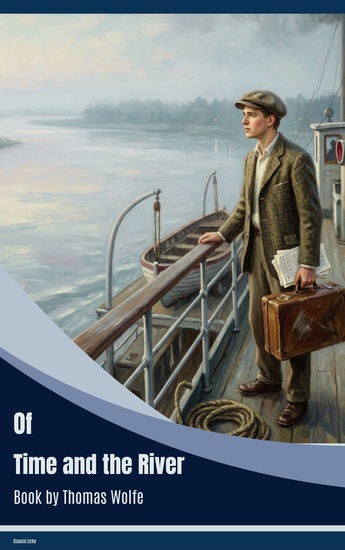
In Of Time and the River, Thomas Wolfe follows the continuing journey of Eugene Gant, an aspiring writer searching for identity, experience, and artistic purpose.

Set against the changing landscapes of America and Europe, the novel explores Eugene's development as he encounters new people, places, relationships, and ideas. His journey becomes both a physical and emotional search for meaning as he struggles with ambition, loneliness, memory, love, family, loss, and the passage of time.

Wolfe's richly lyrical prose gives the novel a distinctive emotional intensity. Time itself becomes a central presence, shaping memory and reminding the characters of the fleeting nature of youth, relationships, and human experience.

As Eugene moves beyond his familiar surroundings, he confronts the challenges of becoming an artist and the complicated relationship between personal experience and creative expression. The novel reflects Wolfe's recurring interest in home, identity, memory, mortality, and the desire to understand one's place in the world.

For readers who enjoy American literary fiction, coming-of-age novels, autobiographical fiction, psychological fiction, poetic prose, and stories about artistic ambition, Of Time and the River offers a deeply reflective literary experience.

Follow Eugene Gant on his journey through youth, discovery, loss, and artistic awakening. Read Of Time and the River today and experience Thomas Wolfe's powerful meditation on time, memory, identity, and the search for meaning.
Available since: 08/19/2026.
Print length: 792 pages.

Other books that might interest you

  • The Happy Prince and Other Tales - cover

    The Happy Prince and Other Tales

    Oscar Wilde

    • 0
    • 0
    • 0
    A timeless classic of deceptively simplistic and fantastical stories.   Originally published by Oscar Wilde in 1888, The Happy Prince and Other Tales is a collection of five short stories packed with heartfelt meaning for children and adults alike. This is a fine new edition of moral tales of selflessness, friendship, sacrifice, and kindness— and the dangers of not having them.   Wilde’s eloquent and poetic writing makes these stories evoke a world in which tenderness and compassion are often endangered by greed, selfishness, and callousness. This new edition includes a new foreword by award-winning author Rick Wilber, and appeals to an entirely new generation of children, while imparting wisdom that withstands the test of time.
    Show book
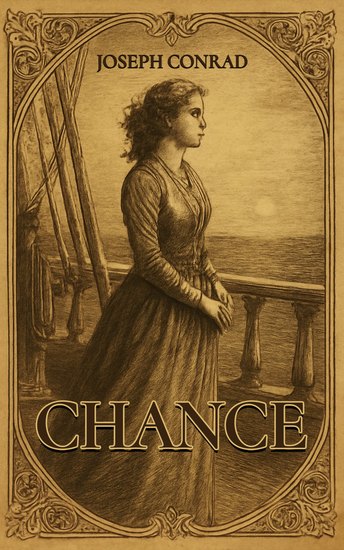
  • Chance - cover

    Chance

    Joseph Conrad

    • 0
    • 0
    • 0
    Chance is one of Joseph Conrad's most psychologically intricate and emotionally resonant novels, blending romance, irony, and moral inquiry against the backdrop of maritime life. Told through Conrad's signature layered narration, the novel explores how fate, coincidence, and human choice intersect to shape lives in unexpected ways.
    
    At the heart of the story is Flora de Barral, a young woman left vulnerable and isolated after her father's public financial disgrace and imprisonment. Thrust into a world governed by social judgment and rigid expectations, Flora's future seems determined by circumstances beyond her control. Yet it is through a series of seemingly accidental encounters—"chances"—that her life becomes entwined with Captain Roderick Anthony, a man whose rigid sense of honor and emotional restraint contrast sharply with Flora's fragility.
    
    Narrated largely by Conrad's recurring storyteller Marlow, the novel unfolds not as a straightforward romance, but as a complex examination of perception, misinterpretation, and moral responsibility. Marlow reflects on the ways people misunderstand one another, how society imposes narratives on individuals, and how love can emerge quietly, almost invisibly, amid misunderstanding and silence.
    
    Set partly at sea and partly on land, Chance uses the maritime world not for adventure alone, but as a symbolic space where isolation, duty, and character are tested. Conrad probes themes of gender, power, loyalty, and justice, particularly highlighting the precarious position of women in a male-dominated society.
    
    Both ironic and compassionate, Chance stands apart from Conrad's darker works, offering a more hopeful—though still deeply nuanced—vision of human connection. It is a novel about the subtle forces that govern life, the redemptive possibilities of kindness, and the profound impact of moments that appear, at first, to be mere coincidence.
    Show book
  • The Complete Collection of Arsène Lupin - cover

    The Complete Collection of...

    Maurice Leblanc

    • 0
    • 0
    • 0
    A thrilling collection featuring the legendary gentleman thief Arsène Lupin.
    
    Filled with clever crimes, daring escapes, hidden identities, and brilliant investigations, this anthology showcases the charm, intelligence, and wit of one of literature's most iconic fictional criminals.
    
    Blending mystery, suspense, adventure, and humor, the stories deliver fast-paced excitement and unforgettable twists that continue to captivate readers worldwide.
    
    Written by Maurice Leblanc, this classic collection remains essential for lovers of detective fiction and thrilling adventure.
    
    Enter the fascinating world of Arsène Lupin and experience timeless mystery and intrigue—download your copy today.
    Show book
  • The Voyage Out - The Lost Manuscript - cover

    The Voyage Out - The Lost...

    Virginia Woolf

    • 0
    • 0
    • 0
      
    "The Voyage Out" is the debut novel written by Virginia Woolf, a prominent English modernist writer. Published in 1915, the novel follows the journey of Rachel Vinrace, a young woman who embarks on a voyage to South America with her aunt and uncle. The novel explores themes of self-discovery, social conventions, and the constraints placed upon women in early 20th-century society. 
     
    As Rachel sets sail on her voyage, she encounters a diverse group of passengers, each representing different social classes, backgrounds, and personalities. Through her interactions with them, Rachel undergoes a transformative journey of personal growth and awakening. Woolf skillfully captures Rachel's internal thoughts and emotions, delving into her inner world as she navigates her way through the complexities of life and relationships. 
     
    "The Voyage Out" also provides a critical examination of societal norms and gender roles during the Edwardian era. Woolf challenges the traditional expectations placed upon women and explores the limitations and frustrations they face. Rachel's journey serves as a metaphor for breaking free from societal constraints and seeking personal fulfillment and independence. 
     
    Virginia Woolf's writing style in "The Voyage Out" is characterized by its lyrical prose, stream-of-consciousness narrative technique, and keen observations of human psychology. Through vivid descriptions and introspective passages, Woolf explores themes of identity, love, and the search for meaning in a rapidly changing world 
    . 
    "The Voyage Out" is a significant novel in Woolf's body of work and serves as a precursor to her later, more experimental novels. It provides an early glimpse into Woolf's mastery of character development, psychological insight, and her unique literary style that would go on to shape the landscape of modernist literature.
    Show book
  • An Occurrence at Owl Creek Bridge - cover

    An Occurrence at Owl Creek Bridge

    Ambrose Bierce

    • 0
    • 0
    • 0
    An Occurrence at Owl Creek Bridge by Ambrose Bierce is offered here in a clean English digital edition prepared for fluent ebook reading. The work stands within classics and gives modern readers direct access to a public-domain classic with navigable structure and a restrained typographic presentation. The opening pages establish the book's atmosphere with this first movement: A man stood upon a railroad bridge in northern Alabama, looking down into the swift water twenty feet below. The man's hands were behind his back, the wrists bound with a cord. A rope closely encircled his neck. It was attached to a stout cross-timber above his head and the slack fell to the level o This edition is suited to readers who want a reliable, uncluttered version of the text for study, rediscovery, and sustained reading.
    Show book
  • A Rich Woman - From their pens to your ears genius in every story - cover

    A Rich Woman - From their pens...

    Katharine Tynan

    • 0
    • 0
    • 0
    Katharine Tynan was born on 23rd January 1859 into a large family in Clondalkin, County Dublin. 
    The family business was cattle rearing and the farmhouse, set with the mountains for a backdrop, was a wonderful world for a young mind to learn and imagine. 
    She was educated at the convent school, St Catherine of Sienna, in Drogheda.  A stubborn streak inhibited her ability to learn as easily as the school wished. However she did learn on her own terms and soon began to take her ‘forbidden literature’, hidden in her clothing, to her loft in a stable hideaway.  
    Until she turned seventeen nothing appeared to point to a literary career.  But some verse printed in a Dublin newspaper changed everything. It led to a sonnet being printed in the Spectator.  Thereafter the Graphic published several others and even paid a half guinea for the privilege.   
    In 1884 Katharine dispatched herself to London and made an abiding friendship in Alice Meynell.  Alice was an established poet and helped, with her husband Wilfred, to publish many poets. The following year it was arranged for the publication of her first poetry volume, ‘Louise de la Vallière’.  
    She formed valuable friendships with the poets Gerard Manley Hopkins, William Butler Yeats and later Francis Ledwidge.  
    As she gathered friends and contacts into her life her literary output began to gather pace. Katharine had begun to write prose for the Speaker and for the Scots and National Observer.  
    In 1892 she married Henry Albert Hinkson, a fellow writer and a barrister.  They moved to England and had five children although two were to tragically die in infancy.   
    By now her output was prolific and ranged from poetry to novels to short stories.  It would later include a biography and further extend to editing and reviewing.   
    In 1912 the family returned to Claremorris, County Mayo, when her husband was appointed magistrate, a post he held until his early death in 1919.     
    Tynan is sometimes grouped amongst the War Poets of the First World War. Her experience was not direct but as a Mother with one son serving in France and another in Palestine, the emotions, fears and doubts are expressed in a beautiful and heart-felt way.  
    Involved in the Irish Literary Revival, Tynan expressed concern for feminist causes, the poor, and the effects of World War I in her work. She also meditated on her Catholic faith. 
    She is said to have written over 100 novels, 12 collections of short stories, plays and many volumes of enduring poetry as well as five volumes of autobiography. 
    Katharine Tynan Hinkson died at age 72 on 2nd April 1931 in London and is buried in Kensal Green Cemetery.
    Show book