Join us on a literary world trip!
Add this book to bookshelf
Grey
Write a new comment Default profile 50px
Grey
Subscribe to read the full book or read the first pages for free!
All characters reduced
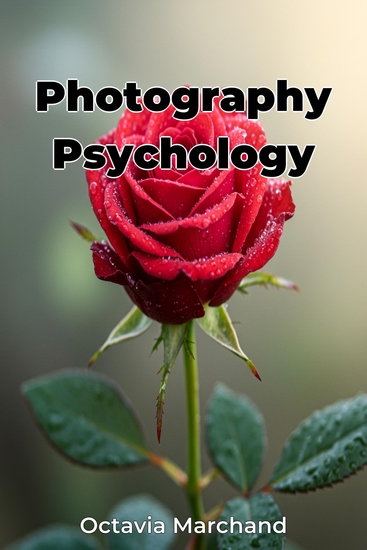
Photography Psychology - cover

Photography Psychology

Octavia Marchand

Translator A AI

Publisher: Publifye

  • 0
  • 0
  • 0

Summary

Photography Psychology explores the powerful intersection of photography and psychology, revealing how images impact our emotions, memories, and perceptions. Have you ever noticed how a particular photograph can instantly transport you back to a specific moment? The book delves into the psychological mechanisms behind this phenomenon, highlighting how visual details embedded within an image can unlock deeply rooted recollections and emotional responses. It also examines how photographic manipulation, through framing and composition, can subtly shape our understanding of events and individuals.

 
The book's approach is to blend insights from psychology, visual studies, and communication theory to dissect the visual language of photography. Beginning with basic psychological principles related to visual perception and emotional response, the book progresses to explore memory formation and the influence of elements like color and composition.

 
Ultimately, it addresses the ethical considerations surrounding photographic manipulation, providing readers with tools for critical thinking and a more responsible approach to photography in the digital age, including discussions on photojournalism ethics.
Available since: 02/26/2025.
Print length: 72 pages.


Other books that might interest you

  • Muisca Confederation - The Land of El Dorado and the Riches of the Andes - cover

    Muisca Confederation - The Land...

    Rolf Hedger

    • 0
    • 0
    • 0
    The Muisca Confederation was one of the most sophisticated political entities in pre-Columbian South America, emerging in the highlands of present-day Colombia. The origins of this powerful society can be traced back to the earliest inhabitants of the Eastern Cordillera of the Andes, a region characterized by fertile valleys, cool mountain climates, and abundant natural resources. Over time, these early settlers developed complex social structures, agricultural techniques, and political institutions that would form the foundation of the Muisca Confederation.  
    The first groups to settle in the high-altitude plateaus of the Andean region arrived thousands of years ago, likely migrating from Central America or other parts of South America. These early inhabitants lived in small, semi-nomadic communities, relying on hunting, fishing, and rudimentary farming. As they adapted to their environment, they developed advanced agricultural methods, cultivating maize, potatoes, quinoa, and other crops suited to the high-altitude terrain. The fertile lands and steady supply of food allowed for population growth, leading to the establishment of permanent settlements. 
    As Muisca society evolved, it became increasingly hierarchical, with distinct roles emerging among its members. The transition from small, scattered villages to organized chiefdoms marked a significant turning point in their history. Power began to concentrate in the hands of local leaders, or caciques, who governed their respective communities. Over time, these leaders expanded their influence, forming alliances and asserting control over larger territories. The most powerful of these rulers eventually became the Zipa of Bacatá and the Zaque of Hunza, the two principal leaders who governed the northern and southern regions of the Muisca Confederation.
    Show book
  • The Art of the Pharaohs - Sculptures Paintings and Jewelry - cover

    The Art of the Pharaohs -...

    Omar Khalil

    • 0
    • 0
    • 0
    Ancient Egyptian art is one of the most iconic and influential art forms in history. Spanning over three millennia, it provides a deep insight into the culture, religion, and beliefs of ancient Egyptian society. The art of Egypt is characterized by its symbolic use of colors, the strict adherence to formal rules of representation, and its focus on the afterlife. It was primarily created for religious, funerary, and commemorative purposes, serving as a medium to honor the gods and pharaohs, as well as to ensure a successful passage into the afterlife for the deceased. 
    The origins of Egyptian art can be traced back to the early dynastic periods, where it evolved in response to both religious needs and political structures. As the power of the pharaohs grew, so did the complexity and grandeur of Egyptian art. The early works were heavily influenced by the religious beliefs that governed life and death. Art was not seen as a form of personal expression but rather as a tool to serve divine and societal purposes. The rigid style and symbolic representations seen in Egyptian art reflect the culture's focus on order, permanence, and the divine, rather than individualism or naturalism. 
    Key materials used in Egyptian art included stone, wood, and metals, often adorned with vibrant pigments. The Egyptians were skilled in creating sculptures, jewelry, and paintings that survived for thousands of years due to their mastery of preservation techniques. The most recognizable aspects of Egyptian art include the distinctive posture and proportions in their sculptures, as well as the use of vibrant, symbolic colors in their paintings. These works were often intended for tombs, temples, and other sacred spaces, ensuring the continued favor of the gods and providing a connection to the divine realm.
    Show book
  • Regal Sacrifice: - The Heartbreaking Saga of Adrian's Alteration - cover

    Regal Sacrifice: - The...

    OLAYINKA EMMANUEL

    • 0
    • 0
    • 0
    In a realm where power and beauty reign, a young commoner named Adrian dares to dream beyond his humble existence. His life takes a dramatic turn when he falls deeply in love with Princess Isabella, the enchanting daughter of King Alaric. Despite the impossible odds, Adrian's passion and poetry capture Isabella's heart, and they embark on a clandestine romance.Will their love prevail, or will the curse destroy their dreams forever? 
    Immerse yourself in this epic tale of star-crossed lovers, ancient magic, and the transformative power of love. Regal Sacrifice: A Heart-Wrenching Tale of Love and Transformation is a suspenseful and romantic journey that will leave you breathless and yearning for more.
    Show book
  • Beryl - cover

    Beryl

    Joanna Quinn

    • 0
    • 0
    • 0
    This book documents the behind-the-scenes work that went into the animation of the award-winning short film Affairs of the Art by Beryl Productions. It includes a range of sketches, storyboards, final artwork and commentary from director Joanna Quinn and writer Les Mills.
    Show book
  • Janet Roth: Extremely Analytical - cover

    Janet Roth: Extremely Analytical

    Janet Roth

    • 0
    • 0
    • 0
    Janet Roth bares all in a blistering stand-up special about marriage, Millennial dating and living in LA. And she won't spare you the details.
    Show book
  • Ways of Voice - Vocal Striving and Moral Contestation in North India and Beyond - cover

    Ways of Voice - Vocal Striving...

    Matthew Rahaim

    • 0
    • 0
    • 0
    Ways of Voice explores techniques of voice production in North India, from Bollywood to raga music to ghazal to devotional hymns and Sufi song. The voices in play here are not merely given, but achieved. Singers consciously train themselves to cultivate characteristic vocal gaits, sonorities, and poetic attunements; they adopt postures of the vocal apparatus; they build habits of listening, temporality, and social relations. The action in Ways of Voice revolves around several dozen North Indian popular, devotional, classical, and folk singers engaged in projects of vocal striving. Like most singers, they are strategically working on changing, refining, and making their own voices. The book thus highlights the ways in which singers not only "have" voice, but actively acquire, cultivate and contest particular vocal dispositions for particular kinds of listeners. In framing a "Hindustani vocal ecumene" that encompasses a diverse range of classical, popular, and spiritual-devotional musical styles and practices, it offers an expansive look at ways of voice that extend far beyond commonsense boundaries of genre and place. A rich archive of audio and video examples are provided on the online companion site, which can be found at https://www.weslpress.org/readers-companions/.
    Show book