Join us on a literary world trip!
Add this book to bookshelf
Grey
Write a new comment Default profile 50px
Grey
Subscribe to read the full book or read the first pages for free!
All characters reduced
Birth of Photography - cover

Birth of Photography

Octavia Marchand

Translator A AI

Publisher: Publifye

  • 0
  • 0
  • 0

Summary

Birth of Photography explores the fascinating history of how photography emerged, transforming image-making and setting the stage for the modern era. It delves into the key figures, pivotal moments, and scientific breakthroughs that shaped our ability to capture the world. The book highlights that photography's invention was not a singular event, but a gradual, collaborative process involving numerous individuals across different disciplines such as science, art, and entrepreneurship. Readers will gain insights into early experiments, the invention of practical photographic processes like the daguerreotype and calotype, and the spread of photography as both a scientific tool and an art form during the 19th century.

 
The book begins by examining pre-photographic techniques and progresses to the inventions of the Daguerreotype and Calotype, detailing the technical challenges and personalities involved. It explores the refinement of photographic processes, the rise of photographic studios, and photography's application in science, portraiture, and art.

 
Ultimately, Birth of Photography provides a comprehensive account of photography's origins, contextualizing its development within the broader scientific, artistic, and social landscape.
Available since: 02/26/2025.
Print length: 66 pages.


Other books that might interest you

  • Calm Your Mind: Why Our Children Are Struggling in Today's World - "Unlock your child's potential with insightful audio lessons that ease their challenges in today’s world!" - cover

    Calm Your Mind: Why Our Children...

    Orson Finchley

    • 0
    • 0
    • 0
    Calm Your Mind: Why Our Children Are Struggling in Today's World  
    ⭐⭐ Simplified Guide & Explanations Included⭐⭐ 
    Are you eager to foster resilience and understanding for future generations by challenging assumptions about today's world? 
    Do you need a comprehensive resource that addresses the crucial elements for empowering our children in a rapidly changing environment?  
    Your search ends here! 
    This guide is your ultimate companion for enhancing your insights, applying practical skills, and engaging in real-world exercises. With this resource, you're on the path to meaningful change for our children’s lives. 
    Updated to reflect current challenges and strategies for 2025. 
    Key features of this enriched guide: 
    - In-depth insights into the issues our children face today 
    - Detailed exploration of societal challenges and effective coping mechanisms 
    - Successful strategies for fostering resilience and understanding 
    What sets our guide apart is its comprehensive approach, essential for fostering a deeper understanding. Concepts are thoroughly examined rather than superficially touched upon. 
    With a clear structure and straightforward language, our guide ensures seamless transitions between topics. Bid farewell to confusing jargon and welcome clear, concise, and technically accurate content. 
    So, why wait? Click the BUY NOW button to secure your guide, and embark on a transformative journey to empower resilient future generations! 
    Dive into this essential guide and help your children thrive in today’s complex world!
    Show book
  • How We Got Our Antiracist Constitution - Canonizing Brown v Board of Education in Courts and Minds - cover

    How We Got Our Antiracist...

    Jesse Merriam

    • 0
    • 0
    • 0
    Over the past decade, several American cities have been rocked by race riots. With each passing year, a new racial agenda emerges—from police defunding to education reform to reparations—inciting more and more division and radicalization along racial lines. What started all of this? The roots of this pathology run much deeper than the recent symptoms suggest. The civil rights revolution unleashed an assault on the US Constitution, and the sacralization of that revolution, marked by the canonization of Brown v. Board of Education (1954), has transformed our constitutional order. A system once rooted in local self-governance and natural rights now operates along new moral axes, entirely foreign to the American way of life. The choice is increasingly obvious: Either the traditional American order or the new civil rights regime will prevail.
    Show book
  • Ripples Across Time - cover

    Ripples Across Time

    Santiago Machain

    • 0
    • 0
    • 0
    Ripples Across Time explores the sweeping changes that shaped Europe from the Middle Ages to the dawn of modernity. Through a series of thematic chapters, the book examines the continent’s demographic shifts, the evolution of social structures, the rise of cities and the middle class, the impact of wars and religion, and the flourishing of art, science, and literature. It delves into the forces that propelled Europe from a patchwork of feudal societies to a global powerhouse, highlighting the interplay between tradition and innovation, conflict and cooperation, and local and global influences. By tracing the ripple effects of key developments, the book offers a nuanced understanding of how Europe’s transformation not only redefined the continent but also set the stage for its expansion and enduring influence on the world.
    Show book
  • Establishment of the League of Nations and United Nations The: The Controversial Starts of Both International Bodies in the 20th Century - cover

    Establishment of the League of...

    Charles River Editors

    • 0
    • 0
    • 0
    The United Nations is one of the most famous bodies in the world, and its predecessor, the League of Nations, might be equally notorious. In fact, President Woodrow Wilson’s pet project was controversial from nearly the minute it was conceived. Wilson mostly found himself shut out, but Britain and France did not want American contributions to the war to go totally unappreciated, if only out of fear that the U.S. might turn towards improving their relations with Germany in response. Thus, to appease Wilson and the Americans, France and Britain consented to the creation of a League of Nations. However, even though his participation in the crafting of the Treaty of Versailles earned him a Nobel Prize that year, Wilson soon learned to his consternation that diplomacy with Congress would go no better than his diplomacy with European leaders. The only major provision that Wilson achieved in Europe, the League of Nations, was the most controversial in the United States.   
    	While it would attempt to resolve some territorial disputes, it simply proved too weak to prevent international aggression, primarily among the Axis Powers in the buildup to World War II. Thus, the League’s greatest legacy ended up being its dismal failure to prevent World War II and ensure that World War I had truly been the “war to end all wars,” as originally intended.  
    	Although the League of Nations was short-lived and clearly failed in its primary mission, it did essentially spawn the United Nations at the end of World War II, and many of the UN’s structures and organizations came straight from its predecessor, with the concepts of an International Court and a General Assembly coming straight from the League. More importantly, the failures of the League ensured that the UN was given stronger authority and enforcement mechanisms, most notably through the latter’s Security Council, and the UN has survived the last 80 years. 
    Show book
  • Longbow The: The History of the Weapon that Revolutionized Warfare in the Middle Ages - cover

    Longbow The: The History of the...

    Editors Charles River

    • 0
    • 0
    • 0
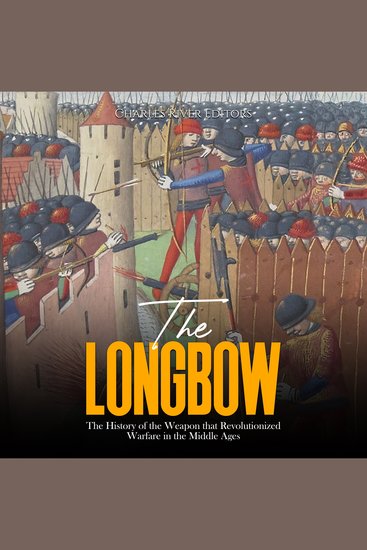
    While the bow was used throughout ancient times and the Middle Ages, on mainland Europe it was mostly replaced by the crossbow in the early 13th century, but that would change with the introduction of the longbow, a more powerful weapon than the traditional hunting bows. The original longbowmen were Welshmen recruited by King Edward I of England after he conquered Wales, and the weapon got its name from the fact that it was almost as tall as the man using it. This gave it a longer draw and therefore more force, as longbows were generally made of yew, a strong and pliable wood. The longbow was cheap and easy to make, but they required extensive training to be used well, so in England, commoners were encouraged and at times required to practice archery. A statute of Richard II dating from 1388 reads, “Servants and Laborers shall have Bows and Arrows, and use the same the Sundays and Holydays, and leave all playing at tennis or foot-ball, and other games called coits, dice, casting of the stone, kaikles [skittles], and other such importune games.” 
    	The longbow’s greatest day was at Agincourt in 1415, but the fact that this did not end the age of heavy plate cavalry indicated the longbow did have some limitations. For example, modern tests show that longbow arrows had trouble piercing plate armor, likely the main reason they were used as a massed weapon. With arrows raining down, it increased the chances of hitting a joint in the armor or an imperfection. Also, horse armor couldn’t protect the entire animal and the knights would soon find themselves dismounted. At some battles like Agincourt, the knights foundered in soft earth, and as their horses fell and the men became confused and hampered by the arrows clanking off their armor, they got mired in the mud and the English infantry could move in and finish them off. 
    Show book
  • Battle of Breitenfeld The: The History and Legacy of the First Major Protestant Victory of the Thirty Years’ War - cover

    Battle of Breitenfeld The: The...

    Editors Charles River

    • 0
    • 0
    • 0
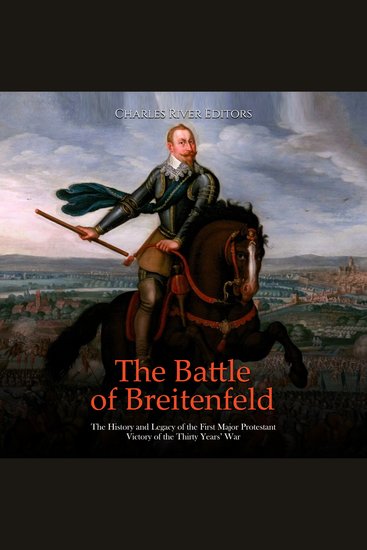
    The Thirty Years' War was one of the most horrific conflicts in history, and though it is widely viewed as a religious struggle, that was only part of the complicated war. Calvinists and Lutherans did not get along, and both persecuted some of the more radical Anabaptist sects. At the same time, one major motivation behind the war was Holy Roman Emperor Ferdinand II’s determination to rule all of the empire and not be just a figurehead. There were struggles between rulers and their estates over power, and Catholic France later entered the war on the side of the Protestants in order to counter the Habsburgs’ power.  
    	The Battle of Breitenfeld, fought in September 1631, was one of the most decisive moments of the war. It was the first major Protestant victory and widely considered the crowning achievement of Swedish King Gustavus Adolphus’ military career. Through his establishment of communication and supply lines at strategic points across the Baltic Sea, the securing of Protestant alliances, and his use of combined arms, amongst his other trademark techniques, the Swedish forces, against all odds, defeated their rivals. Such was the devastation inflicted upon their opponents that the Count of Tilly, the chief commander of the Catholic League's armies, had no other choice but to retreat. 6,000 or so Catholic soldiers were captured, many of them later incorporated into the Protestant forces. Whatever remained of the survivors vanished into the dark of the night. 
    Show book