Join us on a literary world trip!
Add this book to bookshelf
Grey
Write a new comment Default profile 50px
Grey
Subscribe to read the full book or read the first pages for free!
All characters reduced
Homes of the London Poor - cover

Homes of the London Poor

Octavia Hill

Publisher: DigiCat

  • 0
  • 0
  • 0

Summary

In 'Homes of the London Poor,' Octavia Hill undertakes a transformative exploration of the living conditions faced by the underprivileged in Victorian London. This work blends vivid descriptive prose with social commentary, creating a powerful narrative that illuminates the stark realities of urban poverty. Hill employs a poignant observational style, urging the reader to engage with the human stories behind the statistics, and contextualizing her findings within the burgeoning social reform movements of her time, making it a seminal text in the study of housing and social justice. Octavia Hill, a pioneering social reformer and one of the founders of the National Trust, draws from her extensive advocacy work to inform this compelling account. Her upbringing and deep-seated compassion for the disenfranchised undoubtedly shaped her views, leading her to advocate for better living conditions and ultimately inspiring her to document the struggles of the urban poor. Hill's work not only reflects her commitment to social activism but also her innovative approaches to urban development and housing reform. 'Homes of the London Poor' is essential reading for anyone interested in socio-economic history, social justice, or urban studies. Hill's eloquent prose and fervent advocacy invite readers to reflect on issues of housing and inequality that remain pertinent today, making this book both a historical document and a call to action.
Available since: 09/04/2022.
Print length: 64 pages.

Other books that might interest you

  • The America We Knew - The Evolution of a Nation - cover

    The America We Knew - The...

    Harry Montgomery

    • 0
    • 0
    • 0
    Long before the United States was conceived, the land that would become America was home to diverse Native nations with distinct cultures, languages, and ways of life. These Indigenous peoples had established intricate societies with deep spiritual ties to the land. Their histories and traditions stretched back centuries, shaped by the environment and a rich tapestry of social and economic systems. When European settlers began arriving in the early 1600s, they encountered not an empty wilderness, but thriving civilizations. However, the arrival of these settlers would soon mark a period of upheaval and change that would drastically alter the continent’s destiny. 
    The first European settlements were often fragile, dependent on Indigenous knowledge and assistance for survival. The English at Jamestown, the Pilgrims in Plymouth, and other colonial groups faced starvation, disease, and harsh climates. Over time, however, these colonies grew stronger and more permanent. As settlers established farms, towns, and trade routes, they also began to encroach upon Native lands, leading to rising tensions and inevitable conflict. Colonial powers such as Britain, France, and Spain vied for control over these territories, using both diplomacy and violence to expand their influence. The early colonial period was thus characterized by both cooperation and confrontation, shaping a complex legacy of interaction between Natives and newcomers. 
    As settlements expanded, so too did European influence over the land. Colonists brought with them not only goods and technology but also new political, religious, and economic systems. These imported ideas began to take root, forming the foundations of what would later become American governance and identity. At the same time, the enslaved labor of Africans was introduced into the colonies, creating a brutal institution that would come to define much of the nation's future struggles.
    Show book
  • Baskerville - The Biography of a Typeface - cover

    Baskerville - The Biography of a...

    Simon Garfield

    • 0
    • 0
    • 0
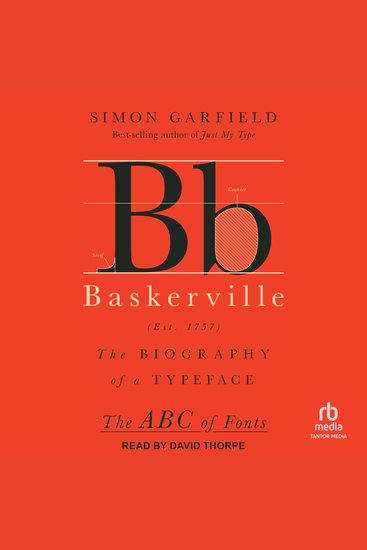
    A compact and charming history of the classic Enlightenment font by the New York Times bestselling author of Just My Type. 


    When Baskerville was first created in 1757, there was concern that it would damage readers' eyes with its combination of thin and thick strokes and tapering serifs. Yet 250 years later, it remains one of the most commonly used typefaces in books of all kinds. As bestselling author Simon Garfield tells it, the tale of this elegant typeface is one of painstaking dedication. The font's creator, John Baskerville, was a maverick lacquer maker and master printer who made it his life's mission to achieve the font's perfection. His efforts culminated in his magnificent Bible, acclaimed as the finest ever made. Garfield explores why Baskerville's own body was dug up and buried many times before finally being allowed to rest in peace, and examines his legacy through the work of his wife, Sarah Baskerville—one of the first powerful women in the printing world—and the archivists and enthusiasts working to preserve the font's original steel punches today.
    Show book
  • Brief History of Equality A: Book Summary & Analysis - cover

    Brief History of Equality A:...

    Briefly Summaries

    • 0
    • 0
    • 0
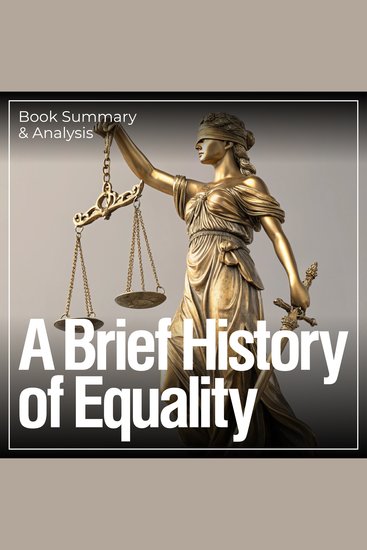
    This is a concise summary and analysis of A Brief History of Equality, by Thomas Piketty.
     
    It is not the original book and is not affiliated with or endorsed by Thomas Piketty.
     
    Ideal those seeking a quick and insightful overview.
     
    "A Brief History of Equality" offers a concise yet profound exploration of humanity's long struggle toward a more equitable society. This thought-provoking work delves into centuries of economic and social transformations, highlighting the milestones and setbacks in the quest for equality. With a sharp analysis of wealth distribution, power dynamics, and systemic change, the book argues that progress, though uneven, is achievable through collective effort and informed policy. Accessible and empowering, it serves as both a historical overview and a roadmap for creating a fairer world.
    Show book
  • The Miracle of Our Universe - A New View of Consciousness God Science and Reality - cover

    The Miracle of Our Universe - A...

    Marsha Sims, Bernard Haisch

    • 0
    • 0
    • 0
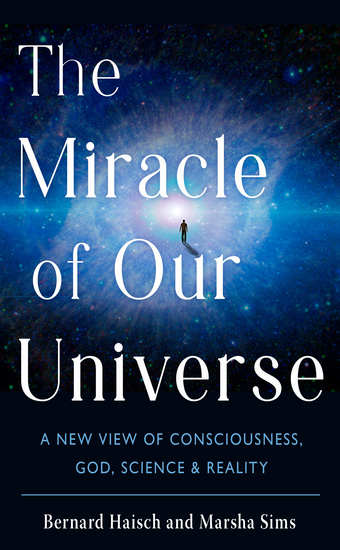
    “A fascinating, comprehensive, and accessible exploration of life’s most fundamental questions. If you’re wondering who we are and why we’re here, this book is a great place to start.”—Mark Gober, award-winning author of An End to Upside Down Thinking and board member at the Institute of Noetic SciencesIs our physical universe actually a virtual simulation that is thought into existence by consciousness? Noted astrophysicist Bernard Haisch explores the frontiers of science, consciousness, and God, revolutionizing our understanding of the universe and what’s behind it all.Have you ever wondered why and how the world around you came to exist and whether there might be another experience awaiting you after the physical body dies? Might there actually be a God and a heaven of some sort? Without consciousness there is nothing. The hypothesis presented in this book is that our seemingly physical universe of matter and energy is a virtual simulation which is thought into existence by a universal consciousness which we call God. Authors Bernard Haisch and Marsha Sims tackle age-old metaphysical questions such as the following:Are near-death experiences real?What is the zero-point field?What kind of being could God be?Is there some place that God could have come from?How does the Big Bang figure into this?It there an afterlife, and what could it be like?What is the purpose of life?Is consciousness all there is?Is the universe a virtual reality?Why is hell impossible?
    Show book
  • Cognitive Behavioral Therapy - How to Retrain your Brain The Best Strategies for Managing Anxiety Worry Anger Depression and Panic - cover

    Cognitive Behavioral Therapy -...

    Ivy Spencer

    • 0
    • 0
    • 0
    Most of us are caught in a roller coaster of' automatic' thinking, feelings, and actions. Try as hard as we can, when we see certain people or hear certain things, we get upset. Such intense emotions then cause us to say a few things out of habit. We also often feel the urge to act in a certain way.  
    This is all playing out so rapidly that we think that we really don't have any influence over it. It's a bit like being on a roller coaster. Well, could you just brace yourself for the ride, huh? It's too easy to conclude, after all, that your' automatic' reactions of fear, anxiety, depression, or rage are simply part of' who you are as a human!Alright, you don't have to make the same wrong decisions over and over again. You don't need to be miserable, powerless, or small. You don't have to keep defining yourself as a person who has little power over your life and your world. 
    CBT is zero on the central fact that you have a lot of choices about how your life works. Just by trying to think differently and viewing those events differently, you will bring about a massive positive change in your life. You no longer have to feel that certain negative mental and emotional states are natural and' automatic' responses to certain triggers in your life. 
    What You Will Learn:How Does Cognitive Behavioral Therapy WorkThe Evolution Of Cognitive Behavior TherapyCognitive DistortionsThe Power Of A Personal MantraEmotional Reasoning 
    And many more.. 
    This audiobook teaches you key principles of Cognitive-Behavioral Therapy that will allow you to become a happier, more accomplished, more effective and more contented person. Stop thinking that your world is spiraling out of control or that you don't have control over your life. 
    This audiobook teaches simple, straightforward techniques that will help you to begin your life to the fullest.
    Show book
  • Law The: Book Summary & Analysis - cover

    Law The: Book Summary & Analysis

    Miles Thatcher

    • 0
    • 0
    • 0
    This content is an independent and unofficial summary created for informational and educational purposes only. It is not affiliated with, authorized, approved, licensed, or endorsed by the original author or publisher. All rights to the original work belong to its respective copyright holders. This summary is not intended to substitute the original book, but to offer a concise overview and interpretation of its main ideas
     
    This classic work explores the principles of justice, liberty, and the proper role of government in society. It argues for the protection of individual rights, the limitations of state power, and the importance of free markets in fostering human prosperity. With a clear and concise style, the book delivers a timeless critique of overreaching government intervention while defending the rights of individuals to life, liberty, and property. It remains a foundational text for anyone interested in philosophy, economics, and political thought.
    Show book