Join us on a literary world trip!
Add this book to bookshelf
Grey
Write a new comment Default profile 50px
Grey
Subscribe to read the full book or read the first pages for free!
All characters reduced
Torture Garden - Enriched edition - cover

Torture Garden - Enriched edition

Octave Mirbeau

Publisher: DigiCat

  • 0
  • 0
  • 0

Summary

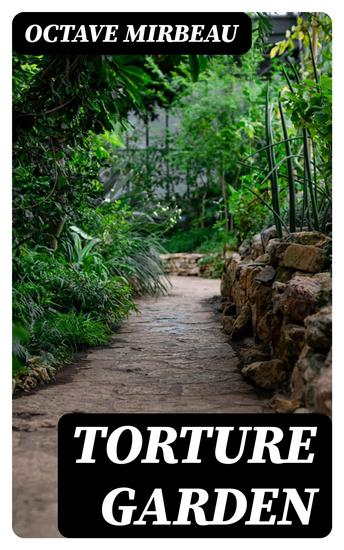
In "Torture Garden," Octave Mirbeau crafts a provocative exploration of the human psyche through a vivid and unsettling portrayal of a decadent paradise filled with immoral excesses. Set in a surreal garden, the narrative unfolds like a dark tapestry woven with themes of voyeurism, the nature of suffering, and societal hypocrisy. Mirbeau's impressionistic prose and unfiltered observations on humanity navigate the complexities of pleasure and pain while exposing the brutal reality lurking beneath the surface of bourgeois society. This book, emblematic of the Symbolist movement, challenges readers to confront their own complicity in the degradation it depicts. Octave Mirbeau, a key figure in French literature and contemporary of the late 19th and early 20th centuries, was deeply influenced by his turbulent experiences with societal norms and the macabre aspects of human existence. A journalist and advocate for social reform, Mirbeau's bold critiques often reflect his disdain for the prevailing morality of his time. His personal encounters with art, especially in the context of the Parisian avant-garde, inform the surreal and extravagant settings of "Torture Garden," allowing him to blend autobiography with fiction in a groundbreaking manner. Readers drawn to the dark corners of human experience and those fascinated by the interplay between beauty and horror will find a compelling companion in "Torture Garden." This novel not only serves as a reflection of Mirbeau's mastery of imagery and comment but also invites an introspective journey into one's morality. It stands as an essential work for anyone seeking to understand the complexities of the human condition through a literary lens.

In this enriched edition, we have carefully created added value for your reading experience:
- A succinct Introduction situates the work's timeless appeal and themes.
- The Synopsis outlines the central plot, highlighting key developments without spoiling critical twists.
- A detailed Historical Context immerses you in the era's events and influences that shaped the writing.
- A thorough Analysis dissects symbols, motifs, and character arcs to unearth underlying meanings.
- Reflection questions prompt you to engage personally with the work's messages, connecting them to modern life.
- Hand‐picked Memorable Quotes shine a spotlight on moments of literary brilliance.
- Interactive footnotes clarify unusual references, historical allusions, and archaic phrases for an effortless, more informed read.
Available since: 05/29/2022.
Print length: 151 pages.
Other books that might interest you

  • Trailin'! - cover

    Trailin'!

    Max Brand

    • 0
    • 0
    • 0
    “Max Brand", the most used pseudonym of Frederick Schiller Faust (1892-1944), is best known today for his western fiction. Faust began in the early twentieth century selling his stories to the pulp magazines, writing in many genres under numerous pseudonyms. He is probably best known as the creator of the character Destry. His novel Destry Rides Again has been filmed several times, most notably the 1939 version starring James Stewart and Marlene Dietrich. Also his character Dr. Kildare which was popularized in film and on television earned him a fortune. Faust’s novel The Untamed, the first of three novels featuring the classic western hero Dan Barry was filmed in 1920, starring Tom Mix. Faust became a front line war correspondent and died of wounds received while traveling with American soldiers in Italy, May 12, 1944.Trailin’ (1919) tells the story of Anthony Bard, a young aristocract from the east with a hunger for adventure, who sees his father murdered in the yard of their home. This starts young Anthony on a trail of vengeance that leads him to the far west. Here, Anthony, a tenderfoot with a knack for survival must track down a legendary outlaw who waits for him, not with a gun, but with a story. Along the way he braves the elements, resists a band of cold-blooded killers and finds love. A classic western revenge plot…..with a twist. (summary by Rowdy Delaney)
    Show book
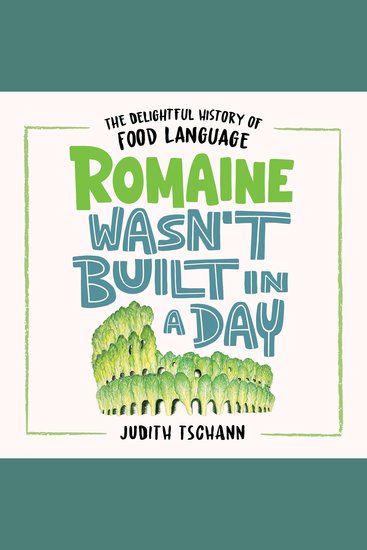
  • Romaine Wasn't Built in a Day - The Delightful History of Food Language - cover

    Romaine Wasn't Built in a Day -...

    Judith Tschann

    • 0
    • 0
    • 0
    Discover how the food we love shapes the language we use in this sharp, laugh-out-loud story of the etymology of food words. All food has a story, reaching as far back into history as language itself. Throughout time, as languages followed and reflected the tides of civilizations, food language came to represent some of the highs and lows of how humans communicate: from the highbrow "Chateauneuf du Pape," which must be pronounced with a healthy dose of snootiness; to the giggle-inducing yet delicious "nun's farts" of Jamaica (also known as "beignets"); to the fascinating travels of the word "coffee" across centuries and continents, attesting to the undying and unifying allure this drink holds for us. From Spam to amuse-bouches, ciabatta to kombucha, Romaine Wasn’t Built in a Day reveals the delightful history and stories behind the words we use for the foods we love.   In Romaine Wasn’t Built in a Day, linguist Tschann takes us on a journey from the vineyards of Avignon to the shores of Tahiti to the port of Mocha on the Red Sea coast to explore the history of the history of the words we use for the food we eat. Chock full of linguistic did-you-knows and delectable trivia, this is your go-to gift for history buffs, crossword fiends, and Scrabble diehards. This is the surprising and sometimes hilarious history of food, told through the lens of the fascinating evolution of language. All food has a story, reaching as far back into history as language itself. Throughout time, as languages followed and reflected the tides of civilizations, food language came to represent some of the highs and lows of how humans communicate: from the highbrow "Chateauneuf du Pape," which must be pronounced with a healthy dose of snootiness; to the giggle-inducing yet delicious "nun's farts" of Jamaica (also known as "beignets"); to the fascinating travels of the word "coffee" across centuries and continents, attesting to the undying and unifying allure this drink holds for us. From Spam to amuse-bouches, ciabatta to kombucha, Romaine Wasn’t Built in a Day reveals the delightful history and stories behind the words we use for the foods we love.   In Romaine Wasn’t Built in a Day, linguist Tschann takes us on a journey from the vineyards of Avignon to the shores of Tahiti to the port of Mocha on the Red Sea coast to explore the history of the history of the words we use for the food we eat. Chock full of linguistic did-you-knows and delectable trivia, this is your go-to gift for history buffs, crossword fiends, and Scrabble diehards. This is the surprising and sometimes hilarious history of food, told through the lens of the fascinating evolution of language.
    Show book
  • Dark Harbor House - cover

    Dark Harbor House

    Tom DeMarco

    • 0
    • 0
    • 0
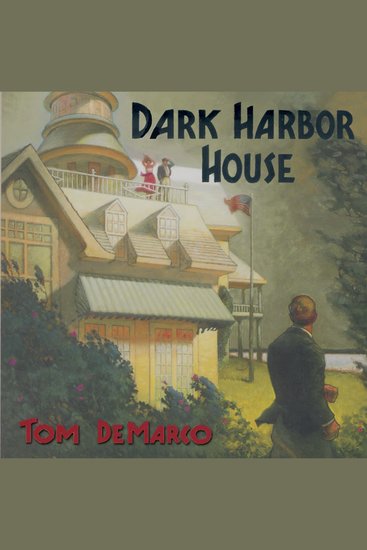
    An island off the coast of Maine in the late 1940s 
    For Liam Dwyer, collegian and would-be poet (or at least really deep intellectual thinker), the Forsythe’s summer-long house party had charming possibilities.  At its best it might turn out as a simple little love story, with himself and the enchanting Laura as principals.  Only, nothing was ever simple with Laura. Nothing. And when he was near her, his own actions and reactions were sometimes a surprise as well:  
    He could feel Laura’s warmth through her thin dress, pressing against his side as they sat together on the pier. 
    “I . . .” he said. 
    She turned to him, batting her lashes. “Yes, Liam?” 
    Liam was beginning to sweat along the top of the lip.  He looked into Laura’s blue eyes.  And then it hit him, all of a sudden.  It hit him like a ton of bricks.  It was almost impossible to believe but it was true: Under her clothing, Laura was was wearing absolutely nothing — she was totally nude.   Nude!   He was sitting only a few inches away from a lovely nude girl.   
    “Grk,”  he said.
    Show book
  • Further Foolishness - cover

    Further Foolishness

    Stephen leacock

    • 0
    • 0
    • 0
    Seventeen goofy stories and essays by Canadian humourist Stephen Leacock. "Professor Leacock has made more people laugh with the written word than any other living author. One may say he is one of the greatest jesters, the greatest humorist of the age." – A. P. Herbert (Introduction by TriciaG & Wikipedia)
    Show book
  • Locus Amoenus - cover

    Locus Amoenus

    V. N. Alexander

    • 0
    • 0
    • 0
    In this dark comedy, a 9/11 widow and her son, Hamlet, have retreated from Brooklyn to the idyllic rural countryside upstate, where for nearly eight years they have tried organic farming. Unfortunately, their outrageously obese neighbors, who prefer the starchy products of industrial agriculture, shun their elitist ways (recycling, eating healthy, reading). Hamlet, who is now eighteen, is beginning to suspect that something is rotten in the United States of America, when health, happiness and freedom are traded for cheap Walmart goods, Paxil, endless war, standard curriculum, and environmental degradation. He becomes depressed when, on the very day of the 8th anniversary of his father’s death, his mother marries a horrid, boring bureaucrat named Claudius. Things get even more depressing for Hamlet when his friend Horatio, a conspiracy theorist, reveals that Claudius is a fraud. The deceptions, spying, corruption, will ultimately lead, as in Shakespeare’s play, to tragedy. 
    Locus Amoenus uses hilarity and conspiracy theories to present the tragicomedy of a contemporary America that is beyond belief. An important contribution to contemporary American fiction. -William Irwin Thompson, Wild River Review 
    This is Hamlet reimagined as a truther. The protagonist isn’t just feigning madness–he’s genuinely losing his mind. -Kirkus 
    A witty novella that unflinchingly examines the dark roots of industrial agriculture, pharmaceutical conglomerates, and standardized curriculum. A brilliant modern parallel to Shakespeare’s timeless work. –Literary Fiction Book Review 
    Until now, the only 9/11 themed novel of high literary quality was Thomas Pynchon’s Bleeding Edge. Locus Amoenus is the best fictional treatment of 9/11 yet. It’s hilarious, darkly ironic, playful, deeply moving. –Kevin Barrett
    Show book
  • Woodcutters - cover

    Woodcutters

    Thomas Bernhard

    • 0
    • 0
    • 0
    Fiercely observed, often hilarious, and "reminiscent of Ibsen and Strindberg" (The New York Times Book Review), this exquisitely controversial novel was initially banned in its author's homeland. 


    A searing portrayal of Vienna's bourgeoisie, it begins with the arrival of an unnamed writer at an 'artistic dinner' hosted by a composer and his society wife—a couple he once admired and has come to loathe. The guest of honor, a distinguished actor from the Burgtheater, is late. As the other guests wait impatiently, they are seen through the critical eye of the writer, who narrates a silent but frenzied tirade against these former friends, most of whom have been brought together by Joana, a woman they buried earlier that day. Reflections on Joana's life and suicide are mixed with these denunciations until the famous actor arrives, bringing an explosive end to the evening that even the writer could not have seen coming.
    Show book