Join us on a literary world trip!
Add this book to bookshelf
Grey
Write a new comment Default profile 50px
Grey
Subscribe to read the full book or read the first pages for free!
All characters reduced
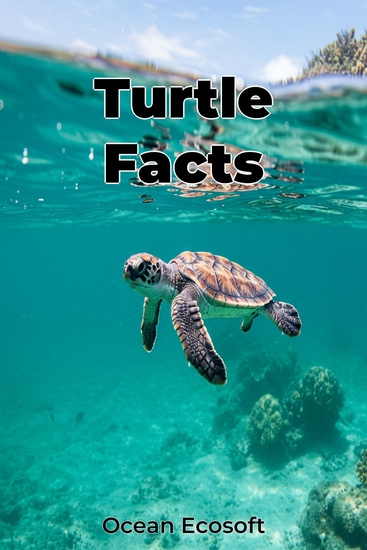
Turtle Facts - cover

Turtle Facts

Ocean Ecosoft

Translator A AI

Publisher: Publifye

  • 0
  • 0
  • 0

Summary

Turtle Facts explores the fascinating lives of turtles, revealing their incredible adaptations and crucial roles in various ecosystems. These ancient reptiles, having existed for over 200 million years, showcase remarkable resilience. The book highlights the biological complexities of turtles, such as their unique shell structures that protect them from predators and environmental elements, and their extensive migrations across vast distances.

 
The book examines the significant role turtles play in environmental health and the food chain. It also emphasizes the impact of climate change and habitat loss on turtle populations, underscoring the urgency of conservation efforts.

 
Structured to provide a comprehensive understanding, Turtle Facts begins with turtle biology basics, then explores adaptations, behaviors, and conservation challenges. This book synthesizes scientific literature to offer a broad overview of turtle biology and ecology, making it a valuable resource for nature enthusiasts, students, and conservation professionals alike.

 
By understanding turtle biology and ecology, readers can appreciate their importance and contribute to conservation strategies, addressing ongoing debates and knowledge gaps in the field.
Available since: 02/18/2025.
Print length: 72 pages.

Other books that might interest you

  • Finding Genius: Understanding Cancer - 30 Questions 70 Geniuses 200+ Amazing Insights - cover

    Finding Genius: Understanding...

    Richard Jacobs

    • 0
    • 0
    • 0
    This book is for three kinds of audiences: 1) curious amateurs interested in science or overall wellness, 2) anyone who has been diagnosed with cancer or knows someone who has, and 3) medical, bioengineering, or other professionals who have a general knowledge of and curiosity about any or all aspects of cancer biology and treatment, but who are not experts in the field. 
    This book is the result of 70+ interviews of genius-level medical and science professionals, primarily in cancer biology, research, and medicine. They have all been asked the same set of questions, and have answered to the best of their ability and knowledge. 
    What you’re about to read is the answers to these questions, not from all the individuals, but from the most interesting 4 to 9 who answered each question. 
    At the start of my journey in science, I already had a B.S. in Chemical Engineering, but that was from 1998, certainly not 2016 when I started. Reading scientific papers was difficult at first – I understood about 10% of what I was reading. As I interviewed more scientists, researchers, clinicians and others, I started to pick up the vocabulary and thinking process needed to read scientific papers. 
    After a year of reading, my comprehension increased, and now stands at around 70%, typically. In the areas of physics or other sciences in which I’m not conversant, I understand about 30%. In advanced math, since it’s a language unto itself, especially at high levels, I am back to the 10% level. Apply yourself, and you’ll be surprised by what you can learn in a year’s time.
    Show book
  • Unkindness of Ravens An - cover

    Unkindness of Ravens An

    Sally Cook

    • 0
    • 0
    • 0
    The  power and ancient symbology of the raven carries this story through its  historic presence for centuries at the Tower of London to current landscapes including the sandstone monolith of Mount Arapiles in Western Victoria. The ravens seemingly gloating presence adds to the atmosphere at this ancient Aboriginal rock site where many have taken up the climbing challenge and some have fallen. The story moves from this climbing area to one at Hanging Rock - principal  scene of the famous novel Picnic at Hanging Rock and the hugely successful movie "Picnic At Hanging Rock" made 50 years ago. An Unkindness of  Ravens also looks at the thousands of years of Aboriginal heritage at this former volcanic site and the overall ancient atmospherr of both sites,
    Show book
  • The Science of The Mandalorian - cover

    The Science of The Mandalorian

    Mark Brake

    • 0
    • 0
    • 0
    Take a trip beyond this Earth to explore the myths of The Mandalorian and uncover the anatomy of the newest space western in the Star Wars Universe. Star Wars dominates the film world. The combined box office revenue of the Star Wars movies equates to over $10 billion, making it the second highest-grossing film franchise of all time. But this franchise is no blaster from the past. Its fantastically successful films have now been followed by multiple television series set in that same galaxy far, far away. The franchise’s flagship television series, and likely the firmest fan favorite for some time to come, is The Mandalorian. Tracing the tale of the titular bounty hunter, traveling across the furthest reaches of that mythic galaxy, The Mandalorian has been greatly praised and highly acclaimed for creating characters with gravitas and originality, worlds with depth and impact, resulting in some of the best Star Wars content ever. Even though it’s set in deep space, The Mandalorian has as much in common with Western movies as it does with science fiction. Saloons. Bandits. “Gun” duels. Bounty hunters. Outlaws with a price on their heads. Space exploration as a “final frontier.” And a wild hero who doesn’t quite belong in a lawless part of the Galaxy after the fall of Empire. The Science of The Mandalorian takes you on a badass journey with a mysterious, lone gunfighter in the outer reaches of the galaxy, where your beskar armor will protect you from many things, but not the sight of a small, green, carnivorous humanoid with big black eyes and mysterious powers. This is the way.
    Show book
  • AI Content Explosion The: How Artificial Intelligence will Create Books Images Videos and Music - cover

    AI Content Explosion The: How...

    Hugh Line

    • 0
    • 0
    • 0
    In the future, artificial intelligence will create virtually all of the content we consume. This book reviews how AI is already helping create written content, images, video, and music. It then explains how AI will be a valuable tool for content creators in the short-term. Finally, it discusses the risks and benefits of AI-created content.
    Show book
  • The Art of NFTs - A NFT Business Model Playbook - cover

    The Art of NFTs - A NFT Business...

    J Rob

    • 0
    • 0
    • 0
    I will discuss how NFTs can be incorporated into a variety of business industries including music, fashion, film, content creation, sports, franchising and real estate. In the next chapters, we’ll explore new business models that use blockchain technologies, smart contracts, NFTs, and cryptocurrencies to diversify revenue streams. 
    Show book
  • Design for Cognitive Bias - cover

    Design for Cognitive Bias

    David Dylan Thomas

    • 0
    • 0
    • 0
    We humans are messy, illogical creatures who like to imagine we’re in control—but we blithely let our biases lead us astray. In Design for Cognitive Bias, David Dylan Thomas lays bare the irrational forces that shape our everyday decisions and, inevitably, inform the experiences we craft. Once we grasp the logic powering these forces, we stand a fighting chance of confronting them, tempering them, and even harnessing them for good. Come along on a whirlwind tour of the cognitive biases that encroach on our lives and our work, and learn to start designing more consciously. 
    THIS BOOK EXPLORES: 
    • Why our brains take shortcuts—and why that matters in our work 
    • How bias influences everything from user behavior to stakeholder decision-making to team dynamics 
    • Techniques for noticing your own biases, and using them for good where you can 
    • Making more humane and conscientious products and experiences
    Show book