Join us on a literary world trip!
Add this book to bookshelf
Grey
Write a new comment Default profile 50px
Grey
Subscribe to read the full book or read the first pages for free!
All characters reduced
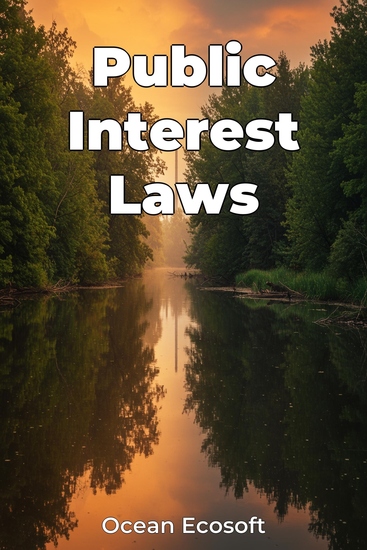
Public Interest Laws - cover

Public Interest Laws

Ocean Ecosoft

Translator A AI

Publisher: Publifye

  • 0
  • 0
  • 0

Summary

Public Interest Laws examines the effectiveness of legal frameworks designed to protect citizens and the environment, focusing on areas like environmental protection, healthcare policies, and workplace safety. It argues that while these laws are crucial, their impact is often weakened by political influence and economic pressures. For instance, landmark legislation such as the Clean Air Act faces ongoing debates regarding environmental regulations versus economic development. The book uniquely combines legal analysis with practical insights, using real-world case studies and policy implementation examples.

 
The book progresses from introducing core concepts of public interest law to exploring environmental protection, healthcare policies, including the Affordable Care Act, and workplace safety regulations, highlighting the role of OSHA. Each section reviews the historical development, practical application, and future direction of these laws. By presenting evidence from legal cases, government data, and academic research, the book encourages critical thinking about governmental responsibility and the importance of policy implementation.
Available since: 04/03/2025.
Print length: 74 pages.

Other books that might interest you

  • Second Crusade The: The History of the Controversial Campaign that Led to the Collapse of the Crusader States - cover

    Second Crusade The: The History...

    Charles River Editors

    • 0
    • 0
    • 0
    In the 50 years following the First Crusade, the Latin states in the East were consolidated, but there were also growing tensions and new challenges. Against this backdrop, the fall of the County of Edessa in December 1144 at the hands of Zengi, the atabeg of Aleppo and Mosul, was a catastrophic event. Founded in 1098 by the future King Baldwin of Boulogne, Edessa was the first Crusader state, as well as the northernmost, weakest, and least populated. It was constantly exposed to Muslim attacks, and news of its fall reached Europe at the beginning of 1145, and the fall was the catalyst for the Second Crusade. Furthermore, the Crusader states were also concerned about their relationship with the Byzantine Empire. Relations with the Empire were often tense. As early as 1105, Bohemond of Antioch travelled to the West in search of troops to fight the Muslims while concealing his intention to attack parts of the Byzantine Empire. He reportedly obtained papal acquiescence, though not an explicit bull.  
    Historically, writers have given little prominence to the Second Crusade because of its failure, and it is understandably overshadowed by the triumphant First Crusade and the more captivating Third Crusade. For a long time, historiography attributed a central role to Bernard of Clairvaux, sometimes portraying him as the sole architect of the enterprise due to the political difficulties experienced by Pope Eugene III in Rome. However, more recent studies have re-evaluated the Pope's role, emphasizing his commitment to planning and coordinating the crusade through a network of legates and advisors. Contrary to the portrayal of him as a naïve monk, Eugene III had a profound grasp of the dynamics of crusading and the boundaries of Christendom, which informed his bull and overall strategy. Another historiographical issue concerns the scope of the crusade itself:
    Show book
  • Morning After the Revolution: Book Summary and Analysis - cover

    Morning After the Revolution:...

    Briefly Summaries

    • 0
    • 0
    • 0
    This is a concise summary and analysis of Morning After the Revolution, by Nellie Bowles.
     
    It is not the original book and is not affiliated with or endorsed by Nellie Bowles.
     
    Ideal those seeking a quick and insightful overview.


    Morning After the Revolution takes you on a gripping journey through the aftermath of a progressive movement that promised sweeping change but struggled with practical realities. The author reflects on their personal experiences within the rise of New Progressivism, analyzing the lofty ideals, the disappointments, and the unintended consequences that unfolded in key cities like San Francisco. Through a critical examination of issues such as homelessness, identity politics, and the influence of financial backing, this audiobook delivers a sobering yet insightful exploration of how well-intended policies can sometimes miss their mark.
     
    Narrated with clarity and purpose, this audiobook dives deep into the challenges of balancing idealism with pragmatism in a rapidly changing world. The author critiques the ways in which progressive movements, while striving for justice, often lose sight of the very people they aim to uplift, becoming bogged down in ideological purity and short-term fixes. With a dynamic and thought-provoking tone, this audiobook offers listeners not just a critique of social movements, but also a call to rethink how we can make real, lasting progress.
    Show book
  • Complexity Theory Consciousness and Everyday Life - cover

    Complexity Theory Consciousness...

    Neil Thiese

    • 0
    • 0
    • 0
    In this 2023 interview with Justine Willis Toms, Neil Theise, M.D discusses the nature of complex systems, and how the limited randomness in biological life makes us different from machines. They also discuss how the brain does not create consciousness, and how consciousness is fundamental in the universe. 
    Theise is a practicing pathologist and leading stem-cell researcher as well as an explorer in the nature of consciousness and its relationship to us and the cosmos as revealed in Complexity Theory. He is also a senior student of Zen Buddhism at the Village Zendo, in New York City, under the guidance of Roshi Enkyo O’Hara. Theise is the author of Notes on Complexity: A Scientific Theory of Connection, Consciousness, and Being. (Spiegel & Grau 2023) 
    Interview Date: 2/25/2023   Tags: Neil Theise, ant colony, ant colonies, errant ant, quenched disorder, technosphere, liver cells, stem cells, hard problem in science, complexity theory, consciousness, Max Planck, spacetime energy field, quantum physics, particles, photons, waves, complementarity, nonlocality, mass extinction, Covid, AIDS, holocaust, Buddhist relative and absolute, Science, Buddhism, Personal Transformation
    Show book
  • Croton Point Park - Westchester's Jewel on the Hudson - cover

    Croton Point Park -...

    Scott Craven, Caroline Ranald...

    • 0
    • 0
    • 0
    Less than an hour by train from New York City...Croton Point Park encapsulates the history, beauty and promise of the Hudson Valley. The Westchester County Park encompasses miles of Hudson River shoreline with astonishing views and remnants of the region's past. Incredible shell mounds shed light on the Native peoples who inhabited the area generations prior to European colonization. The remains of the first commercial vineyards in the Northeast are just steps away from historic brickyards that helped build Manhattan. The Point served as a dumping ground for years until local efforts restored the park into a model of environmental conservation. Today, bald eagles have returned to nest alongside visitors exploring remarkable landmarks, sailing the waters of the Hudson or enjoying a scenic picnic. Authors Scott Craven and Caroline Ranald Curvan present Westchester's crown jewel, Croton Point Park.
    Show book
  • Tango 1-1 - 9th Infantry Division LRPs in the Vietnam Delta - cover

    Tango 1-1 - 9th Infantry...

    Jim Thayer

    • 0
    • 0
    • 0
    LRPs were all volunteers. They were in the spine-tingling, brain-twisting, nerve-wracking business of Long Range Patrolling. They varied in age from eighteen to thirty. These men operated in precision movements, like walking through a jungle quietly and being able to tell whether a man or an animal is moving through the brush without seeing the cause of movement. They could sit in an ambush for hours without moving a muscle except to ease the safety off the automatic weapon in their hand at the first sign of trouble. These men were good because they had to be to survive. 


    Called LRPs for short, they were despised, respected, admired, and sometimes thought to be a little short on brains by those who watched from the sidelines as a team started out on another mission to seek out the enemy. They were men who can take a baby or small child in their arms and make them stop crying. They shared their last smoke, last ration of food, last canteen of water. They were kind in some ways, deadly in others. They were men who believed in their country, freedom, and fellow men. They were a new kind of soldier in a new type of warfare. 


    LRPs stand out in a crowd of soldiers. It's not just their tiger fatigues but the way they walk, talk, and stand. They were proud warriors because they were members of the Long Range Patrol.
    Show book
  • The Last Best Hope - A History of American Realism - cover

    The Last Best Hope - A History...

    John Hulsman

    • 0
    • 0
    • 0
    In this brilliant exploration of American history and contemporary conservative politics, foreign policy expert John Hulsman draws on his years at the heart of Washington to present a compelling new vision of conservative realism. 
    In our current Age of Insecurity, Hulsman suggests, there has never been a bigger need for the re-ascendance of realist principles in conservative circles. By drawing on U.S. history to illustrate realist precepts at the heart of the American story, The Last Best Hope provides a practical, realist foreign policy for a new age of American politics. 
    There has never been a greater time to re-claim the primacy of conservative thought. By fusing the populist Jacksonian base of the GOP with the more libertarian Jeffersonian school of thought, this cogently argued manifesto hopes to grasp that opportunity, and to act as a clarion call for a new dominant realist foreign policy.
    Show book