Join us on a literary world trip!
Add this book to bookshelf
Grey
Write a new comment Default profile 50px
Grey
Subscribe to read the full book or read the first pages for free!
All characters reduced
Intuitive Decision Making - cover

Intuitive Decision Making

Ocean Ecosoft

Translator A AI

Publisher: Publifye

  • 0
  • 0
  • 0

Summary

Intuitive Decision Making explores the fascinating realm of social intuition, examining the cognitive underpinnings of our instant judgments and choices in social contexts. It delves into how we quickly assess trustworthiness or navigate social dynamics, often without conscious awareness. The book highlights that while these intuitive decisions are generally efficient, they are also susceptible to biases. For instance, confirmation bias can lead us to selectively notice information that confirms our existing beliefs, while the availability heuristic makes us overestimate the importance of information that is easily recalled. 

 
This book uniquely bridges theoretical research with practical applications, offering actionable strategies to refine our social intuition. Beginning with a foundation in cognitive science, including dual-process theory, the progression of chapters explores nonverbal communication, emotional intelligence, and various social heuristics. It then dissects common biases affecting social judgments, providing real-world examples and empirical studies. Finally, it presents techniques like mindfulness and emotional regulation to enhance intuitive judgment, ultimately discussing the ethical considerations involved in developing social intuition.

 
By understanding the cognitive science behind social intuition, individuals can improve decision-making, build stronger relationships, and navigate complex social interactions more effectively. The book's approach aims to make these concepts accessible to both researchers and practitioners, offering a valuable guide to understanding and improving intuitive social decision-making.
Available since: 02/21/2025.
Print length: 89 pages.
Other books that might interest you

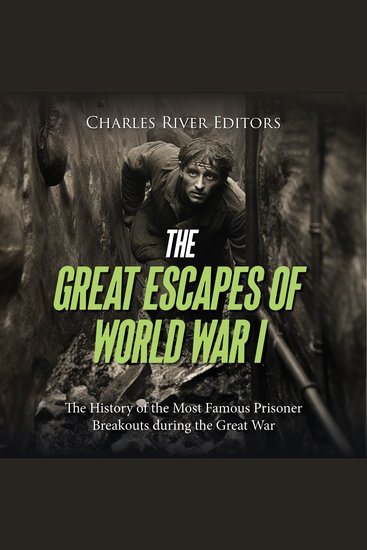
  • Great Escapes of World War I The: The History of the Most Famous Prisoner Breakouts during the Great War - cover

    Great Escapes of World War I...

    Editors Charles River

    • 0
    • 0
    • 0
    In the first half of the 20th century, war was fought on a global and industrial scale. Millions of men were flung into the grinder of World War I and World War II, leading to commensurately huge numbers of prisoners of war (POWs). Camps were built to hold thousands of captives, with their own barracks blocks, parade grounds, and even farms. In World War I, there were several fronts in the war - Britain, France, Belgium, and Germany faced each other on the Western Front, fought mostly in northeast France and Belgium, while Germany and Austria Hungary faced Russia on the Eastern Front, where much of the war was fought in East Prussia and what is now Poland. The Italians and Austrians fought in the region of northeast Italy, and the Austrians and Bulgarians faced Serbia and then later an Allied army based in Salonica in the Balkans. The Ottomans faced Russia in northeast Anatolia, the British and Allied forces in the Mesopotamian campaign (mainly in today’s Iraq), the British in Palestine, and the Allies at Gallipoli.  
    	Regardless of rank, throughout the war, many of these men did not sit idle. Many spent their time preparing elaborate escape plans in the hopes of returning to their home nations and back to the fight. Following World War I, several books were published giving romantic accounts of successful escapes. For example, the wildly popular film The Great Escape (1963), has been a main factor in how the public views prisoners of war, and while that film was based on a book that details a mass escape of British and Allied prisoners from a World War II German prison camp for aviators, Stalag Luft III, a real escape from a German prisoner camp in World War I inspired the 1944 great escape from Stalag Luft III. 
    Show book
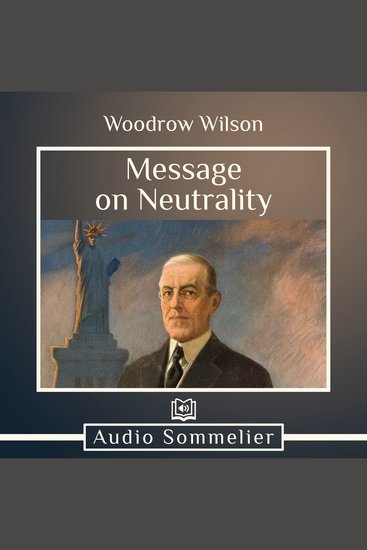
  • Message on Neutrality - cover

    Message on Neutrality

    Woodrow Wilson

    • 0
    • 0
    • 0
    With this 1914 address, President Woodrow Wilson declared his intentions for the US to remain neutral in World War I. “Every man who really loves America will act and speak in the true spirit of neutrality,” he said, “which is the spirit of impartiality and fairness and friendliness to all concerned.” This platform secured Wilson’s re-election in 1916, but it only lasted until 1917. When Germany restarted unrestricted submarine warfare against US vessels, Wilson would retract his sentiment and lead Congress to vote in favor of war.  
    Show book
  • The New Atlantis - cover

    The New Atlantis

    Sir Francis Bacon

    • 0
    • 0
    • 0
    "The New Atlantis" by Francis Bacon is a utopian novel published posthumously in 1626. A European crew loses their way in the Pacific and discovers Bensalem, a mythical island where Christian piety meets scientific ambition. At its heart stands Salomon's House, a state-sponsored research institution dedicated to understanding nature's secrets and expanding human knowledge. Through encounters with the island's chaste, enlightened inhabitants, the visitors glimpse Bacon's vision for humanity's future—a society where systematic inquiry and moral virtue combine to achieve "the effecting of all things possible."
    Show book
  • Civil Wars of the Late Roman Republic The: The History of the Conflicts that Made Sulla and Caesar the Dictators of Rome - cover

    Civil Wars of the Late Roman...

    Editors Charles River

    • 0
    • 0
    • 0
    Julius Caesar is still remembered for winning a civil war and helping bring about the end of the Roman Republic, leaving a line of emperors in its place, but it’s quite possible that none of what Caesar did would’ve happened without the template for such actions being set 40 years earlier. At the time, when Caesar was in his teens, war was being waged both on the Italian peninsula and abroad, with domestic politics pitting the conservative, aristocratic optimates against the populist, reformist populares, and this tension ultimately escalated into an all-out war. One of the leading populares was Caesar’s uncle, Gaius Marius, a military visionary who had restructured the legions and extended the privileges of land ownership and citizenship to legionaries on condition of successful completion of a fixed term of service. In the late 2nd century B.C., Marius had waged a successful campaign against several Germanic tribes, and after earning eternal fame in the Eternal City, Marius was appointed a consul several times. In 88 B.C., he entered into conflict with his erstwhile protégé, the optimate Sulla, over command of the army to be dispatched against Mithridates VI of Pontus, a long-time enemy of Rome and its Greek allies.   
    Ironically, Marius’s reforms had made the legions fiercely loyal to their individual generals rather than the state, which allowed Sulla to march his army against Rome and force Marius into exile. With that, Rome’s first civil war was officially underway, but Sulla’s triumph proved short-lived. Just as Sulla departed for a campaign, Marius returned at the head of a scratch army of veterans and mercenaries, taking over the city and purging it of Sulla’s optimate supporters, and though Marius died in 86 B.C., his party remained in power. 
    Show book
  • Crimean War - cover

    Crimean War

    Kelly Mass

    • 0
    • 0
    • 0
    The Crimean War was an army war between Russia and an alliance of France, the Ottoman Empire, the UK, and Sardinia that lasted from October 1853 to February 1856. The rights of Christian minority in Palestine, which became part of the Ottoman Empire, were the instant reason for the war. The rights of Roman Catholics were promoted by the French, while those of the Eastern Orthodox Church were promoted by Russia.Longer-term elements included the Ottoman Empire's fall, the Russian Empire's development at the time of the preceding Russo-Turkish Wars, and the British and French desire to safeguard the Ottoman Empire to maintain the Show of Europe's power balance. It has been commonly observed that the causes, that included a difference over a type in one case, never ever suggested a "bigger confusion of purpose" but instead caused a dispute well-known for its "infamously inexperienced worldwide butchery."Let’s learn more about this often-forgotten war.
    Show book
  • SAT Vocabulary AudioLearn - Complete Review the Top 500 SAT Vocabulary Words You Need to Know! - cover

    SAT Vocabulary AudioLearn -...

    AudioLearn Content Team

    • 0
    • 0
    • 0
    Improve your spelling. Gain a better understanding of sentence structure. Increase your SAT scores. SAT AudioLearn includes more than 500 words that commonly appear on the SAT, making it your indispensable study guide when it comes to SAT vocabulary! 
    Key Topics:SpellingSyntaxSentence UsagePronunciation 
    With its convenient format, SAT AudioLearn fits your busy lifestyle, enabling you to study anywhere, anytime. Best of all, you'll significantly increase learning and retention with AudioLearn's proven study format.
    Show book