Join us on a literary world trip!
Add this book to bookshelf
Grey
Write a new comment Default profile 50px
Grey
Subscribe to read the full book or read the first pages for free!
All characters reduced
Forest Roots Bloom - cover

Forest Roots Bloom

Ocean Ecosoft

Translator A AI

Publisher: Publifye

  • 0
  • 0
  • 0

Summary

Forest Roots Bloom explores the intersection of technology and tradition among isolated jungle tribes, revealing how digital tools are being used for cultural preservation, economic empowerment, and environmental conservation. The book demonstrates that rather than being passive recipients of technology, these communities are active agents, adapting tools like mobile banking and e-commerce to participate in global markets and secure fair prices, bypassing exploitative intermediaries. It further highlights how social media and digital archives are used to safeguard cultural heritage and transmit traditions to future generations. The book delves into the historical context of these tribes, acknowledging the challenges they face from globalization, deforestation, and resource exploitation. It emphasizes that technology can serve as a lifeline for survival, offering a strategic means to thrive without sacrificing autonomy or cultural integrity. The book progresses by first establishing the cultural and historical backdrop, then examining specific technological interventions related to sustainable trade, environmental protection (using drones and satellite imagery), and cultural identity.
Available since: 02/27/2025.
Print length: 75 pages.

Other books that might interest you

  • Brandy Station and the March to Gettysburg: The History of the Confederate Invasion of Pennsylvania Before the Biggest Battle of the Civil War - cover

    Brandy Station and the March to...

    Editors Charles River

    • 0
    • 0
    • 0
    As Lee’s army moved into Pennsylvania, Stuart’s cavalry screened his movements, thereby engaging in the more traditional cavalry roles, but it’s widely believed that he was still smarting over the results of June 9. As a result, many historians think it likely that he had already planned to remove the negative effect of Brandy Station by duplicating one of his now famous rides around the enemy army, much as he did to McClellan’s Army of the Potomac during the Peninsula Campaign in 1862. This time, however, as Lee began his march north through the Shenandoah Valley in western Virginia, it is highly unlikely that is what he wanted or expected. 
    To complicate matters even more, as Stuart set out on June 25 on what was probably a glory-seeking mission, he was unaware that his intended path was blocked by columns of Union infantry that would invariably force him to veer farther east than he or Lee had anticipated. Ultimately, his decision would prevent him from linking up with Ewell as ordered and deprive Lee of his primary cavalry force as he advanced deeper and deeper into unfamiliar enemy territory. According to Halsey Wigfall (son of Confederate States Senator Louis Wigfall) who was in Stuart’s infantry, “Stuart and his cavalry left [Lee’s] army on June 24 and did not contact [his] army again until the afternoon of July 2, the second day of the [Gettysburg] battle.” 
    As it would turn out, Lee’s army inadvertently stumbled into Union cavalry and then the Union army at Gettysburg on the morning of July 1, 1863, unaware of the force in their front. From July 1-3, Lee’s army tried everything in its power to decisively defeat George Meade’s Union Army of the Potomac, unleashing ferocious assaults that inflicted nearly 50,000 casualties in all. Lee would try and fail to dislodge the Union army with attacks on both of its flanks during the second day and Pickett’s Charge on the third and final day. 
    Show book
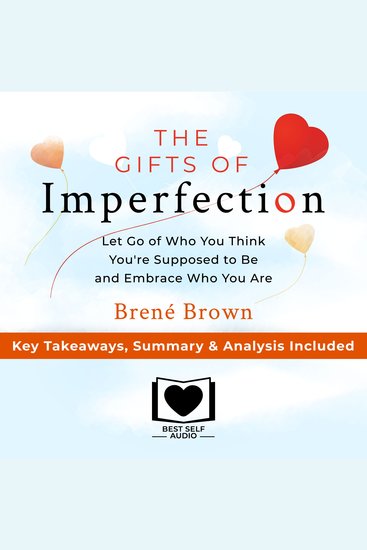
  • Summary of The Gifts of Imperfection - Let Go of Who You Think You're Supposed to Be and Embrace Who You Are by Brené Brown: Key Takeaways Summary & Analysis Included - cover

    Summary of The Gifts of...

    William Beckett

    • 0
    • 0
    • 0
    *PLEASE NOTE: This concise summary is unofficial and is not authorized, approved, licensed, or endorsed by the original book's publisher or author.* 
    Short on time? Or maybe you’ve already read the book, but need a refresh on the most important takeaways. In a quick, easy listen, you can take the main principles from The Gifts of Imperfection: Let Go of Who You Think You’re Supposed to Be and Embrace Who You Are! 
    The Gifts of Imperfection: Let Go of Who You Think You’re Supposed to Be and Embrace Who You Are is a prominent self-help book by Brené Brown that has sold over two million copies and has been translated into thirty languages. This New York Times bestselling book uses anecdotes and research to create a coherent, enjoyable reading experience. Throughout the book, Brown teaches how we should learn wholehearted living, so we can fully embrace the different opportunities and joys life provides us. 
    An expert on shame, Brown brings her professional expertise to her book to show readers how to cultivate self-worth and let go of the perfectionistic tendencies that make it hard for people to feel fulfilled in life. Brown came upon her conclusions after she experienced burnout professionally and sought therapy to fix her broken relationship with success and worth. She shares professional and personal wisdom that helps readers reorient their relationships with themselves. Brown expertly leads readers, using ten guideposts that target different emotional entities, to improve our lives within our bodies, minds, and souls. 
    This audiobook encapsulates key takeaways found in the original book. We’ve also provided an in-depth analysis as well as removing any fluff to save you hours of your time. If you’ve read the original, then this audio summary will help you solidify the most important lessons.
    Show book
  • The Little Book of Stoic Wisdom - Learn the Art of Living Well with Classical Philosophy - cover

    The Little Book of Stoic Wisdom...

    Joseph Piercy

    • 0
    • 0
    • 0
    Learn how to thrive in the modern world by unlocking the ancient art of Stoicism. 


    The Little Book of Stoic Wisdom is a classical primer for anyone wanting to understand true Stoicism—and even though we're living in drastically different times than the ancients, many of the lessons of Seneca, Epictetus, and Marcus Aurelius still stand today. 


    The millennia-old mindset will show you how to learn the Stoic art of mindful acceptance, foster calmness, and reach your full potential. Featuring a breakdown of the central pillars of Stoic philosophy alongside practical everyday examples, this essential book will help you sharpen your focus, build your self-discipline, and banish negative thinking. 


    A Stoic life well-lived has been adopted by some of the most successful business leaders, from Steve Jobs to Bill Gates and Elon Musk, as well as high-performing athletes like Rory McIlroy, and historic figures such as George Washington, Theodore Roosevelt, and Thomas Jefferson, among others. The Little Book of Stoic Wisdom will show you what it truly means to live stoically and reach your goals.
    Show book
  • A Book of Poems for Black Kings - cover

    A Book of Poems for Black Kings

    Fulterius King

    • 0
    • 0
    • 0
    A Book of Poems for Black Kings is a profound and empowering anthology that speaks directly to the hearts and souls of Black men and Black boys. This collection of poetry and prose is designed to validate their lived experiences, provide strength during trials, and facilitate deep soul-searching and self-discovery. Through poignant and powerful pieces, this book explores the multifaceted nature of power, vulnerability, and purpose within the Black male experience. 
    In the first section, "New Braids," readers will find poems that uplift and inspire, celebrating the strength, resilience, and inherent dignity of Black men and boys. These poems serve as a source of empowerment, reminding readers of their rich heritage and the greatness they carry within. The second section, "Managing the Frizz," delves into the complexities of vulnerability, offering a safe space for Black men and boys to confront and navigate their emotions during challenging times. These poems provide comfort and understanding, emphasizing that vulnerability is not a weakness but a powerful aspect of their humanity. The final section, "Afro - The Let Out," takes readers on a journey of introspection and soul-searching. Through deeply reflective and thought-provoking poems, this section encourages readers to explore their inner selves, understand their true essence, and embrace their individuality. 
    Metaphorically, this book guides the reader through a journey mirroring the stages of a Black man's hair—from the freshly braided strands that signify new beginnings and empowerment, to the frizz that embodies life's challenges and the call for resilience, and finally to the majestic afro, a symbol of self-acceptance and liberation. 
    Brothers, prepare to embark on a transformative journey through these pages, gaining insights, strength, and a renewed sense of self.
    Show book
  • Scimitar into Stanley - One Soldier's Falklands War - cover

    Scimitar into Stanley - One...

    Roger Field

    • 0
    • 0
    • 0
    In May 1982, Captain Roger Field, The Blues and Royals, attached to HQ 5th Infantry Brigade, sailed on the Queen Elizabeth 2 as part of the second wave to liberate the Falkland Islands. Surprised by what he saw at Brigade HQ, he started writing a diary. 
    His journey took him to Fitzroy as the Argentinean aircraft struck the landing ships Sir Galahad and Sir Tristram. A chance meeting led him to fighting alongside the Commanding Officer of 2 Para at the Battle of Wireless Ridge. When the commander of one of the four attached armoured cars of The Blues and Royals was knocked out part way through the battle, Roger took command of that Scimitar. Next day his Scimitar was at the very tip of the spear as 2 Para and The Blues and Royals led the victorious charge into Port Stanley. 
    ‘Revisionist’ in places and always refreshingly candid, this account is unique as it describes the War from the viewpoint of a staff officer, infanteer and armoured vehicle commander. A gripping listen.
    Show book
  • The Book of the National Parks - cover

    The Book of the National Parks

    Robert Sterling Yard

    • 0
    • 0
    • 0
    Robert Sterling Yard was an American writer, journalist, and wilderness activist. Born in Haverstraw, New York, Yard graduated from Princeton University and spent the first twenty years of his career in the editing and publishing business. In 1915, he was recruited by his friend Stephen Mather to help publicize the need for an independent national park agency. Their numerous publications were part of a movement that resulted in legislative support for a National Park Service (NPS) in 1916. Yard worked to promote the national parks as well as educate Americans about their use. Creating high standards based on aesthetic ideals for park selection, he also opposed commercialism and industrialization of what he called "America's masterpieces". In 1935, he became one of the eight founding members of The Wilderness Society and acted as its first president from 1937 until his death eight years later. Yard is now considered an important figure in the modern wilderness movement.In the preface to  this book, published in 1919, he writes, "In offering the American public a carefully studied outline of its national park system, I have two principal objects. The one is to describe and differentiate the national parks in a manner which will enable the reader to appreciate their importance, scope, meaning, beauty, manifold uses and enormous value to individual and nation. The other is to use these parks, in which Nature is writing in large plain lines the story of America's making, as examples illustrating the several kinds of scenery, and what each kind means in terms of world building; in other words, to translate the practical findings of science into unscientific phrase for the reader's increased profit and pleasure, not only in his national parks but in all other scenic places great and small." (summary from wikipedia)
    Show book