Join us on a literary world trip!
Add this book to bookshelf
Grey
Write a new comment Default profile 50px
Grey
Subscribe to read the full book or read the first pages for free!
All characters reduced
Face Saving Methods - cover

Face Saving Methods

Ocean Ecosoft

Translator A AI

Publisher: Publifye

  • 0
  • 0
  • 0

Summary

Face Saving Methods explores the universal human need to maintain dignity and avoid shame in social interactions, even at personal cost. It delves into the psychological and behavioral strategies cultures worldwide use to manage "face"—the public image we present. Understanding these strategies is vital for effective cross-cultural communication, as misunderstandings can lead to tensions in diplomacy, business failures, and personal conflicts. 

 
For example, the book highlights how indirect communication can be a face-saving tactic in some cultures, while directness is valued in others. The book draws from psychology, sociology, and anthropology to provide a cross-cultural perspective on face management. It examines how concepts of honor and shame have evolved historically while using social psychology to uncover biases that influence perceptions of face threats. 

 
The book progresses by first introducing core concepts of face and potential threats, then analyzes diverse face-saving strategies across cultures, illustrated with real-world examples. It offers a framework for understanding the psychological mechanisms driving cultural differences, making it valuable for anyone seeking to navigate cross-cultural interactions with greater confidence.
Available since: 02/21/2025.
Print length: 72 pages.
Other books that might interest you

  • Kafkaesque - From Jorge Luis Borges to Primo Levi Ten Writers Who Translated Kafka and Transformed Twentieth-Century Literature - cover

    Kafkaesque - From Jorge Luis...

    Maïa Hruska

    • 0
    • 0
    • 0
    A lively inquiry into a literary genius, the translators who immortalized him, and what it means to cultivate a rich inner life in turbulent times 
    "What happens to a writer's work when it is translated–specifically, what happens if his name is Franz Kafka?" 
    In Kafkaesque, Maïa Hruska traces the strange, shape-shifting legacy of one of literature’s most elusive figures—not through traditional biography but through the lives of his earliest and most influential translators. With rigor and élan, she shows us how our understanding of Kafka is inevitably filtered through these voices, many of whom were, or would become, major writers and thinkers in their own right. 
    Jorge Luis Borges rendered Kafka into Spanish, recognizing in him a fellow architect of the infinite. Primo Levi used the German he acquired in a concentration camp to bring The Trial into Italian despite the “psychoanalytic repulsion” he felt toward Kafka. Bruno Schulz published his Polish edition of the same novel before being shot by a Nazi officer. Vladimir Nabokov annotated The Metamorphosis in exile, having undergone his own transformation–from native to foreigner. Milena Jesenská, Kafka’s great love, translated him into Czech, a language he was both surrounded by and estranged from. 
    What emerges across these essays isn’t just a portrait of a legendary writer and his translators but also a portrait of the twentieth century itself—its fractures and displacements, its aesthetic revolutions, its ethical crises. Part cultural history, part group biography, Kafkaesque is a dazzling meditation on language, identity, and the irreducible strangeness of reading and being read.
    Show book
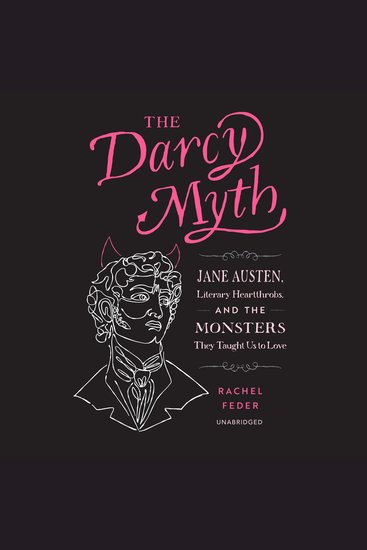
  • The Darcy Myth - Jane Austen Literary Heartthrobs and the Monsters They Taught Us to Love - cover

    The Darcy Myth - Jane Austen...

    Rachel Feder

    • 0
    • 0
    • 0
    What if we’ve been reading Jane Austen and romantic classics all wrong? A funny, brainy, eye-opening take on how our contemporary love stories are actually pretty terrifying. 
    Covering cultural touchstones ranging from Twilight to Taylor Swift and from Lord Byron to The Bachelor, The Darcy Myth is a book for anyone who loves thinking deeply about literature and culture—whether they love Jane Austen or not. 
    You already know Mr. Darcy—at least you think you do! The brooding, rude, standoffish romantic hero of Pride and Prejudice, Darcy initially insults and ignores the witty heroine but eventually succumbs to her charms. It’s a classic enemies-to-lovers plot and one that has profoundly influenced our cultural ideas about courtship. But what if this classic isn’t just a grand romance but a horror novel about how scary love and marriage can be for women? 
    In The Darcy Myth, literature scholar Rachel Feder unpacks Austen’s Gothic influences and how they have led us to a romantic ideal that is halfway to being a monster story. Why is our culture so obsessed with cruel, indifferent romantic heroes, and sometimes heroines? How much of that is Darcy’s fault? And, now that we know, what do we do about it?
    Show book
  • More Perfect Heaven - How Copernicus Revolutionized the Cosmos - cover

    More Perfect Heaven - How...

    Dava Sobel

    • 0
    • 0
    • 0
    With the enthralling style that made Longitude and Galileo's Daughter international best-sellers, Dava Sobel paints an unforgettable portrait of the Copernican Revolution. Encouraged by his German protege, Polish cleric Nicolaus Copernicus published his heliocentric model of the universe, tantalizing 16th-century mathematicians and scientists-and triggering a groundswell of opposition.
    Show book
  • The STAR Method Explained - Proven Technique to Succeed at Interview - cover

    The STAR Method Explained -...

    Martha Gage

    • 0
    • 0
    • 0
    Most people lose job offers before they finish answering the first question.
     
    Not because they lack experience, but because they don't know how to tell their story.
     
    The STAR Method fixes that. It's the same framework used by top candidates at the world's most competitive companies. Simple, proven, and once you hear it in action, you'll never fumble through a behavioral interview again.
     
    You'll learn how to turn your real experiences into confident, compelling answers. The kind that make hiring managers lean in, not tune out. No rambling. No underselling yourself. No awkward silences.
     
    Your next interview could be the one that changes everything. Let's make sure you're ready.
    Show book
  • The Queens Who Fought Rome - cover

    The Queens Who Fought Rome

    Editors Charles River

    • 0
    • 0
    • 0
    During one of the most turbulent periods in the history of Rome, men like Julius Caesar, Mark Antony, and Octavian participated in two civil wars that would spell the end of the Roman Republic and determine who would become the Roman emperor. In the middle of it all was history’s most famous woman, the Egyptian pharaoh Cleopatra (69-30 B.C.), who famously seduced both Caesar and Antony and thereby positioned herself as one of the most influential people in a world of powerful men. Cleopatra was a legendary figure even to contemporary Romans and the ancient world, as Plutarch’s quote suggests, and she was a controversial figure who was equally reviled and praised through the years, depicted as a benevolent ruler and an evil seductress, sometimes at the same time.  
    One of the reasons Hadrian's Wall existed was to protect against enemies, and given what happened in the mid-1st century CE, the Romans’ fears was understandable. Indeed, Londinium had become the largest city in Britannia shortly before being burned down in a native revolt led by an infamous Celtic Iceni queen named Boudica. With a name meaning “Victory,” Boudica was a charismatic woman who commanded nearly 100,000 Celts and led them on a campaign to expel the Roman overlords from Britain around the year 61 CE. Often called the “Celtic Queen,” she wore a warrior’s necklace around her delicate neck and rode upon a sturdy steed.  
    One of the most significant women in late antiquity was Zenobia, who for just a few short years in the late 3rd century CE ruled the wealthy merchant city of Palmyra. During her time as ruler, Zenobia extended Palmyra’s boundaries from its very circumscribed location in the Syrian desert to that of a full-fledged empire that included most of the Levant, Egypt, and part of Anatolia. Despite living in a man’s world, Zenobia was able to come to power and eventually challenge the Roman Emperor Aurelian (r. 270-275).
    Show book
  • Tao Te Ching - cover

    Tao Te Ching

    Lao Tzu

    • 0
    • 0
    • 0
    Embark on a transformative journey of self-discovery with "Tao Te Ching" by Lao Tzu, available now as an enriching audiobook experience. This timeless classic offers profound insights into the nature of existence, human behavior, and the path to inner peace. 
    Narrated with clarity and reverence, this audiobook invites listeners to explore the essence of Taoism, guiding them through verses that reveal the harmony of opposites, the power of simplicity, and the wisdom of living in accordance with the Tao, or the Way. 
    Whether you're seeking guidance on leadership, personal growth, or spiritual fulfillment, "Tao Te Ching" offers invaluable lessons that resonate across cultures and generations. Perfect for moments of reflection, meditation, or simply unwinding, this audiobook provides a serene oasis in the hustle and bustle of modern life. 
    Don't miss the opportunity to immerse yourself in the profound wisdom of Lao Tzu. Start listening to "Tao Te Ching" today and embark on a journey of enlightenment and self-discovery.
    Show book