Rejoignez-nous pour un voyage dans le monde des livres!
Ajouter ce livre à l'électronique
Grey
Ecrivez un nouveau commentaire Default profile 50px
Grey
Abonnez-vous pour lire le livre complet ou lisez les premières pages gratuitement!
All characters reduced
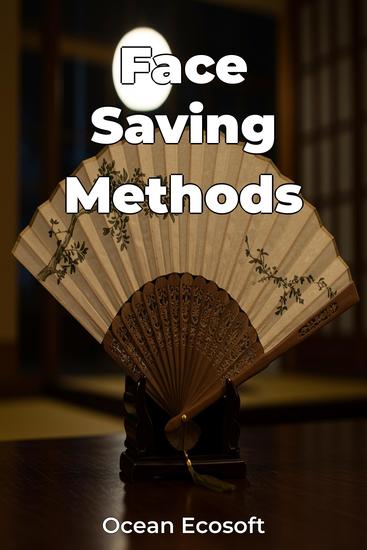
Face Saving Methods - cover

Face Saving Methods

Ocean Ecosoft

Traducteur A AI

Maison d'édition: Publifye

  • 0
  • 0
  • 0

Synopsis

Face Saving Methods explores the universal human need to maintain dignity and avoid shame in social interactions, even at personal cost. It delves into the psychological and behavioral strategies cultures worldwide use to manage "face"—the public image we present. Understanding these strategies is vital for effective cross-cultural communication, as misunderstandings can lead to tensions in diplomacy, business failures, and personal conflicts. 

 
For example, the book highlights how indirect communication can be a face-saving tactic in some cultures, while directness is valued in others. The book draws from psychology, sociology, and anthropology to provide a cross-cultural perspective on face management. It examines how concepts of honor and shame have evolved historically while using social psychology to uncover biases that influence perceptions of face threats. 

 
The book progresses by first introducing core concepts of face and potential threats, then analyzes diverse face-saving strategies across cultures, illustrated with real-world examples. It offers a framework for understanding the psychological mechanisms driving cultural differences, making it valuable for anyone seeking to navigate cross-cultural interactions with greater confidence.
Disponible depuis: 21/02/2025.
Longueur d'impression: 72 pages.

D'autres livres qui pourraient vous intéresser

  • A Comprehensive Guide to Bhagavad-gita With Literal Translation - cover

    A Comprehensive Guide to...

    Howard J. Resnick (H.D.Goswami)

    • 0
    • 0
    • 0
    Widely revered as a work of spiritual and philosophic genius, Bhagavad-gītā excels in providing reasonable, satisfying responses to life’s biggest issues: Who am I? Why do I exist? What is the universe? What is God? This Comprehensive Guide, with its systematic analysis of major Gītā themes, provides a unique companion for beginners, advanced students and mature scholars alike. With encyclopedic knowledge and an insider’s grasp of the text, the author guides us in simple elegant prose to the very heart of the Gītā’s sublime conclusions.
    Voir livre
  • Ancient and Medieval Warfare in the West: The History of Western Europe’s Changing Military Tactics in Antiquity and the Middle Ages - cover

    Ancient and Medieval Warfare in...

    Editors Charles River

    • 0
    • 0
    • 0
    For the Greeks, a hoplite was only as strong as the hoplite next to him; without hoplites on the sides, both flanks were exposed, and heavy infantry units are not mobile. Thus, they implemented the phalanx formation, one of history’s most important military innovations. The phalanx was a line of infantry as wide across as the battlefield dictated, anything from five to 30 men deep, with each rank of men officered by a veteran. The formation also included an additional, expert file-closer at the back of each file, to keep the formation cohesive. The phalanx advanced slowly to maintain its tight formation and unit cohesion, speeding up in unison just before reaching combat.   
    	While the Roman army is rightly famed as an institution, the image of the individual legionary is also an iconic one. The uniformed, disciplined soldier of the late Republic and early Empire is one of the first things many people imagine when they think of Rome. They are the ultimate image of the ancient soldier, their arms and armor instantly recognizable. Their abilities, not only as warriors but also as engineers and administrators, have made them role models for other soldiers through the centuries. In the same vein, their commanders are still celebrated and studied, and generals the world over have tried to emulate the likes of Julius Caesar. 
    If anything, the one aspect of the Middle Ages that has been romanticized is medieval warfare. Indeed, the Middle Ages have long sparked people’s imaginations thanks to imagery of armored knights battling on horseback and armies of men trying to breach the walls of formidable castles. What is generally forgotten is that medieval warfare was constantly adapting to the times as leaders adopted new techniques and technology, and common infantry became increasingly important throughout the period. By the end of the period, warfare was radically changing thanks to the rise of gunpowder weapons and artillery. 
    Voir livre
  • Founding an Empire - cover

    Founding an Empire

    Santiago Machain

    • 0
    • 0
    • 0
    From the wind-swept plains of Anshan to the terraced palaces of Persepolis, Founding an Empire follows how a cluster of royal ambitions became the ancient world’s most sophisticated superstate. Opening with Cyrus the Great’s audacious conquests and his radical politics of legitimacy—liberation, local autonomy, and measured mercy—the narrative moves through Cambyses II’s Egyptian campaign at the edge of the known world and into the turbulence of succession that nearly cracked the young empire. It culminates with Darius I’s disciplined counterrevolution: a reforming king who turned roads, taxes, languages, and law into a scalable system.
    Voir livre
  • Summary of Thinking Fast and Slow - 80 mins with the top ideas in the book - cover

    Summary of Thinking Fast and...

    Anton Gavrailov

    • 0
    • 0
    • 0
    Get the key insights of the bestseller 'Thinking, Fast and Slow' by Daniel Kahneman in this easy-to-comprehend audio book. 
    We've distilled the complex topics into a concise and accessible version, perfect for those who want to learn how we think and make decisions. 
    Perfect for anyone interested in psychology, economics, or just understanding themselves better, without getting bogged down in jargon and details.Learn about the two systems of thinking that drive our decision making processesDiscover how our biases and heuristics can affect our judgments and choicesUnderstand the impact of framing and context on our perceptions and decisionsExplore the psychology of risk and uncertainty and how we assess probabilitiesGain insights into the role of intuition and emotions in our thinkingFind out how to improve your decision making by recognizing common cognitive errorsGet a practical framework for understanding and analyzing complex problems 
    The summarization was generated using AI and reviewed by a human editor to ensure accuracy and clarity. 
    Humans also facilitate the AI by tuning it to create most valuable and understandable content for the general public without difficult to understand language and details.
    Voir livre
  • Ninety Days - The True Story of the Hunt for Rajiv Gandhi's Assassins [NOW A MAJOR WEB SERIES] - cover

    Ninety Days - The True Story of...

    Adwait Karambelkar, Anirudhya Mitra

    • 0
    • 0
    • 0
    At 10.20 p.m. on 21 May 1991, a young woman bowed before Rajiv Gandhi at an election rally in Sriperumbudur, 42 km north of Chennai. And then there was an explosion.  
    This book is the definitive account of one of the most controversial crimes in contemporary India. It unravels the complex plot hatched by the LTTE (Liberation Tigers of Tamil Eelam) to ensure that Rajiv Gandhi did not return to power in the 1991 general elections.  
    Ninety Days provides a blow-by-blow account of how the Special Investigation Team of the CBI cracked the assassination plot, identified the assassins and chased the mastermind, Sivarasan, to his final hideout. The deaths from cyanide consumption of the members of the hit squad left several unanswered questions in their wake, which this book explores.
    Voir livre
  • Can Thought Bring Order? - Saanen 1974 - Public Talk 2 - cover

    Can Thought Bring Order? -...

    Jiddu Krishnamurti

    • 0
    • 0
    • 0
    Can thought bring order? - 18 July 1974 
    • Are thoughts, feelings, reactions and relationships merely mechanical? Is there 
    any other movement? 
    • Where there is a cause there is time and so living becomes relative. 
    • Is my relationship with another based on opinions, memories, demands and 
    sexual appetites? 
    • Is there a way of living which has no cause? 
    • Do I actually see disorder or only its description? 
    • Is it only when the ‘me’ is non-existent that I am related? 
    • What takes place when the mind has order and a sense of total relationship? • Can the mind be free of the word to look and discover its disorder? 
    Questions from the audience followed the talk."
    Voir livre