Join us on a literary world trip!
Add this book to bookshelf
Grey
Write a new comment Default profile 50px
Grey
Subscribe to read the full book or read the first pages for free!
All characters reduced
The Four Million - cover

The Four Million

O. Henry

Publisher: Memorable Classics eBooks

  • 0
  • 0
  • 0

Summary

The Four Million by O. Henry - he Four Million is the second published collection of short stories by O. Henry originally released on April 10, 1906, by McClure, Phillips & Co. in New York. There are twenty-five stories of various lengths including several of his best known works such as "The Gift of the Magi" and "The Cop and the Anthem".

The book's title refers to the then population of New York City where many of the stories are set. O. Henry was responding to a newspaper editorial which opined that there were only four hundred people in New York City worth knowing.

Contents:
 

	"Tobin's Palm"
	"The Gift of the Magi"
	"A Cosmopolite in a Cafe"
	"Between Rounds"
	"The Skylight Room"
	"A Service of Love"
	"The Coming-Out of Maggie"
	"Man About Town"
	"The Cop and the Anthem"
	"An Adjustment of Nature"
	"Memoirs of a Yellow Dog"
	"The Love-Philtre of Ikey Schoenstein"
	"Mammon and the Archer"
	"Springtime à la Carte"
	"The Green Door"
	"From the Cabby's Seat"
	"An Unfinished Story"
	"The Caliph, Cupid and the Clock"
	"Sisters of the Golden Circle"
	"The Romance of a Busy Broker"
	"After Twenty Years"
	"Lost on Dress Parade"
	"By Courier"
	"The Furnished Room"
	"The Brief Debut of Tildy"
Available since: 06/02/2022.

Other books that might interest you

  • The Undying Man - cover

    The Undying Man

    D H Lawrence

    • 0
    • 0
    • 0
    'The Undying Man' is a slight unfinished piece, drawing its inspiration from Shelley's 'Frankenstein' about the creation of life and the fear of death. It is interesting to speculate where Lawrence would have gone with the story but the sound of broken glass is the most likely ending.
    Show book
  • Top 10 Short Stories The - The 1920's - The Women - The ten best stories written from 1920-1929 by female authors - cover

    Top 10 Short Stories The - The...

    Katherine Mansfield, Virginia...

    • 0
    • 0
    • 0
    Short stories have always been a sort of instant access into an author’s brain, their soul and heart.  A few pages can lift our lives into locations, people and experiences with a sweep of landscape, narration, feelings and emotions that is difficult to achieve elsewhere. 
     
    In this series we try to offer up tried and trusted ‘Top Tens’ across many different themes and authors. But any anthology will immediately throw up the questions – Why that story? Why that author?  
     
    The theme itself will form the boundaries for our stories which range from well-known classics, newly told, to stories that modern times have overlooked but perfectly exemplify the theme.  Throughout the volume our authors whether of instant recognition or new to you are all leviathans of literature. 
     
    Some you may disagree with but they will get you thinking; about our choices and about those you would have made.  If this volume takes you on a path to discover more of these miniature masterpieces then we have all gained something. 
     
    In this decade the equality of the sexes is now law.  In real life it’s patchy.  Power refuses to ebb or cede.  In literary terms though women are again second to none with writing that strides confidently forward addressing the issues, the characters and the stories in unique and individual ways. 
     
    1 - The Top 10 - The Women - The 1920's - An Introduction 
    2 - The Garden Party by Katherine Mansfield 
    3 - The String Quartet by Virginia Woolf 
    4 - Miss Ogilivy Finds Herself by Radclyffe Hall 
    5 - The Difference by Ellen Glasgow 
    6 - Rhapsody by Dorothy Edwards 
    7 - Hodge by Elinor Mordaunt 
    8 - Blessed Are the Meek by Mary Webb 
    9 - Decay by Marjorie Bowen 
    10 - The Night of No Weather by Violet Hunt 
    11 - Young Magic by Helen Simpson
    Show book
  • The Challenge from Beyond - cover

    The Challenge from Beyond

    C. L. Moore, A. Merritt, H. P....

    • 0
    • 0
    • 0
    George Campbell retreats into the Canadian wilderness with nothing but a tent, hoping to escape the pressures of work. Deep in the forest, he stumbles upon a mysterious crystalline cube with strange, mesmerizing qualities — the longer he looks at it, the brighter it glows, gradually pulling him into a hypnotic trance. The object reminds him of the legendary Eltdown Shards, ancient texts said to describe similar cubes used by an otherworldly race to send their minds across the cosmos in search of knowledge. 
    The creator of the story was the young Julius Schwartz, publisher of the fanzine "Fantasy Magazine," who asked a group of well-known writers to create a multipart story based on the given title - each writer was to write one segment. One group of authors was to create a work in the spirit of science fiction, while the rest (including Lovecraft) - in the spirit of supernatural or fantasy tales. 
    C. L. Moore started the story. Then, Frank Belknap Long wrote his part. The next in line, the highest-paid writer among them all, A. Merritt, declared that Long had deviated too much from the title's essence in his development of the story. Merritt set a condition: either Long's portion would be rejected and replaced with his fragment, or he would withdraw from the project. Schwartz couldn't afford to lose such a prominent name, so he thanked Long. Of course, Merritt's contribution was minimal, and to advance the plot, Lovecraft had to intervene, creating the longest fragment of them all. The rest was completed by Robert E. Howard and – convinced by H.P. Lovecraft to return – Frank Belknap Long.
    Show book
  • Tree of Death - cover

    Tree of Death

    Dawn Blair

    • 0
    • 0
    • 0
    Spencer walked through the night as if he were death itself. 
    Some souls get tangled and lost. they need to be gathered and the energy gently released back into the ether of the All. 
    Spencer collects the souls of the dead who have not yet crossed over. That mission brought him to the cemetery tonight. 
    Most people can’t contemplate this task, let alone do it. Yet Spencer enjoys being a soulcolist. 
    But tonight, no souls wait for him. Unnatural and unkind, this absence of death leaves Spencer to uncover the reason why. 
    If you enjoy endearing characters and fateful twists, you’ll love this metaphysical fantasy about life, death, and rites of passage.
    Show book
  • Diplomacy - From their pens to your ears genius in every story - cover

    Diplomacy - From their pens to...

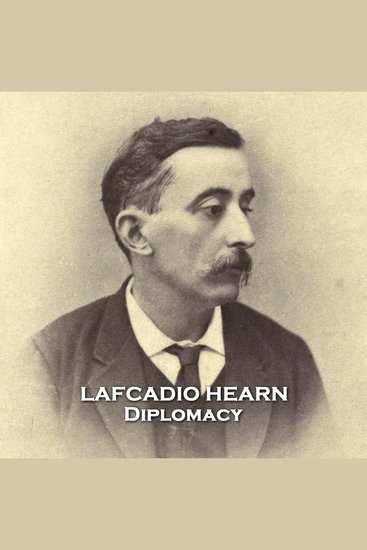
    Lafcadio Hearn

    • 0
    • 0
    • 0
    Lafcadio Hearn was born on the 27th June 1850 on the Ionian isle of Levkás in Greece to a British Army officer and a Greek Mother. 
    His father, fearing for his career prospects at being married to a Greek Orthodox wife, sent them to Dublin whilst he continued to advance his career with further postings.  Life there was difficult for mother and son.  His father returned, wounded and traumatised, when Lafcadio was three.  He annulled the marriage and she remarried but had to give up care of Lafcadio to her sister-in law.   
    After brief periods for Catholic education in England and France he emigrated to Ohio in the United States when he was 19, taking on a series of casual jobs before embarking on a career as a journalist, publishing poems and essays in Cincinnati.  It was whilst here that he began a side-line in translating, starting with Gautier and Flaubert.  He married in 1874 to a 20 year old African-American woman in violation of Ohio's anti-miscegenation law.  The marriage soon failed. 
    In 1877 he relocated to New Orleans to write on a variety of themes before picking up a two year assignment from Harper’s to write in the West Indies, where he also wrote his first novel. 
    In 1890 Harper’s sent him to Japan.  Here he left journalism and took the remarkable decision to become a schoolteacher in the north of Japan.   Enraptured by the culture he was driven to explain it in various Western publications to those who had little, if any, knowledge of its culture.  Within the year he had fallen in love with, and married, a high-born Japanese lady, together they would have four children.   
    In 1895 he became a Japanese national and took the name Koizumi Yakumo, Koizumi being his wife’s family name. 
    The following few years, whilst a professor of Literature at the Imperial University of Japan, were his most creative and admired period.   
    Lafcadio Hearn died of heart failure on the 26th of September 1904, in Tokyo, Japan shortly before leaving to deliver a series of lectures at Cornell University in New York State.  He was 54.
    Show book
  • A Slip of the Pen - From their pens to your ears genius in every story - cover

    A Slip of the Pen - From their...

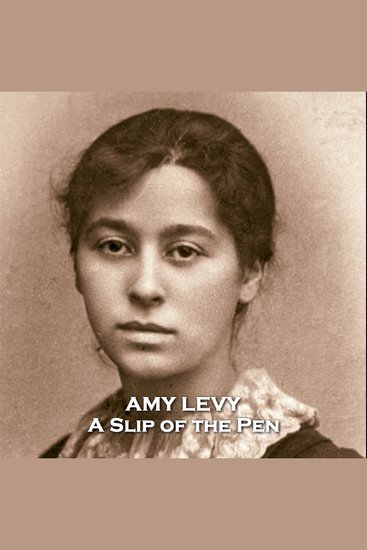
    Amy Levy

    • 0
    • 0
    • 0
    Amy Levy was born in London, England in 1861, the second of seven in a fairly wealthy Anglo-Jewish family. The children read and participated in secular literary activities and became firmly integrated into Victorian life. 
    Her education was at Brighton High School, Brighton, before studies at Newnham College, Cambridge; she was the first Jewish student when she arrived in 1879, but left after four terms. 
    Amy’s writing career began early; her poem ‘Ida Grey’ appeared when she was only fourteen. Her acclaimed short stories ‘Cohen of Trinity’ and ‘Wise in Their Generation,’ were published by Oscar Wilde in his magazine ‘Women's World’. 
    Her poetic writings reveal feminist concerns; ‘Xantippe and Other Verses’, from 1881 includes a poem in the voice of Socrates's wife. ‘A Minor Poet and Other Verse’ from 1884 comprises of dramatic monologues and lyric poems. 
    In 1886, Amy began a series of essays on Jewish culture and literature for the Jewish Chronicle, including ‘The Ghetto at Florence’, ‘The Jew in Fiction’, ‘Jewish Humour’ and ‘Jewish Children’. 
    That same year while travelling in Florence she met the writer Vernon Lee. It is generally assumed they fell in love and this inspired the poem ‘To Vernon Lee’. 
    Her first novel ‘Romance of a Shop’, written in 1888 is based on four sisters who experience the pleasures and hardships of running a London business during the 1880s. This was followed by Reuben Sachs (also 1888) and concerned with Jewish identity and mores in the England of her time and was somewhat controversial. 
    Her final book of poems, ‘A London Plane-Tree’ from 1889, shows the beginnings of the influence of French symbolism. 
    Despite many friendships and an active life, Amy suffered for many years with serious depressions and this, together with her growing deafness, led her to commit suicide by inhaling carbon monoxide on September 10th, 1889. She was 27.
    Show book