¡Acompáñanos a viajar por el mundo de los libros!
Añadir este libro a la estantería
Grey
Escribe un nuevo comentario Default profile 50px
Grey
Suscríbete para leer el libro completo o lee las primeras páginas gratis.
All characters reduced
Giants in the earth - cover

Giants in the earth

O. E. Rölvaag

Editorial: Good Press

  • 0
  • 0
  • 0

Sinopsis

In 'Giants in the Earth,' O. E. Rølvaag masterfully explores the struggles and triumphs of Norwegian immigrants in the American Midwest during the late 19th century. Through vivid imagery and rich, lyrical prose, Rølvaag delves into the lives of his characters as they wrestle with the harsh realities of frontier life, the clash of cultures, and the haunting pull of their ancestral roots. Written in a naturalistic style, the narrative immerses readers in the psychological torment and resilience of the settlers, offering a poignant reflection on identity and belonging in a rapidly changing world. O. E. Rølvaag, a Norwegian-American novelist and a significant figure in immigrant literature, draws upon his own experiences as an immigrant to inform his work. Arriving in the United States as a young man, he personally grappled with cultural dislocation, which profoundly shaped his perspective and narrative voice. Rølvaag's deep understanding of the immigrant experience allows him to authentically portray the emotional complexities faced by his characters, making their struggles resonate on a universal level. Recommended for readers interested in the themes of migration, identity, and cultural conflict, 'Giants in the Earth' serves as both a historical account and a timeless exploration of the human spirit. Rølvaag's nuanced portrayal of resilience in the face of adversity will captivate those who appreciate rich storytelling and the exploration of cultural heritage.
Disponible desde: 24/04/2025.
Longitud de impresión: 240 páginas.

Otros libros que te pueden interesar

  • Afterward - cover

    Afterward

    Edith Wharton

    • 0
    • 0
    • 0
    "Afterward" is a short story by American writer Edith Wharton. It was first published in the 1910 edition of The Century Magazine and later reprinted in her books The Collected Short Stories of Edith Wharton and Tales of Men and Ghosts. This intriguing tale weaves an ironic ghost story around themes of greed and retribution.
    Ver libro
  • James (Giacomo) - English Version - cover

    James (Giacomo) - English Version

    Italo Svevo

    • 0
    • 0
    • 0
    Giacomo is a farmer that the narrator meets during a walk in the Friuli countryside and who tells him his story. Every time Giacomo finds a job he protests and ends up launching into propaganda and debates to convince his fellow workers to demand optimal working conditions, always causing big problems for his employers. Not finding any more jobs, he becomes a nomad, in vain search for a well-organized job. Therefore, practically non-existent. Until one day he is called back to his hometown for a particular job...
    Ver libro
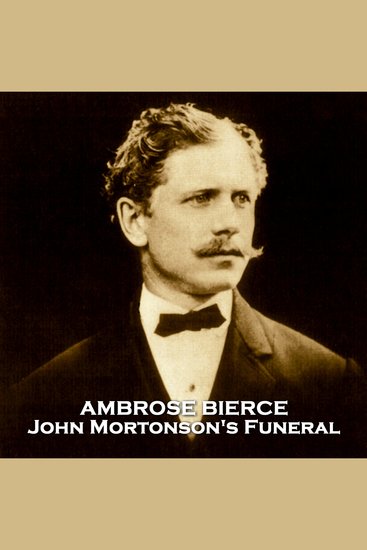
  • John Mortonson's Funeral by Ambrose Bierce - From their pens to your ears genius in every story - cover

    John Mortonson's Funeral by...

    Ambrose Bierce

    • 0
    • 0
    • 0
    Ambrose Gwinnett Bierce was born on 24th June 1842 at Horse Cave Creek in Meigs County, Ohio. His parents were poor but they introduced him to literature at an early age, instilling in him a deep appreciation of books, the written word and the elegance of language.  
    Growing up in Koscuisko County, Indiana poverty and religion were defining features of his childhood, and he would later describe his parents as “unwashed savages” and fanatically religious, showing him little affection but always quick to punish. He came to resent religion, and his introduction to literature appears to be their only positive effect. 
    At age 15 Bierce left home to become a printer’s devil, mixing ink and fetching type at The Northern Indian, a small Ohio paper. Falsely accused of theft he returned to his farm and spent time sending out work in the hopes of being published. 
    His Uncle Lucius advised he be sent to the Kentucky Military Institute. A year later he was commissioned as an Officer.  As the Civil War started Bierce enlisted in the 9th Indiana Infantry Regiment.  
    In April 1862 Bierce fought at the Battle of Shiloh, an experience which, though terrifying, became the source of several short stories. Two years later he sustained a serious head wound and was off duty for several months. He was discharged in early 1865.  
    A later expedition to inspect military outposts across the Great Plains took him all the way to San Francisco. He remained there to become involved with publishing and editing and to marry, Mary Ellen on Christmas Day 1871.  They had a child, Day, the following year.  
    In 1872 the family moved to England for 3 years where he wrote for Fun magazine. His son, Leigh, was born, and first book, ‘The Fiend’s Delight’, was published.  
    They returned to San Francisco and to work for a number of papers where he gained admiration for his crime reporting. In 1887 he began a column at the William Randolph Hearst’s San Francisco Examiner.  
    Bierce’s marriage fell apart when he discovered compromising letters to his wife from a secret admirer. The following year, 1889 his son Day committed suicide, depressed by romantic rejection. 
    In 1891 Bierce wrote and published the collection of 26 short stories which included ‘An Occurrence at Owl Creek Bridge’.  Success and further works including poetry followed.  
    Bierce with Hearst’s resources helped uncover a financial plot by a railroad to turn 130 million dollars of loans into a handout. Confronted by the railroad and asked to name his price Bierce answered “my price is $130 million dollars. If, when you are ready to pay, I happen to be out of town, you may hand it over to my friend, the Treasurer of the United States”.  
    He now began his first foray as a fabulist, publishing ‘Fantastic Fables’ in 1899.  But tragedy again struck two years later when his second son Leigh died of pneumonia relating to his alcoholism.  
    He continued to write short stories and poetry and also published ‘The Devil’s Dictionary’.  
    At the age of 71, in 1913 Bierce departed from Washington, D.C., for a tour of the battlefields where he had fought during the civil war. At the city of Chihuahua he wrote his last known communication, a letter to a friend. It’s closing words were “as to me, I leave here tomorrow for an unknown destination,” Ambrose Bierce then vanished without trace.
    Ver libro

  • The White Heron - Adapted and Narrated by Querida Funck - cover

    The White Heron - Adapted and...

    Sarah Orne Jewett, Querida FUnck

    • 0
    • 0
    • 0
    The White Heron 
     Adapted from Sarah Orne Jewett | Abridged & Narrated by Querida Funck 
    In this lyrical retelling of Sarah Orne Jewett’s 1886 classic, a young girl living in rural Maine must choose between loyalty to the natural world and the approval of those around her. 
    This True Voice Shorts edition blends Jewett’s original text with thoughtful abridgment and new reflections, illuminating themes of solitude, wonder, and moral courage through a modern lens. 
    Querida Funck’s intimate narration brings added depth and resonance, honoring the heart of the original while enhancing its emotional clarity for contemporary listeners. A brief, moving story that speaks to the still, strong voices within us all.
    Ver libro
  • Odyssey of the North An - cover

    Odyssey of the North An

    Jack London

    • 0
    • 0
    • 0
    Things are not what they seem. A grizzled traveler arrives in a bluster. He doesn't make sense when he speaks. But once he warms up from the brink of death, his story and his heartbreak unfolds. 
    Enjoy this classic from Jack London, narrated by Audible best seller Evan Schmitt. 
    Story originally published in 1900. Production copyright 2023 by Riveting Publishing
    Ver libro
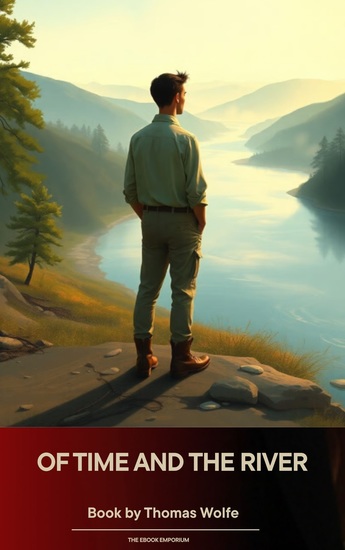
  • Of Time and the River - cover

    Of Time and the River

    Thomas Wolf

    • 0
    • 0
    • 0
    "A man's hunger for the world—the fury of youth, the mystery of time, and the pulse of a nation."
    
    In Of Time and the River, Thomas Wolfe paints a portrait of the artist as a young man on a grand scale. We follow Eugene Gant from the halls of Harvard University to the bustling streets of New York City and across the oceans to Europe. Driven by an insatiable hunger for knowledge, experience, and love, Eugene grapples with the weight of his family's past and the overwhelming promise of the future. Wolfe's prose is legendary—vibrant, torrential, and deeply poetic—capturing the "buried life" of humanity and the sprawling, contradictory beauty of early 20th-century America.
    
    The "Hunger" of Youth: Eugene Gant is one of literature's most relatable seekers. His journey is defined by a frantic desire to read every book, meet every person, and see every sight. Wolfe perfectly captures that specific time in life when the world feels both impossibly large and urgently within reach.
    
    A Symphony of Time: As the title suggests, the novel is obsessed with the flow of time—both the relentless "river" of history and the private, internal time of memory. Wolfe explores how we are shaped by the ghosts of our ancestors and the fleeting moments that define our identity.
    
    Why It Is a Masterpiece: Of Time and the River is more than a story; it is an experience. It is a book for anyone who has ever felt "homesick for a place they've never been." Wolfe's ability to find the epic in the everyday makes this one of the most powerful and enduring works of American Modernism.
    
    Lose yourself in the river of time. Purchase "Of Time and the River" today.
    Ver libro