Join us on a literary world trip!
Add this book to bookshelf
Grey
Write a new comment Default profile 50px
Grey
Subscribe to read the full book or read the first pages for free!
All characters reduced
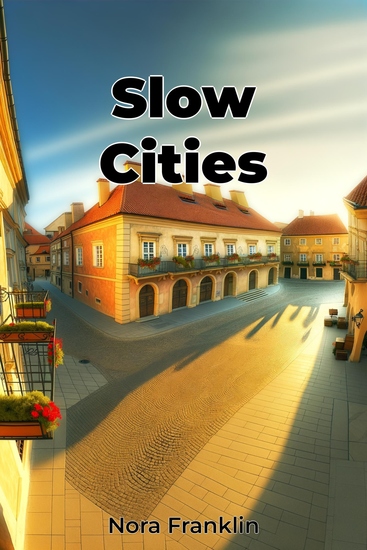
Slow Cities - cover

Slow Cities

Nora Franklin

Translator A AI

Publisher: Publifye

  • 0
  • 0
  • 0

Summary

"Slow Cities" explores a revolutionary approach to urban development through the lens of the Cittaslow movement, which champions quality of life over rapid growth in smaller cities worldwide. This thoughtful examination reveals how communities with populations under 50,000 are successfully implementing principles of deliberate deceleration and sustainable living, creating more livable environments while preserving local culture and identity.The movement, born from Italy's Slow Food initiative in 1999, has spread globally, offering a compelling alternative to conventional urban development patterns. The book masterfully weaves together theoretical frameworks and practical applications, presenting case studies from certified Cittaslow communities across Europe, Asia, and the Americas. Through extensive research combining demographic data, quality-of-life metrics, and economic indicators, it demonstrates how slower, more mindful urban development strengthens community bonds and enhances environmental sustainability.Readers gain insights into specific criteria these cities must meet, including environmental conservation policies, infrastructure requirements, and cultural preservation strategies. Structured in three comprehensive sections, the work progresses from fundamental principles to real-world implementation and broader implications for urban planning. It provides concrete guidelines for communities interested in joining the movement while honestly addressing challenges such as economic pressures and stakeholder resistance. This balanced approach, supported by detailed maps and diagrams, makes the book an invaluable resource for urban planners, community leaders, and anyone interested in creating more sustainable, culturally rich urban environments.
Available since: 01/05/2025.
Print length: 121 pages.
Other books that might interest you

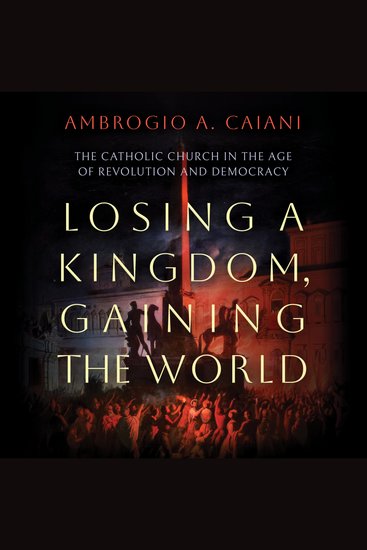
  • Losing a Kingdom Gaining the World - The Catholic Church in the Age of Revolution and Democracy - cover

    Losing a Kingdom Gaining the...

    Ambrogio A. Caiani

    • 0
    • 0
    • 0
    An ambitious, authoritative history of the Roman Catholic Church in the modern age. 
     
    Despite its many crises, especially in Western Europe, there are still 1.2 billion Catholics in the world and the Church remains a powerful, controversial and defiantly archaic institution. 
     
    After the French Revolution and the democratic rebellions of 1848, the Church retreated, especially under Pius IX, into a fortress of unreason, denouncing almost every aspect of modern life, including liberalism and socialism. The Pope proclaimed his infallibility; the cult of the Virgin Mary and her apparitions to semi-illiterate shepherds became articles of faith; the Vatican refused all accommodation with the modern state, until a disastrous series of concordats with fascist states in the 1930s. 
     
    In Losing a Kingdom, Gaining the World, Dr Ambrogio A. Caiani narrates the epic, fascinating, entertaining and horrifying history of the Roman Catholic Church. It is an account of the Church's fraught encounter with modernity in all its forms, from representative democracy and the nation state to science, literature and secular culture. 
    Praise for the author: “In gripping, vivid prose, Caiani brings to life the struggle for power that would shape modern Europe. a historical read which is both original and enjoyable” ANTONIA FRASER
    Show book
  • Good Luck Bad Luck or No Luck? - cover

    Good Luck Bad Luck or No Luck?

    Gregory Heary

    • 0
    • 0
    • 0
    Is the concept of 'luck' guiding your decisions more than your faith? Are you ready to challenge how you think about luck and its impact on your life?Examine the role of 'luck' across different cultures and its effect on personal accountability and decision-making in this insightful study. By dissecting the belief in luck through various lenses—such as its influence in gambling, sports, and even medical practices—the book paints a vivid picture of how such beliefs can lead to a reliance on superstitions rather than divine guidance. With a critical analysis that includes Islamic perspectives on luck, which advocate for a life based on faith and trust in God, the author expertly guides readers away from misconstrued beliefs and towards a more spiritually aligned existence.Armed with the knowledge from this book, you will be encouraged to let go of baseless superstitions and to embrace a life guided by faith and divine will, enhancing both your personal accountability and spiritual health.
    Show book
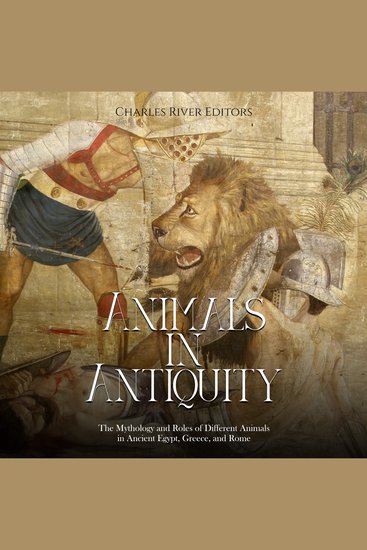
  • Animals in Antiquity: The Mythology and Roles of Different Animals in Ancient Egypt Greece and Rome - cover

    Animals in Antiquity: The...

    Editors Charles River

    • 0
    • 0
    • 0
    To the ancient Egyptians, the gods and goddesses were all around them and could be seen daily in nature. Nearly every animal found in ancient Egypt, both domestic and wild, were associated with a god or goddess, which can be seen in Egyptian art where deities are often depicted with human bodies and animal heads. Or sometimes the deities are portrayed as complete animals. Since deities were associated with certain animals, all animals of a specific species were given divine and protected status.  
    Animals were constantly involved in the core elements of Greek society and cults, and this centrality could be found in the numerous depictions of animals on coins and vases throughout the Greek colonies. Game and fish were plentiful, along with deer, wolves, boar, lynx, and even bears. Similarly, there were numerous jackals and porcupines. There were, however, a few significant species that would have been found in the wild in Classical times, such as the agrimis (or Cretan goat) and the lion, that have either become totally extinct or virtually extinct in the modern-day region. Lions, in particular, often feature in Greek literature, and both Herodotus and Aristotle described lions in northern Greece. The presence of lions in Greece seems further confirmed by their numerous portrayals in Mycenaean art and tales of lions in Homer. 
    Rome's complex relationship with animals goes right back to its foundation myth, and even today, the wolf remains a symbol of the Eternal City, forming part of the logo for the capital's football team, A.S. Roma. According to tradition, the city of Rome was founded by Romulus, who, with his brother Remus, was nursed and sheltered by a she-wolf. That tale, widely believed as a historical fact by ancient Romans, had a profound influence on Roman culture, and in part that shaped Roman attitudes toward their animals.
    Show book
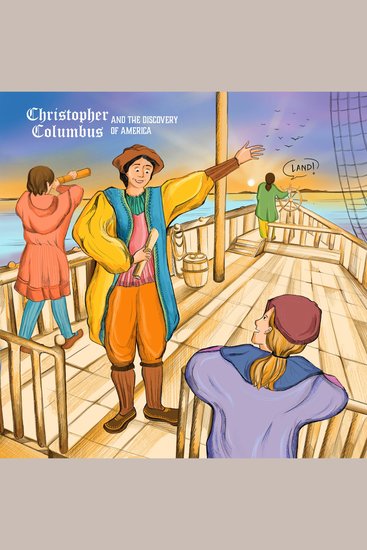
  • Did Columbus discover America? - How was America discovered? - cover

    Did Columbus discover America? -...

    Shreyas Pande, Sharad Baggonkar

    • 0
    • 0
    • 0
    Christopher Columbus was an explorer, fine mapmaker and navigator. He also had deep interest in geography, astronomy, and history. Columbus loved sailing the high seas and was keen to explore a sea passage to the East which would help him reach India. With that in mind he went to the King of Spain in with a proposal in 1492 who immediately approved the plan. Thus began Columbus's voyage to reach India but little did he know that it was not going to be India but a completely different continent, that was waiting to be discovered.
    Show book
  • Indebted - How Families Make College Work at Any Cost - cover

    Indebted - How Families Make...

    Caitlin Zaloom

    • 0
    • 0
    • 0
    This audiobook narrated by Kate Harper examines how the financial pressures of paying for college affect the lives and well-being of middle-class families
    
    The struggle to pay for college is one of the defining features of middle-class life in America today. At kitchen tables all across the country, parents agonize over whether to burden their children with loans or to sacrifice their own financial security by taking out a second mortgage or draining their retirement savings. Indebted takes readers into the homes of middle-class families throughout the nation to reveal the hidden consequences of student debt and the ways that financing college has transformed family life.
    
    Caitlin Zaloom gained the confidence of numerous parents and their college-age children, who talked candidly with her about stressful and intensely personal financial matters that are usually kept private. In this remarkable book, Zaloom describes the profound moral conflicts for parents as they try to honor what they see as their highest parental duty—providing their children with opportunity—and shows how parents and students alike are forced to take on enormous debts and gamble on an investment that might not pay off. What emerges is a troubling portrait of an American middle class fettered by the "student finance complex"—the bewildering labyrinth of government-sponsored institutions, profit-seeking firms, and university offices that collect information on household earnings and assets, assess family needs, and decide who is eligible for aid and who is not.
    
    Superbly written and unflinchingly honest, Indebted breaks through the culture of silence surrounding the student debt crisis, revealing the unspoken costs of sending our kids to college.
    Show book
  • The Turn of the Screw - cover

    The Turn of the Screw

    Henry James

    • 0
    • 0
    • 0
    Prepare to be spellbound by "The Turn of the Screw" by Henry James. This audiobook is a masterful exploration of psychological suspense and the uncanny. With James' intricate narrative, you'll be transported to a remote English country house, where a young governess cares for two enigmatic children. As you listen, you'll unravel the mysteries surrounding the estate, its eerie history, and the unsettling behavior of the children. The story is a chilling examination of the boundaries between reality and the supernatural, making it a classic in the genre of gothic horror. Through its vivid characterizations and subtle psychological nuances, it offers a haunting and thought-provoking experience.
    Show book