Join us on a literary world trip!
Add this book to bookshelf
Grey
Write a new comment Default profile 50px
Grey
Subscribe to read the full book or read the first pages for free!
All characters reduced
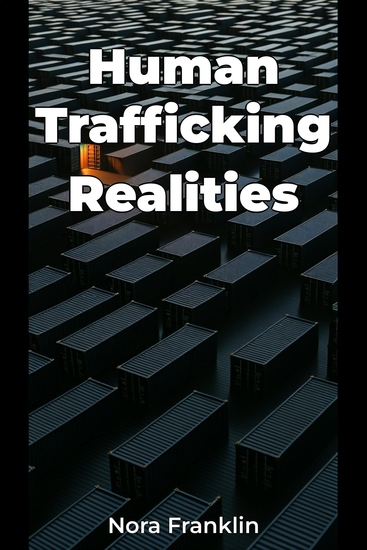
Human Trafficking Realities - cover

Human Trafficking Realities

Nora Franklin

Publisher: Publifye

  • 0
  • 0
  • 0

Summary

"Human Trafficking Realities" presents a comprehensive investigation into modern slavery, revealing the sobering fact that every nation serves as either a source, transit point, or destination for human trafficking—a criminal enterprise generating over $150 billion annually.

 
Through meticulous research spanning five continents, the book uncovers the sophisticated methods trafficking networks employ, combining insights from classified intelligence reports, court documents, and survivor testimonies to paint a complete picture of this global crisis. The book's three-part structure guides readers through the current scope of trafficking operations, regional variations in trafficking methods, and the effectiveness of international counter-measures.

 
By examining the intersection of human trafficking with other criminal enterprises, including money laundering and cybercrime, the work demonstrates how trafficking networks adapt to technological advancements and exploit legal loopholes. Notable findings reveal how cultural, economic, and political factors influence trafficking patterns across different regions, supported by statistical analysis and real-world case studies.

 
Drawing from encrypted communications, financial records, and survivor narratives, the book balances academic rigor with accessible investigative reporting. It uniquely combines criminal justice, international relations, and economic development perspectives to demonstrate how trafficking networks exploit gaps between these domains.

 
The work concludes with practical recommendations for strengthening international cooperation and improving victim support systems, making it an invaluable resource for law enforcement professionals, policy makers, and NGO workers combating modern slavery.
Available since: 01/08/2025.
Print length: 118 pages.


Other books that might interest you

  • Shadows in the Dark: The 12 Least Known Serial Killers and Their Unseen Horrors - cover

    Shadows in the Dark: The 12...

    Marcus Hale

    • 0
    • 0
    • 0
    Shadows in the Dark by Marcus Hale is a journey into the chilling stories of ten lesser-known serial killers who escaped the spotlight yet left a trail of terror and tragedy. With meticulous research and haunting detail, Hale uncovers the lives of these "hidden" killers—men and women who exploited society's blind spots, targeting the vulnerable while slipping through the cracks of justice. Each chapter reveals the unsettling truths behind killers like the "Silent Tormentor," a nurse who took lives rather than saving them, or the "Widowmaker," who preyed on elderly tenants for profit. 
    This book doesn't just recount their crimes; it examines how each managed to operate for years undetected, the societal failings that allowed them to evade capture, and the impact on families whose loved ones were forgotten by history. Through Shadows in the Dark, Marcus Hale provides a powerful, unflinching look at the underbelly of human nature, reminding readers that sometimes the most terrifying monsters are those we never see coming.
    Show book
  • The Lady in The Lake - cover

    The Lady in The Lake

    Jeremy Craddock

    • 0
    • 0
    • 0
    A body in a lake. A wife missing for 21 years. A husband’s denial of murder. A crime reporter who was there revisits the shocking crime 25 years on. 
     
     
    The Lady in the Lake is a real-life murder mystery and true crime memoir that reads like a thriller. A dark secret resurfaces after 21 years in the English Lake District to devastate a family. 
     
     
    With powerful themes of murder and denial, the story spans five decades, from the 1970s to the present day. 
    In August 1997 Jeremy Craddock is a young newspaper reporter in the Lake District. When divers discover a suspicious package weighted down in Coniston Water he is thrust into the heart of the biggest story of his career, a haunting murder mystery that will stay with him for the next quarter of a century. Inside the package is the body of a woman. Police identify her as Carol Park, a young wife and mother missing since 1976. 
     
     
    Now – 21 years later – suspicion falls on her husband, Gordon Park, who is on holiday in France with his third wife. Shocked, he returns to a media frenzy and detectives’ questions. Park is arrested on suspicion of murder. The press nickname the case ‘the lady in the lake’, borrowing the title of Raymond Chandler’s classic detective novel. 
     
     
    As one of the first journalists on the case, Jeremy Craddock bears witness to a strange and dark murder investigation that grips the world’s media. At Park’s later trial, a picture emerges of Gordon and Carol’s open marriage, their infidelities and Park’s controlling nature towards his young wife. Park is convicted of murder and sentenced to life in prison. But did he really murder his wife and drop her body into the murky depths of Coniston Water? The jury and Carol Park’s brother believe he did. But Park never stops protesting his innocence. 
     
    With his now adult children at his side, he begins a long fight to clear his name. Will he succeed? 
     
     
    The Lady in the Lake is a newspaper reporter’s account of a chilling murder case and his re-investigation a quarter of a century later. Using police and court documents, original press coverage and new interviews with detectives, witnesses, lawyers and members of the victim’s family, Jeremy Craddock tells the full story of this shocking case for the first time.
    Show book
  • Lethal Doses - The Story Behind "The Godfather Of Fentanyl" - cover

    Lethal Doses - The Story Behind...

    John Madinger

    • 0
    • 0
    • 0
    On a cold afternoon in February 1991, a frightening new drug hit the streets of New York City, a synthetic narcotic marketed in packets labeled “Tango & Cash.” As police scrambled to warn heroin users of the danger, the overdose victims began piling up in hospital emergency rooms and county morgues across three states. As a Drug Enforcement Administration agent said at the time, “We don’t know yet who’s putting this stuff out there, but whoever he is, he’s an ice-cold son of a bitch.” Fentanyl had come to America. In 2024, fentanyl is killing nearly 200 Americans every day, and not just heroin users, a seemingly unstoppable narcotic curse like none ever seen before. But few know that this plague began in the brilliant mind of the high-school dropout and chemistry prodigy that the DEA called “the best and most dangerous clandestine chemist” it has ever encountered. The clandestine chemist was George Erik Marquardt. Starting at just twelve years old, Marquardt used his extraordinary talents to make every illegal drug in the book, from bootleg booze to heroin. He brewed LSD for Timothy Leary and the Grateful Dead, methamphetamine for outlaw motorcycle gangs, nerve gas for Idaho Nazis, and even life-saving AZT for AIDS patients. But when that ice-cold son of a bitch turned to fentanyl, thousands of Americans would die. In LETHAL DOSES: The Story Behind ‘The Godfather of Fentanyl,’ award-winning author and former undercover agent for the Oklahoma Bureau of Narcotics John Madinger, tells the remarkable story of DEA’s three-year pursuit, the genesis of our fentanyl problem today, and the uniquely dangerous evil genius he spent hundreds of hours interviewing. Now you can read the incredible book on which the hit docuseries, THE GODFATHER OF FENTANYL, is based!
    Show book
  • Evil Nature - cover

    Evil Nature

    Raphael Terra

    • 0
    • 0
    • 0
    This audiobook has been recorded using Text to speech (TTS). 
     
    Mankind is naturally evil and good. Ever since we became conscious, the evil within us emerged. Animals are not good or evil, they just follow the power of nature. We became aware of the differences and we continued regardless. No higher agent such as God can be blamed for the rise of darkness in our souls. Moral evil is caused by human activity. 
     
    It is argued that our love of darkness proves that there is no God. If God exists and is omnipotent and all-knowing and perfectly good then there would be no natural evil, but there is. Can we continue to blame God for the ways of mankind or is it time we accepted responsibility for our ways? 
     
    The truth is that we will not stop any time soon. In this book we examine the dark nature of mankind and the most gruesome and disturbing acts we have committed over time. From the holocaust to human sacrifices to false gods. No bloodstained stone will be unturned. Welcome to the Dark Side.
    Show book
  • Teacher - cover

    Teacher

    Bryan G. Salmons

    • 0
    • 0
    • 0
    This book is about Vicki Koch, her unsolved murder, decades of fruitless investigation, and a personal journey to discover the truth.
    Show book
  • Colombia's Economic Transformation - Historical Insights - cover

    Colombia's Economic...

    Anya Solace

    • 0
    • 0
    • 0
    Colombia's economic transformation has been a complex and dynamic process shaped by historical events, political decisions, and global economic trends. From its early indigenous trade systems to its current standing as one of Latin America's largest economies, Colombia's journey has been marked by periods of growth, crisis, and resilience. Understanding this transformation requires a deep dive into the key factors that have influenced its economy over the centuries. 
    The foundation of Colombia's economy was laid long before Spanish colonization. Indigenous communities engaged in agriculture, trade, and resource management, establishing early economic structures. However, the arrival of the Spanish in the early 16th century drastically altered the economic landscape. The Spanish introduced a mercantilist system that prioritized resource extraction, particularly gold, and forced indigenous labor into exploitative economic activities. This period also saw the beginnings of agricultural exports, as crops like sugar and tobacco became integral to the colonial economy. 
    Following independence in 1810, Colombia faced significant economic instability. The transition from colonial rule to a sovereign state disrupted established trade networks and led to political fragmentation. Wars of independence had devastated infrastructure and financial systems, leaving the new republic struggling to establish a stable economy. The 19th century saw slow economic progress, with regional economies developing independently and a reliance on agriculture persisting. Coffee emerged as Colombia's most valuable export by the late 19th century, setting the stage for greater economic integration and growth.
    Show book