Join us on a literary world trip!
Add this book to bookshelf
Grey
Write a new comment Default profile 50px
Grey
Subscribe to read the full book or read the first pages for free!
All characters reduced
Atlantic Cod - Bio-Ecology and Exploration - cover

Atlantic Cod - Bio-Ecology and Exploration

Nitin Reddy

Publisher: Educohack Press

  • 0
  • 0
  • 0

Summary

Dive into the fascinating world of one of the Atlantic Ocean's most iconic fish species with "Atlantic Cod: Bio-Ecology and Exploration." This comprehensive book provides valuable insights into the life, habitat, and broader ecological significance of the Atlantic cod, a species that has been pivotal to maritime economies and ecosystems across the Northern Hemisphere.

Grounded in thorough scientific research, the book is presented with clarity, engaging both academic readers and laypersons interested in marine biology and environmental conservation. It details the Atlantic cod's biological characteristics, lifecycle, and role within the marine food chain, highlighting its economic and cultural importance from North America to Europe.

The book addresses the critical issue of overfishing, analyzing how it has led to dramatic declines in cod populations and the socio-economic impacts on fishing communities, especially in Newfoundland, Canada, and the New England states in the USA. Enriched with case studies and firsthand accounts, the narrative brings a human element to these ecological and economic upheavals.

A significant portion of the book focuses on conservation strategies and management practices aimed at recovering Atlantic cod stocks. It discusses quota systems, gear restrictions, and closed seasons, as well as the challenges these measures face, including enforcement issues and the ongoing threat of climate change.

In exploring the impacts of rising ocean temperatures and changes in sea currents, the book uses recent data to project future scenarios for cod populations and offers guidance on evolving policies. Throughout, it emphasizes the resilience of Atlantic cod and the human communities that depend on them, advocating for a balanced approach to ocean management.

"Atlantic Cod: Bio-Ecology and Exploration" is a critical resource for understanding this key species and the broader environmental and economic issues facing our oceans. It is a call to action for more informed and sustainable interaction with marine environments, making it a valuable addition to the libraries of policymakers, environmentalists, and anyone concerned with the future of our planet’s oceans.
Available since: 02/20/2025.
Print length: 291 pages.
Other books that might interest you

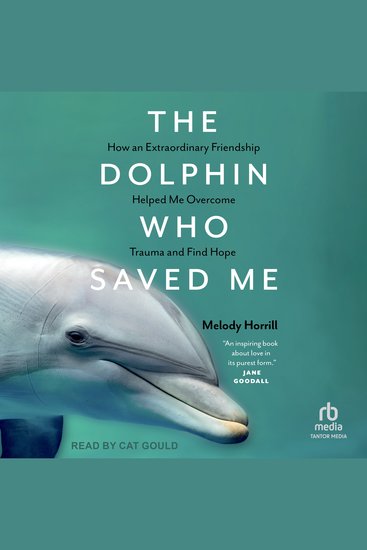
  • The Dolphin Who Saved Me - How An Extraordinary Friendship Helped Me Overcome Trauma and Find Hope - cover

    The Dolphin Who Saved Me - How...

    Melody Horrill

    • 0
    • 0
    • 0
    "An inspiring book about love in its purest form."—JANE GOODALL, DBE, Founder of the Jane Goodall Institute & UN Messenger of Peace 


    When Melody Horrill arrived at university she was a troubled and lost young woman, hiding behind a carefully crafted exterior. She had experienced a childhood of emotional and physical trauma mainly at the hands of her violent father that was as damaging as it was brutal. 


    One day Melody volunteered to help her lecturer monitor pods of river dolphins nearby. There for the first time she encountered Jock, a solitary dolphin with a maimed fin, who lived apart from the highly social pods. Melody was to form a bond with Jock that gave her the key to freeing herself from the demons of her own past, and their extraordinary friendship was the start of a long-term mission to try to save the river dolphins. 


    Beautifully written and filled with insight and compassion, Melody's memoir details her life-changing friendship with the river dolphins, and how Jock helped her to heal.
    Show book
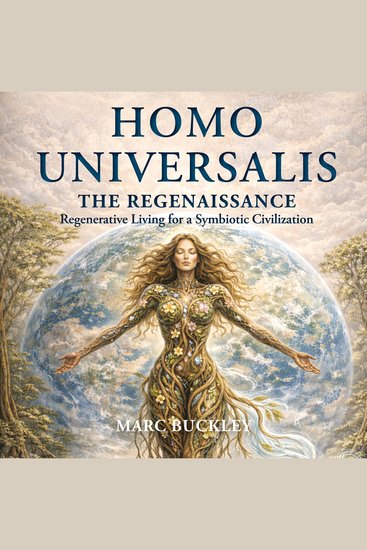
  • Homo Universalis The Regenaissance - Regenerative Living for a Symbiotic Civilization - cover

    Homo Universalis The...

    Marc Buckley

    • 0
    • 0
    • 0
    What does a world that works for everyone actually look like?  
    In a time of climate anxiety, economic uncertainty, technological disruption, and growing division, more and more people feel that the systems shaping our lives no longer work for humanity or the living world. We are told to be more efficient, more productive, more sustainable. Yet the deeper question remains unanswered.  
    What comes after the old story of extraction, separation, and endless growth?  
    In the tradition of big idea books that challenge how we see humanity’s past and future, Homo Universalis offers a bold new vision for what comes next. Marc Buckley argues that the crises of our age are not separate problems. They are symptoms of a single civilizational mistake. We have built our world as if we are separate from life itself.  
    This book reframes that story.  
    Drawing from systems science, ecological economics, regenerative development, and decades of work with global leaders and institutions, Buckley shows how living systems thrive, through connection, cooperation, reciprocity, and regeneration. He introduces a new possibility for our time: Homo Universalis, the human who remembers that we are not outside nature, but participants within a living planetary system.  
    From this remembering comes what Buckley calls the Regenaissance, a regenerative renaissance in which food systems restore health and soil, economies create shared prosperity, cities support wellbeing, and technology aligns with life rather than undermining it.  
    If Sapiens helped readers understand how we got here, and Homo Deus asked where humanity might go, Homo Universalis asks the question that now matters most:  
    How do we create a civilization that works for everyone, and for life itself?
    Show book
  • Mercury and Gemini: The History and Legacy of NASA’s Groundbreaking Spaceflight Programs - cover

    Mercury and Gemini: The History...

    Editors Charles River

    • 0
    • 0
    • 0
    The successful Apollo 11 mission was certainly an astonishing technological triumph, but what is less well remembered now are that many programs preceded Apollo and were essential to its success. Project Mercury was one of those, and in many ways it represented the greatest step forward in terms of the conquest of space. Before Project Mercury, there was no certainty that a human could survive the rigors of a space launch or live outside Earth’s atmosphere. There was no agreement on just what an astronaut should be, and various individuals involved debated whether they should be pilots, technicians, scientists, or even merely observers in an automated craft. Before Project Mercury, no one was entirely certain what a rocket capable of taking a person into space would look like, or even whether building such a craft was within the capabilities of engineering in the 1950s. 
    Gemini also marked another important milestone as America finally surpassed the Soviet Union in space technology. Before Gemini, the US was playing a desperate game of catch-up as it attempted to match Soviet accomplishments. The last Project Mercury flight launched in May 1963, and before then, Russia had put the first satellite in Earth’s orbit and the first man in space and had followed these with longer flights than the tiny Mercury spacecraft. In terms of military significance, it was recognized that the ability to dominate space was very important, and to many people in America, it seemed that Russia was well on the way to doing this. No one could have guessed that it would be almost three years before the next American manned space flight occurred when Gemini 3 left the launch pad in March 1965. It seemed to many people that the Russian lead in space exploration had become unassailable and, in order to reestablish the credibility of the US space program, the Gemini flights simply had to succeed.
    Show book
  • What They Want Us To Know - Messages of Hope Meaning and Unity from the Animal Kingdom - cover

    What They Want Us To Know -...

    Shawndra McWhorter

    • 0
    • 0
    • 0
    Have you ever wondered what animals would tell us if they could? This book will give you that chance to find out! By being able to receive downloaded messages from wild and domestic animals, Shawndra translates their messages for us. These animals have shared powerful messages of unity, connection and purpose, and steps that each of us are able to take to deepen the connection, find more meaning in our lives, and become the humans that the animals know we can be. You'll hear messages from 12 different animals on what they want us to know in order to live a more profoundly amazing life. You'll be given the opportunity to learn ways to be more compassionate, tolerant and heart-centered, to the animals and to each other.
    Show book
  • The Shark Handbook 3rd Edition - The Essential Guide for Understanding the Sharks of the World (Shark Week Author Ocean Biology Books Great White Shark Aquatic History Science and Nature Books Gifts for Shark Fans) - cover

    The Shark Handbook 3rd Edition -...

    Greg Skomal

    • 0
    • 0
    • 0
    Dive deep into the world of sharks, the most fascinating and misunderstood marine animals on the planet, in this stunning new edition of The Shark Handbook, written by Shark Week expert, Dr. Greg Skomal. 
    Did you know that a whale shark’s spots are as unique as a fingerprint? Or that sharks can go into a trance when flipped upside down? Or that the Megallodon’s mouth was 6 feet across? With The Shark Handbook, jump into brand new facts about these fierce sea creatures! Explore all of the orders of sharks, such as:Ground sharksGreat white sharksMackerel sharksCarpet sharksand more! 
      
    Learn about over 400 profiles of every shark in existence, from the first sharks living about 445 million years ago to the ones lurking in the ocean deep today. Starring spectacular, full-color photography that makes these jaw-dropping sharks come to life, this is the perfect gift for the shark enthusiast in your life. 
    Dr. Greg Skomal, PhD is an experienced aquarist and Marine Fisheries Biologist at Martha's Vineyard Fisheries, Division of Marine Fisheries, Massachusetts. He's been keeping saltwater aquariums since childhood and has shared his extensive knowledge with viewers of National Geographic, the Discovery Channel, NBC's Today, and other media. 
    Diagrams, an appendix, and a bibliography can be found in the audiobook companion PDF download. 
    Show book
  • Saving Ourselves from Big Car - cover

    Saving Ourselves from Big Car

    David Obst

    • 0
    • 0
    • 0
    Cars are killing people and making the planet uninhabitable. Crashes take the lives of more than a million people each year. Air pollution linked to motor vehicles contributes to even more untimely deaths. Highways and unsafe streets have devastated cities, yet traffic congestion still swallows up countless hours. And carbon emissions from transportation are a key driver of climate change, which threatens to make the world unlivable. Why do we still worship at the altar of the car? How can we find alternatives that are healthier for the planet and ourselves? 
      
    This book exposes how "Big Car"—the complex of companies in the automobile, oil, insurance, media, and concrete industries that promote and entrench car dependence—has pursued profit at the expense of the common good. David Obst explores how Big Car gained almost immeasurable influence over our lives, weighing the benefits and the costs of reliance on private automobiles. He details how industry covered up the harms of lead additives, fought against seatbelts, and continues to fund climate-change denialism. Obst considers the future of mobility, surveying how cities are experimenting with forms of transportation that offer alternatives to the dominance of cars. Provocative and comprehensive, Saving Ourselves from Big Car is a wake-up call for us to change how we use cars before it's too late.
    Show book