¡Acompáñanos a viajar por el mundo de los libros!
Añadir este libro a la estantería
Grey
Escribe un nuevo comentario Default profile 50px
Grey
Suscríbete para leer el libro completo o lee las primeras páginas gratis.
All characters reduced
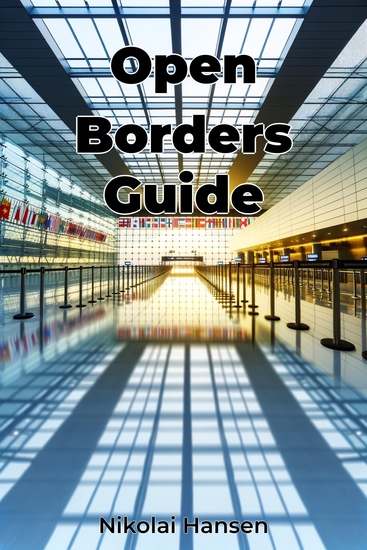
Open Borders Guide - cover

Open Borders Guide

Nikolai Hansen

Editorial: Publifye

  • 0
  • 0
  • 0

Sinopsis

"Open Borders Guide" presents a comprehensive exploration of international relocation opportunities, examining immigration policies, economic landscapes, and cultural integration across more than 30 countries. This meticulously researched guide stands out for its balanced approach to global mobility, combining practical insights with detailed analysis of immigration frameworks and investment opportunities worldwide.

 
The book's three-part structure progressively guides readers through the complexities of international relocation, beginning with an in-depth examination of immigration policies and points-based systems. It then delves into economic opportunities across various sectors, including technology hubs and renewable energy markets, before addressing the crucial aspects of cultural integration and community building.

 
Notable features include real-world case studies from diverse regions, ranging from established destinations like Canada to emerging options in Southeast Asia, providing readers with concrete examples of successful international transitions. What makes this guide particularly valuable is its practical, action-oriented approach, incorporating checklists, resource listings, and specific guidance for visa applications and business registration procedures.

 
The content draws from extensive research by immigration lawyers, economic analysts, and cultural anthropologists, presenting complex information in an accessible format suitable for professionals, entrepreneurs, and retirees considering international relocation. While maintaining objectivity, the guide addresses contemporary debates about immigration policies and their economic impacts, offering evidence-based insights that readers can apply to their own mobility decisions.
Disponible desde: 08/01/2025.
Longitud de impresión: 134 páginas.

Otros libros que te pueden interesar

  • The Importance of Not Being Ernest - My Life with the Uninvited Hemingway - cover

    The Importance of Not Being...

    Mark Kurlansky

    • 0
    • 0
    • 0
    The New York Times–bestselling author of Salt examines the intersections between his life and Ernest Hemingway’s in this mix of travel memoir and history. 
     
    By a series of coincidences, Mark Kurlansky’s life has always been intertwined with Ernest Hemingway’s legend, starting with being in Idaho the day of Hemingway’s death. The Importance of Not Being Ernest explores the intersections between Hemingway’s and Kurlansky’s lives, resulting in creative accounts of two inspiring writing careers. Travel the world with Mark Kurlansky and Ernest Hemingway in this personal memoir, where Kurlansky details his ten years in Paris and his time as a journalist in Spain—both cities important to Hemingway’s adventurous life and prolific writing. 
     
    Paris, Basque Country, Havana and Idaho.Get to know the extraordinary people he met there—those who had also fallen under the Hemingway spell, including a Vietnam veteran suffering from the same syndrome the author did, two winners of the Key West Hemingway look-alike contest, and the man in Idaho who took Hemingway hunting and fishing. 
     
    In The Importance of Not Being Ernest, find:A memoir full of entertaining and illuminative storiesLittle-known historical facts about Hemingway’s lifeAnecdotes about those who suffer from what the Kurlansky calls “hemitis” 
     
    Readers of Haruki Murakami’s What I Talk About When I Talk About Running, John Steinbeck’s Travels with Charley in Search of America, or The Boys will love The Importance of Not Being Ernest. 
     
    Praise for The Importance of Not Being Ernest 
     
    “An absolute delight! Full of personality, Kurlansky’s book will enchant history, literature, and Hemingway fans alike.” —Library Journal (starred review)
    Ver libro
  • World of Guinness - cover

    World of Guinness

    Rory Guinness

    • 0
    • 0
    • 0
    The perfect gift book for Guinness lovers, served here.
    How did a beer from Dublin become a globally renowned symbol of Ireland?
    In 1759, Arthur Guinness left behind his family's small brewery in County Kildare to seek his fortunes in Dublin. After acquiring the ill-equipped St James' Gate brewery, he soon began to produce the Guinness stout that has become world famous.
    Rory Guinness, a direct descendant of the brewery's founder, has written the insider's guide to the world of Guinness. He surveys the family history, the unique brewing process, the brewery's distinctive industrial architecture and the beer's legendary advertising, revealing how Guinness and its people became interwoven into the fabric of Dublin life and created a brewing legacy that stretches around the world.
    This is also the story of a remarkable resurgence, because Guinness is now the bestselling beer in the UK, while Guinness Zero is reaching new markets. It is the official beer of the English Premier League, and a long-term partner of rugby's men's and women's Six Nations Championship.
    World of Guinness is a revised, expanded and redesigned edition of Rory Guinness's classic short introduction, illustrated with archival images, new photography of the Guinness Storehouse in Dublin and a selection of Guinness's witty advertisements. It is published in hardback for the first time and makes a perfect gift.
    Ver libro
  • Mixtec Empire - Skilled Artisans and the Masters of Codices in Mesoamerica - cover

    Mixtec Empire - Skilled Artisans...

    Rolf Hedger

    • 0
    • 0
    • 0
    The Mixtec civilization, known as the Ñuu Savi or "People of the Rain," emerged in the rugged mountains and fertile valleys of what is now Oaxaca, Mexico. Their origins date back to the Preclassic period, around 1500 BCE, when small agricultural communities began to flourish in the Mixteca Alta, Mixteca Baja, and Mixteca de la Costa regions. These early settlements were shaped by the challenging geography, with steep hills and limited arable land requiring innovative farming techniques. Over centuries, the Mixtec people developed sophisticated agricultural systems, including terracing and irrigation, which allowed them to sustain growing populations and establish permanent communities. 
    Mythology played a central role in Mixtec identity, reinforcing their connection to the land and legitimizing the rule of their elite class. The Mixtec creation story, recorded in their intricate codices, tells of divine ancestors emerging from a sacred place known as Apoala, a cave associated with the origins of humanity. These ancestors, believed to be both human and divine, established the first Mixtec lineages, which would later claim authority over the various city-states. This mythology was not just a story but a political tool that reinforced the power of Mixtec rulers, linking them directly to the gods and the forces of nature. 
    The early Mixtec communities were organized into small chiefdoms, each ruled by a hereditary elite. These leaders controlled land, resources, and religious ceremonies, ensuring stability and continuity within their societies. Over time, as populations expanded and rivalries grew, these chiefdoms evolved into larger political entities, forming the foundation for the powerful Mixtec city-states that would dominate the region in later centuries.
    Ver libro
  • Their Heads Are Green and Their Hands Are Blue - cover

    Their Heads Are Green and Their...

    Paul Bowles

    • 0
    • 0
    • 0
    Their Heads Are Green and Their Hands Are Blue has descriptive copy which is not yet available from the Publisher.
    Ver libro
  • Early American Civilizations - Foundations of Culture (3 in 1) - cover

    Early American Civilizations -...

    Rolf Hedger

    • 0
    • 0
    • 0
    This bundle explores the origins and cultural impact of three of the earliest and most influential civilizations in the Americas: the Caral-Supe, Chavín, and Olmec. This book uncovers the remarkable achievements of these ancient societies, from the monumental pyramids of Caral-Supe, one of the oldest urban centers in the world, to the religious and artistic innovations of the Chavín civilization in the Andes.  
    It also delves into the Olmec civilization, often considered the "mother culture" of Mesoamerica, known for its colossal stone heads and early writing system.  
    Through their advancements in architecture, agriculture, religion, and trade, these civilizations laid the foundation for the great empires that followed. Perfect for history enthusiasts, this book provides a fascinating look at the beginnings of complex societies in the Americas.
    Ver libro
  • The Sphinx and Its Significance - Mysteries of Egypt's Guardian - cover

    The Sphinx and Its Significance...

    Omar Khalil

    • 0
    • 0
    • 0
    The Great Sphinx of Giza is one of the most iconic and enigmatic monuments in the world. It stands as a symbol of ancient Egypt's grandeur, captivating historians, archaeologists, and tourists alike. The monument, which lies near the pyramids of Giza, is a colossal limestone statue with the body of a lion and the head of a human, believed to represent the Pharaoh Khafre. Its massive size and mysterious features have sparked fascination and numerous theories about its purpose, creation, and significance throughout history. 
    The origins of the Sphinx are shrouded in mystery, with its construction dating back to the Old Kingdom of Egypt, around 2500 BCE. Some scholars believe that the Sphinx was carved during the reign of Pharaoh Khafre, who also commissioned the construction of the second pyramid at Giza. Others propose that the monument predates Khafre's reign, possibly dating back to the reign of his father, Pharaoh Sneferu. While the precise dating remains uncertain, the Sphinx is undoubtedly a product of Egypt's architectural and artistic achievements, built to withstand the test of time. 
    The significance of the Sphinx in ancient Egyptian culture is multifaceted. In Egyptian mythology, lions were often associated with strength, power, and protection. The body of the lion, combined with the human head, symbolizes the union of human intelligence and animal strength, a combination that represented the ideal qualities of a ruler. The Sphinx’s location near the pyramids further emphasizes its role as a guardian, watching over the tombs of the pharaohs and ensuring their safe passage into the afterlife. The monument also reflects the Egyptians' reverence for their gods and the divine authority bestowed upon their rulers.
    Ver libro