Begleiten Sie uns auf eine literarische Weltreise!
Buch zum Bücherregal hinzufügen
Grey
Einen neuen Kommentar schreiben Default profile 50px
Grey
Jetzt das ganze Buch im Abo oder die ersten Seiten gratis lesen!
All characters reduced
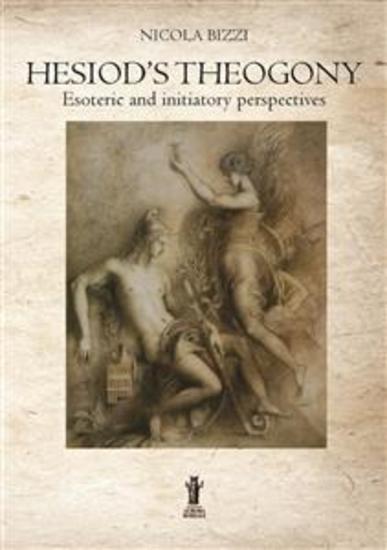
Hesiod’s Theogony: Esoteric and initiatory perspectives - cover

Hesiod’s Theogony: Esoteric and initiatory perspectives

Nicola Bizzi

Verlag: Edizioni Aurora Boreale

  • 0
  • 0
  • 0

Beschreibung

The Hesiod’s Theogony is not, as is often defined by modern philologists, a simple and banal “literary work”. It is a didactic poem of mythological-religious topic and, at the same time, a sacred and initiatory text. It is – with the sole exception of the Homeric poems in the profane field, and of some secret texts handed down by the ancient Mystery Schools in the initiatory sphere – the most ancient mythological-religious text of public domain from archaic Greece. Its content and the precious information that it provides about the origin and nature of the Gods constituted a very important canon for all the later literatures. It was used both in the Hellenic and Roman world, and its reading (but above all its understanding) is still indispensable today for the knowledge of the religious thought of ancient Greece. However, the Hesiodic text is not unique, nor it represents an innovation. It fits into a long tradition, which is mostly an exclusive prerogative of the Mystery Schools linked to the Eleusinian Mother Tradition and to its derivations, which are the Orphic, Pythagorean or Samothracian branches.
Who was Hesiod? A poet? A narrator? A priest? An Initiate? Or all these things together? We know that he was born in Ascra, a city in Boeotia, in the second half of the eighth century B.C. It is important to highlight how ancient Ascra, a village located right at the foot of Mount Helicon, was sacred to the Muses. And Helicon is same sacred mountain on which the Muses manifested themselves, not by chance, precisely to Hesiod himself.
The style of the Theogony is not narrative, nor related to the Homeric poems. On the contrary, Hesiod leaves little space to the actual narration: he seems to express himself through a markedly esoteric code, sometimes intentionally obscure. The myths are never narrated in full, but concentrated in a few lines, sometimes in a cryptic and hermetic manner, without many details.
Hesiod's intention, erroneously interpreted by moderns as an act to show off his skills, is much more likely dictated by initiatory purposes. He proves to have knowingly and carefully dosed and set in the right place phrases, words, and concepts as only an Initiate who addresses to a double audience (one of Initiates and one of uninitiated) can and must do. He proves to know how to move with ease on a “minefield” such as that of the origin and nature of the Gods to express fundamental concepts, without breaking any oath or vow of silence.
Verfügbar seit: 05.03.2022.
Drucklänge: 316 Seiten.

Weitere Bücher, die Sie mögen werden

  • Racial Emotion at Work - Dismantling Discrimination and Building Racial Justice in the Workplace - cover

    Racial Emotion at Work -...

    Tristin K. Green

    • 0
    • 0
    • 0
    This timely book unravels race and emotion in the workplace—exploring why racial emotion is often left out of equity conversations and why we must confront it. 


    Racial Emotion at Work is an invitation to understand our own emotions and associated behaviors around race—and much more. With this surprising and timely book, Tristin K. Green takes us beyond diversity trainings and other individualized solutions to discrimination and inequality in employment, calling for sweeping changes in how the law and work organizations treat and shape racial emotions. 


    Green provides listeners with the latest research on racial emotions in interracial interactions and ties this research to thinking about discrimination and disadvantage at work. We see how our racial emotions can result in discrimination, and how our institutions—the law and work organizations—value and skew our racial emotions in ways that place the brunt of negative consequences on people of color. It turns out we need to reset our institutional and not just our personal radars on racial emotion to advance racial justice. Racial Emotion at Work shows how we can rise to the task.
    Zum Buch
  • The Stuff of History - A Curated Compendium of Curious Objects and Forgotten People - cover

    The Stuff of History - A Curated...

    Steven Moore

    • 0
    • 0
    • 0
    'Moore is wickedly charming - the naughty uncle you want to be sat beside at the dinner table' - Daily TelegraphToo often history focuses on the tales of kings, or those (often men) who were given the credit for shaping our stories. Yet, what fascinates most are the figures who have passed through the cracks of history, people like:- The fourteen-year-old boy who lived undetected in the chimneys of Buckingham Palace- Archie Lee, the re-inventor of Santa Claus- The women at Playtex who helped put the first man on the moon- Unknown war hero Tommy Brown, whose extraordinary bravery helped the code breakers of BletchleyBut it's not just forgotten heroes that you'll meet, this compendium also reveals the curious back stories behind everyday objects - the humble fork, the china cup, the real history of tea, and Queen Victoria's underwear - to name but a few.The Stuff of History is a thoughtful, entertaining and carefully curated miscellany of fascinating forgotten histories from Antiques Roadshow stalwart, and popular historian with a huge Instagram following, Steven Moore.
    Zum Buch
  • History of the Caribbean: A Captivating Guide to Caribbean History Starting from Christopher Columbus through the Wars of Religion Slavery and Colonial Laws to the Present - cover

    History of the Caribbean: A...

    Captivating History

    • 0
    • 0
    • 0
    Almost everyone knows The Bahamas and Jamaica are in the Caribbean. But what do you really know about those countries? 
    The history of the Caribbean is an exciting ride, but few outside of the region know much about it in depth beyond Columbus’s discovery. This audiobook will lead you through the history of the region, which witnessed some of the world’s most important events. We will begin with Christopher Columbus’s accidental discovery and the race for control over the islands of the Caribbean. 
    The land grabs led to war and colonization, making this once-peaceful region a more violent place. In time, most of the Caribbean islands pushed back, declaring independence. But did that make things better for these island nations? Or is there still much work to be done? 
    If you are curious about learning the answers to these questions and more about the exciting history of this beautiful region, keep listening. This audiobook has a ton of interesting information, including: 
    What happened when Christopher Columbus discovered the Caribbean and the chain of events that happened afterward;The pirates who made their living in the Caribbean region and Central AmericaHow mainland Europe had an effect on the Caribbean colonies, with a closer look at the wars of religion, the American and French Revolutions, and the Napoleonic WarsWhat happened when Caribbean nations yearned to break free from their colonial powers to become independentThe United States’ involvement in the Caribbean, including the Spanish-American WarThe dictatorships in some of the Caribbean nations that left behind brutality and financial ruinThe struggles the Caribbean is facing today and what its future might look like 
    So, what are you waiting for? Scroll up and click the “add to cart” button to begin your journey of the Caribbean’s past today!
    Zum Buch
  • Jewish Family Life - Customs Rituals and Values in Daily Living - cover

    Jewish Family Life - Customs...

    Joseph Arston

    • 0
    • 0
    • 0
    Jewish family life is deeply rooted in tradition, values, and a strong sense of community. The family is not just a social unit but the very foundation of Jewish identity, shaping the faith, customs, and moral principles passed down through generations. Through daily practices, holidays, and shared rituals, Jewish families cultivate a home environment that nurtures both spiritual and ethical development. 
    At the core of Jewish family life is the concept of shalom bayit, or peace in the home. This principle emphasizes harmony, mutual respect, and love among family members. Parents play a crucial role in modeling these values, creating an atmosphere where kindness, patience, and understanding are prioritized. The Torah provides guidance on fostering a household filled with compassion and justice, reinforcing the idea that family is a sacred space where Jewish teachings come to life. 
    Another fundamental aspect of Jewish family life is the observance of Shabbat. The Sabbath is more than just a day of rest—it is a time for families to reconnect, reflect, and step away from the distractions of daily life. The preparation for Shabbat, including lighting the candles, reciting blessings over wine and bread, and sharing a festive meal, strengthens family bonds. Shabbat serves as a reminder of the importance of slowing down, appreciating one another, and finding holiness within the home. It is a time when parents pass down traditions and children absorb the rhythms of Jewish living.
    Zum Buch
  • Essays of Schopenhauer - cover

    Essays of Schopenhauer

    Arthur Schopenhauer

    • 0
    • 0
    • 0
    "Essays of Schopenhauer" by Arthur Schopenhauer is a captivating collection of philosophical essays that delve into the depths of human existence and offer profound insights into the complexities of life. In this thought-provoking anthology, Schopenhauer combines his keen intellect with his distinctive writing style to explore a range of philosophical ideas and themes. Throughout the essays, Schopenhauer contemplates the human condition, shedding light on the fundamental aspects of our existence. He reflects on the nature of suffering, the pursuit of happiness, and the inevitability of death, delving into the intricate relationship between desire and fulfillment. Read in English, unabridged.
    Zum Buch
  • End of World War II in Europe The: The History of the Final Campaigns that Led to Nazi Germany’s Surrender - cover

    End of World War II in Europe...

    Editors Charles River

    • 0
    • 0
    • 0
    After the successful amphibious invasion on D-Day in June 1944, the Allies began racing east toward Germany and liberating France along the way. It was Hitler’s belief that by splitting the Allied march across Europe in their drive toward Germany, he could cause the collapse of the enemy armies and cut off their supply lines. Part of Hitler’s confidence came as a result of underestimating American resolve, but with the Soviets racing toward Berlin from the east, this final offensive would truly be the last gasp of the German war machine, and the month long campaign was fought over a large area of the Ardennes Forest, through France, Belgium and parts of Luxembourg. From an Allied point of view, the operations were commonly referred to as the Ardennes Offensive, while the German code phrase for the operation was Unternehmen Wacht am Rhein (“Operation Watch on the Rhine”), with the initial breakout going under the name of “Operation Mist.” Today, Americans know it best as the Battle of the Bulge. 
    After resisting the German attack, the Allied armies began advancing, and with that, the race to Berlin was truly on. In April 1945, the Allies were within sight of the German capital of Berlin, but Hitler refused to acknowledge the collapsed state of the German military effort even at this desperate stage, and he confined himself to his Berlin bunker where he met for prolonged periods only with those that professed eternal loyalty, even to the point of death. In his last weeks, Hitler continued to blame the incompetence of military officers for Germany’s apparent failings, and he even blamed the German people themselves for a lack of spirit and strength. As their leader dwelled in a state of self-pity, without remorse or mercy but near suicide, the people of Berlin were simply left to await their fate as Russians advanced from the east and the other Allies advanced from the west.
    Zum Buch