Join us on a literary world trip!
Add this book to bookshelf
Grey
Write a new comment Default profile 50px
Grey
Subscribe to read the full book or read the first pages for free!
All characters reduced
From Darkness to Light - Getting out of Plato’s Cave and Becoming Conscious - cover

From Darkness to Light - Getting out of Plato’s Cave and Becoming Conscious

Nicola Bizzi

Publisher: Edizioni Aurora Boreale

  • 0
  • 0
  • 0

Summary

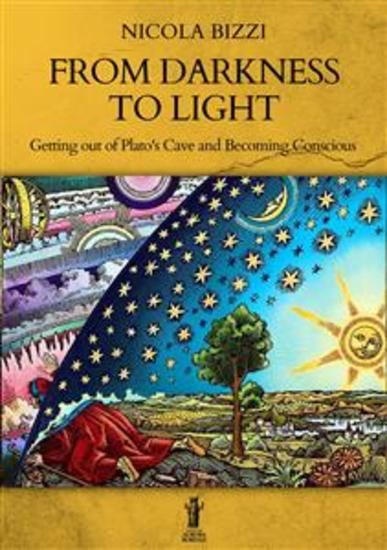
Socrates, Plato’s master, taught his disciple the very art of Maieutics, which Plato later knew how to use to best effect in his philosophical dialogues. Few people nowadays tend to remember that maieutiké in ancient Greek literally means “midwifery”. Indeed, this method, in Socrates’ intentions, was intended to embody an action similar to that of the midwife. That’s why he did not pretend to teach anything, let alone put truths into people’s minds. He meant, if anything, to lead people to bring forth truths out of their minds. He did not launch redemptive programs and did not pretend to drag along hordes of followers, for he was aware that Knowledge can only emerge from deep within ourselves, from the recesses of our soul. Maieutics, through dialogue and confrontation, simply directs the interlocutor’s thinking until they extrapolate truth from within themselves, “giving birth” to it, indeed. This, as the great Parmenides taught us, can be possible by activating nóos, intuition, which is the true magic word with which we should all equip ourselves.In the vast majority of human beings, obfuscated by millennia of counter-initiatory slavery, the mere thought of an ascent into the higher world leads to serious misunderstanding, when not outright fright and dismay, because after all, they feel happy and have the illusion of being protected in the daily darkness of their cave, while their eyes are deceived by vague shadows that the “guardians” cast on the white wall of their minds. It is much easier, indeed, not to ask questions and live with delusional serenity in their daily Matrix.
Available since: 08/09/2023.

Other books that might interest you

  • Talking to Children About Divorce - cover

    Talking to Children About Divorce

    Jenelle Winter

    • 0
    • 0
    • 0
    Talking to Children About Divorce: A Parent's Handbook on Helping Children Cope With DivorceDivorce can be a difficult and emotional process for all involved, but it can be especially challenging for children. As parents navigate the legal and emotional aspects of ending their marriage, children may struggle to understand and cope with the changes in their lives. This audiobook aims to provide guidance and support for parents, caregivers, and professionals working with children affected by divorce. It aims to help families navigate this difficult time and promote positive outcomes for children.This audiobook will cover the following topics:- The Impact of Divorce on Children's Emotional and Behavioral Development- Co-Parenting After Divorce- Assisting Children in Coping with Life Post-Divorce- The Role of the Family Court System in Divorce Cases Involving Children- Child Custody and Visitation Arrangements- The Monetary Effects of Divorce on Children and Households- Assisting Children During High-Stress Divorce Situations- The Importance of Therapy and Counseling in Assisting Children Post-Divorce- Avoiding Parent-Child Estrangement During and Post-Divorce- How to Promote Positive Outcomes for Children After Divorce - And many more!The end of a marriage can be a traumatic and stressful event for children, and the process of adjusting to a new family structure can be difficult and confusing. To have a helpful resource to navigate through this process, scroll up and click “add to cart” now
    Show book
  • Body Language - Decoding Nonverbal Communication for Better Understanding - cover

    Body Language - Decoding...

    Coral Nunez

    • 0
    • 0
    • 0
    Body language is an essential aspect of communication that often speaks louder than words. It encompasses a range of non-verbal signals that convey emotions, attitudes, and intentions, all without uttering a single word. From facial expressions and gestures to posture and eye contact, body language is a powerful tool in human interaction, influencing how we connect with others and how we are perceived in return. While verbal communication is often emphasized, non-verbal cues are just as important—sometimes even more so—when it comes to understanding the full message being communicated. 
      
    In fact, research suggests that a large percentage of our communication is conveyed through body language, with estimates ranging from 60% to 93%, depending on the context. The way we move, stand, and make eye contact can reveal a wealth of information about our true feelings, intentions, and state of mind. Whether we're aware of it or not, our body language is constantly transmitting messages to others, which is why it's crucial to understand the subtle cues we are sending out.
    Show book
  • The Forgotten Slave Trade - The White European Slaves of Islam - cover

    The Forgotten Slave Trade - The...

    Simon Webb

    • 0
    • 0
    • 0
    Everybody knows about the transatlantic slave trade. A century before Britain became involved in this terrible business, whole villages and towns in England, Ireland, Italy, Spain, and other European countries were being depopulated by slavers, who transported the men, women, and children to Africa where they were sold. This is the forgotten slave trade; one which saw over a million Christians forced into captivity in the Muslim world. 


    Starting with the practice of slavery in the ancient world, Simon Webb traces the history of slavery in Europe, showing that the numbers involved were vast and that the victims were often treated far more cruelly than black slaves in America and the Caribbean. Castration, used very occasionally against black slaves taken across the Atlantic, was routinely carried out on an industrial scale on European boys who were exported to Africa and the Middle East. Most people are aware that the English city of Bristol was a major center for the transatlantic slave trade in the eighteenth century, but hardly anyone knows that 1,000 years earlier it had been an important staging-post for the transfer of English slaves to Africa. 


    This book will forever change how you view the slave trade and show that many commonly held beliefs about this controversial subject are almost wholly inaccurate and mistaken.
    Show book
  • Most Influential Mesoamerican Gods The: The History and Legacy of Quetzalcoatl Huitzilopochtli and Tlaloc - cover

    Most Influential Mesoamerican...

    Editors Charles River

    • 0
    • 0
    • 0
    Gilgamesh, Hercules, Aeneas, and Lancelot are instantly recognized as mythological heroes in the West, evoking visions of Persian monsters, ghastly labors, and the founding and glorification of cities, but the names of Mesoamerican gods remain as mysterious as their spelling. Even those who have come across their names when learning about the history of Mesoamerica – particularly the Aztec and various gods’ roles in the Spanish conquest of their empire – are often unaware that the Mesoamerican deities have tales that equal any of those in the repertoire of the mythological figures mentioned above. 
    As archaeologists quickly learned, there are numerous temples dedicated to gods all across Mesoamerica, from the Olmec and Toltec to the Aztec and Maya. Furthermore, thousands of people still gather in the ruins of Mesoamerican cities. 
    From the Aztec to the Maya, Quetzalcoatl - the Feathered Serpent - rears his beautiful head from magnificent relief carvings in temples no less grandiose than the largest pyramid in the region, that of Cholula in Mexico. Furthermore, thousands of people still gather in the great Mayan city of Chichén Itzá during the spring and autumn equinoxes to watch the shadow of the Feathered Serpent slither its way down the temple known as El Castillo. 
    To the Aztec, Huitzilopochtli wore a blue-green hummingbird helmet and was draped in pure white heron feathers. He carried a smoking mirror, an obsidian mirror, a shield, darts, and the serpent Xiuhcoatl that carried with it the fury and might of the sun. Everything about him - from his clothes to his weapons - emanated and defined royalty. His name meant Hummingbird of the South or Hummingbird of the Left (meaning the “Southern Part of the World”) in the native language of the Aztec, Nahuatl. In his kingly role he was not only irrevocably intertwined with war and conquest but also with trade, the things most important to the great Aztec Empire.
    Show book
  • Stories of the Land - Legends and Histories of Australia New Zealand and the Māori (3 in 1) - cover

    Stories of the Land - Legends...

    Lillian Brooks

    • 0
    • 0
    • 0
    This book bundle offers a rich and immersive exploration of the histories, encounters, and enduring legacies that have shaped Australia and New Zealand. This three-part volume captures the essence of these lands through the lens of historical events, cultural clashes, and the resilience of Indigenous peoples.  
    The first section, The Story of Australia, traces the country's journey from its ancient Indigenous roots to the arrival of European settlers, the establishment of colonies, and its eventual rise as a modern nation — all while examining the profound and ongoing impact on Aboriginal communities.  
    The second section, Māori and Pākehā: A History of Encounters, delves into the complex relationship between the Māori, the Indigenous people of New Zealand, and the Pākehā (European settlers), exploring the cultural exchanges, conflicts, and efforts to coexist in a shared land.  
    The third section, The History of New Zealand, provides a broader perspective on the development of the nation, from its Polynesian discovery to British colonization, the signing of the Treaty of Waitangi, and the ongoing struggle for Māori rights and cultural preservation.  
    Together, these three narratives weave a powerful and captivating story of the land, its people, and the historical forces that have shaped Australia, New Zealand, and the Māori. This book is essential for readers seeking a deeper understanding of the complex histories and cultural legacies that continue to define these two nations today.
    Show book
  • The Smut Revolution - From Taboo to Trend - cover

    The Smut Revolution - From Taboo...

    Skyler Bosse

    • 0
    • 0
    • 0
    There is a reason your pulse quickens when you turn to that one particular scene in a book – the one where tension spills over, where restraint shatters, and where characters surrender to something primal, something undeniable. That moment, the one so many readers secretly crave, is smut. 
    Once whispered about behind closed doors, hidden beneath the guise of “guilty pleasures,” smut has clawed its way into mainstream literature, proving that what was once considered taboo is now a genre in its own right. From centuries-old erotic manuscripts to today’s bestselling scorchers, smut has evolved, adapted, and seduced millions along the way. 
    But why do we read it? Why do we write it? And why does society continue to both embrace and condemn it in equal measure? 
    Each chapter in this book begins with an excerpt – an unfiltered glimpse into the heart of smut – before shifting to the forces that shape it, the way it has been challenged, censored, and celebrated. Some scenes will linger, some may provoke, but all of them exist because smut, at its core, is more than just raw lust – it is a reflection of desire, fantasy, and the ever-changing boundaries of storytelling. 
    So, turn the page. But be warned: once you indulge, there is no going back.
    Show book