Join us on a literary world trip!
Add this book to bookshelf
Grey
Write a new comment Default profile 50px
Grey
Subscribe to read the full book or read the first pages for free!
All characters reduced
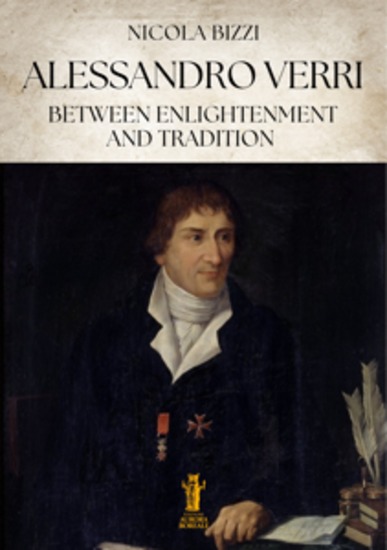
Alessandro Verri between Enlightenment and Tradition - cover

Alessandro Verri between Enlightenment and Tradition

Nicola Bizzi

Publisher: Edizioni Aurora Boreale

  • 0
  • 0
  • 0

Summary

Alessandro Verri (1741-1816) was a remarkable intellectual, philosopher, historian, and man of letters from Milan, lived through the transition from the Enlightenment to Romanticism. He is remembered for his friendship with Cesare Beccaria and his contributions to the magazine Il Caffè, which he founded with his brother Pietro.He began writing his most famous novel, Via di Erostrato (Life of Herostratus), in 1793, a year after being admitted to the Academy of Arcadia in Rome under the initiatory name of Aristander Pentelicus. The work, which was published only in 1815, a year before his death, is a unique and compelling historical novel in which the author, pretending to translate a genuine Greek text—a literary device Verri had already used years earlier in Notti romane al sepolcro degli Scipioni—imaginatively (but not entirely) narrates the adventurous and dramatic life of Herostratus, a Greek from Corinth. After a life filled with failures and disappointments, and for the sole purpose of being remembered by posterity, Erostratus deliberately set fire to the majestic Temple of Artemis at Ephesus, one of the seven wonders of the ancient world.
Available since: 08/24/2025.

Other books that might interest you

  • The War That Made the Middle East - World War I and the End of the Ottoman Empire - cover

    The War That Made the Middle...

    Anonymous

    • 0
    • 0
    • 0
    The Ottoman Empire's collapse at the end of the First World War is often treated as a foregone conclusion. It was only a matter of time, the story goes, before the so-called Sick Man of Europe succumbed to its ailments—incompetent management, nationalism, and ethnic and religious conflict. In The War That Made the Middle East, Mustafa Aksakal overturns this conventional narrative.The War That Made the Middle East shows that, until 1914, the Ottoman Empire was a viable multiethnic, multireligious state, and that relations between the Arabs, Jews, Muslims, and Christians of Palestine were relatively stable. When war broke out, the Ottoman government sought an alliance with the Entente but was rejected because of British and French designs on the Eastern Mediterranean. After the Ottomans entered the fight on the side of Germany and were defeated, Britain and France seized Ottoman lands and new national elites in former Ottoman territories claimed their own states. The region was renamed "the Middle East," erasing a robust and modernizing 600-year-old empire.A sweeping narrative of war, great power politics, and ordinary people caught up in the devastation, The War That Made the Middle East offers new insights about the Great War and its profound and lasting consequences.
    Show book
  • The War on Critical Race Theory - Or The Remaking of Racism - cover

    The War on Critical Race Theory...

    David Theo Goldberg

    • 0
    • 0
    • 0
    "Critical Race Theory" is consuming conservative America. The mounting attacks on a once-obscure legal theory are upending public schooling, legislating censorship, driving elections, and cleaving communities. 


    In this much-needed response, renowned scholar David Theo Goldberg cuts to the heart of the claims expressed in these attacks. He punctures the demonization of Critical Race Theory, uncovering who is orchestrating it, funding the assault, and eagerly distributing the message. The book richly illustrates the enduring nature of structural racism, even as a conservative insistence on colorblindness serves to silence the possibility of doing anything about it. Crucially, Goldberg exposes the political aims and effects of the vitriolic attacks. The upshot of CRT's targeting, he argues, has been to unleash racisms anew and to stymie any attempt to fight them, all with the aim of protecting white minority rule.
    Show book
  • Positive Affirmations for Black Kids - Building Strong Happy Confident Children with Empowered Thoughts Growing Resilience and Encouraging Self-Love and Gratitude in Your Boys and Girls - cover

    Positive Affirmations for Black...

    Zahra Jackson

    • 0
    • 0
    • 0
    Empower Their Dreams 
    An inspiring collection of affirmations specifically crafted to nurture the self-esteem and ambition of young Black children. Young listeners will discover positive affirmations and motivational messages that celebrate their unique identities, dreams, and potential. 
    This is a reminder that Black kids can achieve anything they set their minds to. From embracing their heritage and culture to fostering resilience and confidence, "Positive Affirmations for Black Kids" provides an uplifting and inclusive resource for kids and parents alike, and will:Inspire confidence and self-esteem.Nurture ambition and self-worth.Allow children to embrace their heritage and culture.Feel comfortable in their own skin.Help them create the future you know they deserve.
    Show book
  • The Rise and Fall of the Roman Empire - A Comprehensive History - cover

    The Rise and Fall of the Roman...

    Rogan Fish

    • 0
    • 0
    • 0
    The founding of Rome is one of the most famous legends in history, blending myth and reality to shape the origins of one of the greatest civilizations of the ancient world. According to Roman tradition, the city was established in 753 BCE by Romulus, the first king of Rome, after he and his twin brother, Remus, were rescued and raised by a she-wolf. This tale, passed down through generations, symbolized Rome’s strength, resilience, and divine favor. While the legend is deeply ingrained in Roman identity, historians believe the city’s origins were more complex, involving the gradual unification of Latin and Etruscan tribes. 
    The early formation of Rome was influenced by its strategic location along the Tiber River. The site provided access to trade routes, fresh water, and natural defenses, making it an ideal settlement for early inhabitants. Archaeological evidence suggests that small villages existed in the area long before Rome’s legendary founding, with early settlers engaging in agriculture, trade, and warfare. These early communities gradually coalesced, forming a unified society under a monarchical system. The first rulers of Rome were part of the Roman Kingdom, a period that saw the development of political institutions, religious practices, and military organization that would shape the city’s future. 
    Roman society during its early years was structured around family and clan-based systems, with the patricians, or aristocratic families, holding the majority of political power. The king was the central authority, responsible for religious duties, military leadership, and lawmaking. However, his rule was supported by a council of elders known as the Senate, which played an advisory role. Over time, tensions arose between the patricians and the common people, or plebeians, who sought greater political representation. These early power struggles foreshadowed the later conflicts that would lead to the transition from monarchy to a republic.
    Show book
  • Pompey the Great: The Life and Legacy of the Legendary Roman General Who Lost the Civil War to Julius Caesar - cover

    Pompey the Great: The Life and...

    Editors Charles River

    • 0
    • 0
    • 0
    Thanks to Caesar’s victory in the civil war, Pompey is mostly remembered not for being one of Rome’s greatest generals, but for being defeated by Caesar and then ignominiously murdered after he fled to Egypt, where the boy pharaoh Ptolemy XIII decapitated Pompey and offered his head to Caesar as a gift. Although Caesar was there chasing Pompey’s men, he quickly became involved in Egypt’s own civil war. As a consequence of Ptolemy’s barbarity, Caesar impulsively decided to side with his sister Cleopatra in her bid for the throne of Egypt, escalating what was rapidly becoming an all-out civil war.  
    	Of course, before the civil war, Pompey was one of the most powerful men in Rome. Gnaeus Pompeius was born on September 29, 106 BCE and went on to become regarded as one of the greatest statesmen and generals of the late Roman Republic. He was given the title “the Great” by his troops in Africa in 82 BCE and assumed the cognomen Magnus after 81 BCE. Pompey belonged to the senatorial nobility, the Pompeii, and the family had its first consul in 141 BCE. He loved all things Greek and spoke the language fluently. He gained much of his early military experience working on the staff of his father Pompeius Strabo, and the family base was in Picenum in eastern Italy. Strabo had significantly increased the family’s clients when he was consul in 88 BCE.  
    	In time, Pompey played a role in defeating many of Rome’s enemies across the world, from Africa to Spain, and he even helped put down Spartacus’ uprising. He had built his military power and acumen by participating in Rome’s previous civil war between Gaius Marius and Sulla, sharpening both his political and military skills, and he used them to great effect for decades during one of ancient Rome’s most chaotic – and important – periods. Perhaps just as importantly, following his successes in Africa, he demanded a triumph and refused to disband his army.
    Show book
  • From Fat Black and Unlovable to Beautiful Powerful Love - a journey of intergenerational healing and transformation - cover

    From Fat Black and Unlovable to...

    Barbara C. Pamplin, Chief Oluwa...

    • 0
    • 0
    • 0
    From Near-Death to New Life 
    Barbara (Pamplin) Ohuninifa’s debut memoir, From Fat, Black, and Unlovable to Beautiful Powerful Love, shares her extraordinary journey of survival and healing. In 2017, Barbara faced an aortic dissection—a cardiac event with a 99% fatality rate—along with three open-heart surgeries and three resuscitations. This crisis was not random but the result of unresolved generational pain, betrayal, and systemic trauma. 
    Determined to heal, Barbara embraced intentional practices to reclaim her health and identity. Her story reveals how she untangled herself from toxic beliefs rooted in misogynoir, systemic oppression, and the inherited traumas of slavery. Reflecting on her South Side Chicago upbringing, her years as a young single mother in Atlanta, and the truths she uncovered, she inspires readers with her transformation. Her memoir affirms the power of healing and joy, no matter the odds. 
    What You’ll Discover 
    Barbara’s memoir offers readers more than a story—it’s a guide to healing. Alongside her reflections, she shares practical tools, including: 
    Reconnecting with Self: Techniques to align with your authentic self through nature, Ancestral guidance, and inner stillness. 
    Reflection and Growth: Journaling prompts and meditations to deepen self-awareness and release limiting beliefs. 
    Holistic Healing: Grounding techniques, breathing exercises, and rituals for emotional and physical well-being. 
    A Life of Joy: Simple, actionable ideas to bring creativity, laughter, and celebration into daily life. 
    This book empowers Black women to heal generational wounds, reclaim their power, and embrace self-love. 
    Part of the Beautiful Powerful Love Series 
    This memoir is the first in the Beautiful Powerful Love series, followed by Remember Who The Fck You Are*, a journal and activity book for Black women. Together, these works provide a transformational toolkit for self-discovery, healing, and reconnecting with Ancestral wisdom.
    Show book