Join us on a literary world trip!
Add this book to bookshelf
Grey
Write a new comment Default profile 50px
Grey
Subscribe to read the full book or read the first pages for free!
All characters reduced
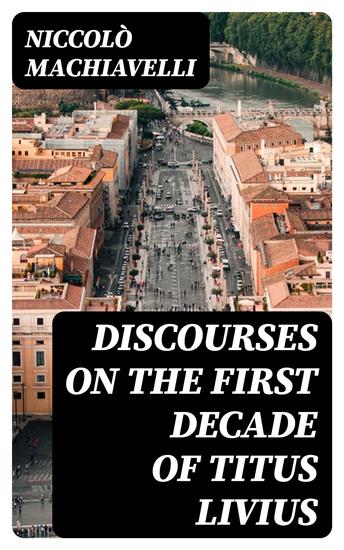
Discourses on the First Decade of Titus Livius - Enriched edition - cover

Discourses on the First Decade of Titus Livius - Enriched edition

Niccolò Machiavelli

Translator Ninian Hill Thomson

Publisher: DigiCat

  • 0
  • 0
  • 0

Summary

In "Discourses on the First Decade of Titus Livius," Niccolò Machiavelli explores the intricacies of political theory through a meticulous examination of ancient Roman history as chronicled by Livy. The work is characterized by Machiavelli's incisive analytical style, where he employs a blend of historical narrative and philosophical reflection to unpack the dynamics of power, governance, and civic virtue. Machiavelli argues for the relevance of republicanism and the importance of civic engagement, juxtaposing the strengths and weaknesses of different governmental structures within the context of human nature and historical precedent. This pioneering work is significant not only for its political insights but also for its impact on Enlightenment thought and modern political theory. Machiavelli, a prominent figure of the Renaissance, drew from his experiences as a diplomat and political advisor in Florence, where he witnessed the tumultuous interplay of power and the fragility of republics. His keen observations on the nature of authority, morality, and citizenship in "Discourses" reflect his resolve to inform contemporary leaders about the enduring principles of governance and the potential for civic corruption. His works are steeped in a profound understanding of historical cycles and human behavior, making him a foundational figure in political philosophy. I highly recommend "Discourses on the First Decade of Titus Livius" to readers who seek to comprehend the roots of modern political discourse. Machiavelli's reflections initiate deeper debates about the nature of power, the role of the citizen, and the moral dimensions of leadership. Whether for scholars of political science or general readers interested in history and ethics, this book serves as an essential guide to understanding the complexities of governance and the imperatives of fostering civic responsibility.

In this enriched edition, we have carefully created added value for your reading experience:
- A succinct Introduction situates the work's timeless appeal and themes.
- The Synopsis outlines the central plot, highlighting key developments without spoiling critical twists.
- A detailed Historical Context immerses you in the era's events and influences that shaped the writing.
- An Author Biography reveals milestones in the author's life, illuminating the personal insights behind the text.
- A thorough Analysis dissects symbols, motifs, and character arcs to unearth underlying meanings.
- Reflection questions prompt you to engage personally with the work's messages, connecting them to modern life.
- Hand‐picked Memorable Quotes shine a spotlight on moments of literary brilliance.
- Interactive footnotes clarify unusual references, historical allusions, and archaic phrases for an effortless, more informed read.
Available since: 09/15/2022.
Print length: 358 pages.
Other books that might interest you

  • Crafting Memoirs - Transforming Life into Compelling Stories - cover

    Crafting Memoirs - Transforming...

    Virversity Online Courses

    • 0
    • 0
    • 0
    Explore the art of storytelling with our online course, Crafting Memoirs, designed to help writers turn personal memories into captivating narratives for both creative fulfillment and deeper life insights.Master Memoir Writing:  - Learn essential techniques.  - Engage your readers effectively.  - Develop your unique voice and style.  - Receive personalized feedback.  - Transform personal tales into impactful memoirs.Unlock the secrets of unforgettable memoirs. Begin with an introduction to memoir writing, exploring its defining characteristics and distinguishing it from other genres. Learn to identify and focus on significant life moments that can evolve into captivating stories.Engage in exercises that teach you to structure your memoirs, ensuring they are coherent and compelling. Discover techniques for creating vivid descriptions and authentic dialogue, bringing your stories to life and resonating with readers on a deeper level.Receive personalized feedback and guidance from experienced instructors to refine your writing and develop your unique voice, ensuring your memoirs reflect your true self.By course end, you'll gain the confidence to share your personal stories, transforming memories into memorable memoirs. Emerge as a skilled memoirist with a profound understanding of your life's journey.
    Show book
  • Parenting the Strong-Willed Child Expanded Fourth Edition - The Clinically Proven Five-Week Program for Parents of Two- to Six-Year-Olds (4th Edition) - cover

    Parenting the Strong-Willed...

    Deborah J. Jones, Nicholas Long,...

    • 0
    • 0
    • 0
    In 1996, Parenting the Strong-Willed Child established itself as a seminal guide for parents who want to manage challenging behavior with parenting techniques grounded in positive reinforcement, without yelling or harming a child's self-esteem. Packed with brand-new content, this fourth edition has been thoroughly updated to integrate state-of-the-field scientific and clinical advances, providing a timely and thorough response to the current issues facing parents of young children. It addresses important new topics, including: 


    ● Understanding parenting and child behavior in context, including effects of the global pandemic, racial disparities, financial strain, and other parenting challenges 


    ● Greater opportunities for parents to learn proven parenting skills for challenging child behaviors such as noncompliance, whining, and tantrums 


    ● Strategies for linking the five-week program skills to common parenting challenges, including screen time 


    ● Understanding how the proven five-week program can help parents of children with ADHD 


    Improve the life of your child—and yourself—with valuable lessons and science-backed advice that has helped a generation of parents raise happy, healthy children.
    Show book
  • Tarascan Empire - The Fierce Rivals of the Aztecs and Masters of West Mexico - cover

    Tarascan Empire - The Fierce...

    Rolf Hedger

    • 0
    • 0
    • 0
    The Tarascan Empire flourished in the rugged and resource-rich region of western Mexico, primarily in what is now the state of Michoacán. Unlike the arid landscapes of central Mexico dominated by the Aztecs, the Tarascan homeland was defined by volcanic highlands, fertile valleys, and vast lakes, particularly Lake Pátzcuaro, which played a central role in their civilization. The geography of this region not only shaped their way of life but also provided a natural defense against external threats, including the expansionist ambitions of the Aztecs. 
    The varied landscape of Michoacán consisted of towering mountains, deep forests, and fertile plateaus. This diverse terrain allowed the Tarascans to develop a robust agricultural system, cultivating maize, beans, squash, and chili peppers, which formed the foundation of their diet. The presence of rivers and lakes further supported fishing and provided fresh water, making settlements around these water bodies highly strategic. Lake Pátzcuaro, in particular, was not only an economic and social hub but also held deep religious significance. It was believed to be the gateway to the underworld in Tarascan mythology, reinforcing its central role in spiritual life. 
    Natural resources played a crucial role in the rise of the Tarascan Empire. The region was rich in minerals, especially copper and obsidian, which were vital for both tools and weaponry. Unlike the Aztecs, whose military strength relied on wooden clubs and stone blades, the Tarascans developed advanced metalworking techniques, producing copper axes, bronze weapons, and intricate ornaments. This technological advantage gave them a distinct edge in warfare and trade, allowing them to maintain independence from their more dominant neighbors.
    Show book
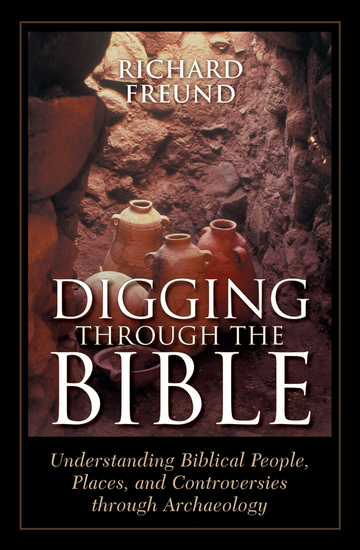
  • Digging Through the Bible - Understanding Biblical People Places and Controversies through Archaeology - cover

    Digging Through the Bible -...

    Richard A Freund

    • 0
    • 0
    • 0
    A “masterful and eminently readable” journey through the fascinating insights and revelations of Biblical archeology (Publishers Weekly, starred review). Many of our religious beliefs are based on faith alone, but archaeology gives us the opportunity to find evidence about what really happened in the distant past—evidence that can have a dramatic impact on what and how we believe. In Digging Through the Bible, archaeologist and rabbi Richard Freund takes readers through digs he has led in the Holy Land, searching for evidence about key biblical characters and events.  Digging Through the Bible presents overviews of the evidence surrounding figures such as Moses, Kings David and Solomon, and Mary the mother of Jesus, as well as new information that can help us more fully understand the life and times in which these people would have lived. Freund also presents new evidence about finding the grave of the Teacher of Righteousness mentioned in the Dead Sea Scrolls, and gives a compelling argument about how the Exodus of the Israelites may have taken place in three separate waves over time, rather than in a single event as presented in the Bible.
    Show book
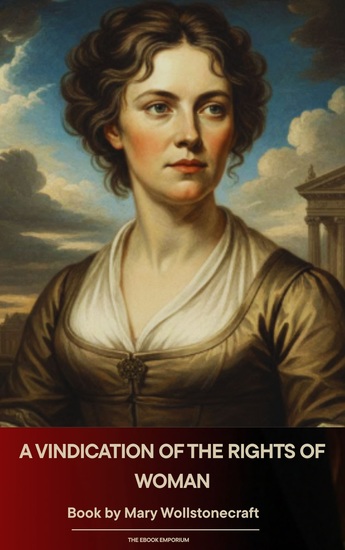
  • A Vindication of the Rights of Woman - cover

    A Vindication of the Rights of...

    Mary Wollstonecraft

    • 0
    • 0
    • 0
    "I do not wish women to have power over men; but over themselves."
    
    At a time when women were viewed as mere decorative ornaments or domestic servants, Mary Wollstonecraft issued a radical call for change. In A Vindication of the Rights of Woman, she challenges the educational and social systems of the 18th century that kept women in a state of "perpetual childhood." She argues that women are rational beings deserving of the same fundamental rights as men, and that a truly just society can only exist when both sexes are equally educated. Bold, fiery, and profoundly logical, this work laid the intellectual groundwork for the suffrage movements that would follow a century later.


    The Power of Education: Wollstonecraft's central argument is that the "frivolity" of women in her time was a product of a culture that only valued them for their beauty. By advocating for a national system of co-education, she envisioned a world where women could be independent, contributing members of society and "rational companions" to their partners.
    
    A Revolutionary Spirit: Written as a response to political theorists who excluded women from the "rights of man," this book is a masterpiece of Enlightenment thought. Wollstonecraft applies the principles of liberty and equality to the domestic sphere, demanding that justice begin at home.
    
    Why It Is Essential Today: As the mother of Frankenstein author Mary Shelley and a pioneer in her own right, Wollstonecraft's voice remains a powerful reminder of the struggle for self-sovereignty. Her work continues to inspire anyone fighting for the right to think, learn, and live freely.
    
    Own a piece of revolutionary history. Purchase "A Vindication of the Rights of Woman" today.
    Show book
  • Gitanjali - Song Offerings - cover

    Gitanjali - Song Offerings

    Rabindranath Tagore

    • 0
    • 0
    • 0
    GitanjaliBy Rabindranath TagoreWith an Introduction by W. B. YeatsGitanjali (song offerings) is a collection of 103 devotional poems written originally in Bengali and first published in 1910.  In 1912 a translation into English by the author was published in 1912, and led to his being awarded the Nobel Prize for Literature in 1913.The Indian sage, Paramahansa Yogananda, who was a friend and admirer of Tagore, made the following comment on his poetry:  "The beauty of his lines, to me, lies in his art of referring to God in nearly every stanza, yet seldom mentioning the sacred Name. 'Drunk with the bliss of singing,' Tagore writes, 'I forget myself and call thee friend who art my lord.'"Production copyright 2024 Voices of Today
    Show book