Begleiten Sie uns auf eine literarische Weltreise!
Buch zum Bücherregal hinzufügen
Grey
Einen neuen Kommentar schreiben Default profile 50px
Grey
Jetzt das ganze Buch im Abo oder die ersten Seiten gratis lesen!
All characters reduced
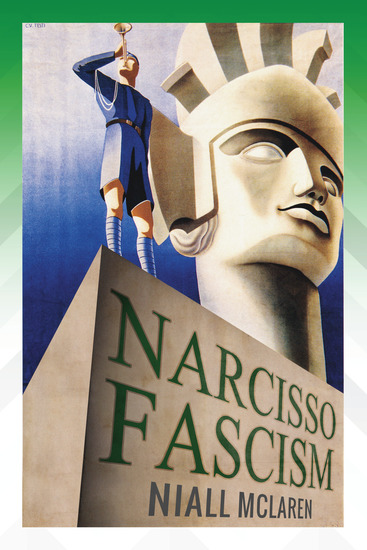
Narcisso-Fascism - The Psychopathology of Right-Wing Extremism - cover

Narcisso-Fascism - The Psychopathology of Right-Wing Extremism

Niall McLaren

Verlag: Modern History Press

  • 0
  • 0
  • 0

Beschreibung

This book examines the biological, social and psychological influences driving one of the most important, and frightening, trends in modern international politics, right-wing extremism. It is radically unlike anything written on the topic before and its conclusions should make all of us stop ... and worry about the world we are leaving to our children. Niall McLaren is a recently-retired Australian psychiatrist with a particular interest in the application of the philosophy of science to psychiatry. Of this work, Prof. Alan Patience, of the School of Social and Political Sciences, Melbourne University, said:"Niall McLaren's new book weaves the disciplines of psychiatry and political science into a highly original approach to the political psychology of fascism... (His) book takes the analysis of fascism to another level, warning how genetically and psychologically ingrained the fascist urge is in human nature generally. In revealing this with rare clarity, this book will help counter the deeply disturbing drift towards neo-facism across the contemporary world."
Verfügbar seit: 01.08.2023.
Drucklänge: 214 Seiten.

Weitere Bücher, die Sie mögen werden

  • Whose America? - Culture Wars in the Public Schools Second Edition - cover

    Whose America? - Culture Wars in...

    Jonathan Zimmerman

    • 0
    • 0
    • 0
    In this expanded edition of his 2002 book, Zimmerman surveys how battles over public education have become conflicts at the heart of American national identity. 
      
    Critical Race Theory. The 1619 Project. Mask mandates. As the headlines remind us, American public education is still wracked by culture wars. But these conflicts have shifted sharply over the past two decades, marking larger changes in the ways that Americans imagine themselves. In his 2002 book, Whose America?, Zimmerman predicted that religious differences would continue to dominate the culture wars. Twenty years after that seminal work, Zimmerman has reconsidered: arguments over what American history is, what it means, and how it is taught have exploded with special force in recent years. In this substantially expanded new edition, Zimmerman meditates on the history of the culture wars in the classroom—and on what our inability to find common ground might mean for our future.
    Zum Buch
  • John Stuart Mill - A Very Short Introduction - cover

    John Stuart Mill - A Very Short...

    Gregory Claeys

    • 0
    • 0
    • 0
    John Stuart Mill (1806-73) is widely regarded as the leading liberal philosopher, economist, and political theorist of nineteenth century Britain. In his lifetime he was best known for his System of Logic (1843) and the Principles of Political Economy (1848). Today Mill is chiefly identified with On Liberty (1859), perhaps the definitive text of modern liberal statement of its subject, and probably the single most important work of modern political thought. Mill was also the first major male feminist thinker of the period (author of The Subjection of Women, 1869), and the first, as an MP, to introduce a bill for female enfranchisement before Parliament. 


    This Very Short Introduction offers a brief survey of the life and key ideas of this most influential Victorian British writer. Moving chronologically, Gregory Claeys outlines the philosophical background out of which Mill developed, chiefly through the ideas of Jeremy Bentham and James Mill. He demonstrates how Mill's personal life, especially his 'mental crisis' of 1827, and his relationship with Harriet Taylor, were integral to his intellectual development. Throughout Claeys considers Mill's key works set within the context of his lesser writings and correspondence, and discusses the more controversial aspects of his thought concerning religion, secularism, and birth control.
    Zum Buch
  • False Front - The Failed Promise of Presidential Power in a Polarized Age - cover

    False Front - The Failed Promise...

    Kenneth Lowande

    • 0
    • 0
    • 0
    A provocative new perspective on presidential power. 


    Border walls, school bathrooms, student loans, gun control, diversity, abortion, climate change—today, nothing seems out of reach for the president's pen. But after all the press releases, ceremonies, and speeches, shockingly little gets done. The American presidency promises to solve America's problems, but presidents' unilateral solutions are often weak, even empty. 


    Kenneth Lowande argues this is no accident. The US political system is not set up to allow presidents to solve major policy problems, yet it lays these problems at their doorstep, and there is no other elected official better positioned to attract attention by appearing to govern. Like any politician, presidents are strategic actors who seek symbolic wins. They pursue executive actions, even when they know that these will fail, because doing so allows them to put on a compelling show for key constituencies. But these empty presidential actions are not without their costs: they divert energy from effective government—and, over time, undermine public trust. Drawing on thousands of executive actions, news coverage, interviews, and presidential archives, False Front shows that the real root of presidential power is in what presidents can get away with not doing.
    Zum Buch
  • Taming Urban Indians - Outlook on Urban India's lack of Civic Sensibilities - cover

    Taming Urban Indians - Outlook...

    Allister Robert

    • 0
    • 0
    • 0
    Callousness towards lack of civic sense which you would have experienced and insights on desired etiquettes are drawn in this publication on non-prescriptive tangents. 
    Intriguing and inspiring, it throws light on propriety deficiencies widely considered trivial in urban India, through compelling stories and real life experiences.
    Zum Buch
  • Activating the Common Good - Reclaiming Control of Our Collective Well-Being - cover

    Activating the Common Good -...

    Peter Block

    • 0
    • 0
    • 0
    A powerful, inspiring, and achievable vision of a society based on cooperation and community instead of competition and commodification. 
     
    This book counters the dominant and destructive story that we are polarized, violent, selfish, and destined to consume everything in sight. That is not who we are. 
     
    The challenge, Peter Block says, is that we are suffering under an economic theology that is based on scarcity, self-interest, competition, and infinite growth. We're told we can purchase and outsource all that matters. Block calls this the "business perspective narrative." It dominates not only the economy but also architecture, faith communities, journalism, arts, neighborhoods, and much more. 
     
    Block offers an antidote:  the "common good narrative." It embodies the belief that we are basically communal and cooperative. And that we have the capacity to communally produce what we care most about: raising a child, safety, livelihood, health, and a clean and sustainable environment. 
     
    This book describes how shifts to the common good perspective could transform many areas, fostering journalism that reports on what works, architecture that designs habitable spaces creating connection, faith collectives that build community, a market that is restrained and local, and leadership and activism that build social capital by creating trust among citizens. With these shifts, we would fundamentally change the world we live in for the better.
    Zum Buch
  • Heart of Atlanta - Five Black Pastors and the Supreme Court Victory for Integration - cover

    Heart of Atlanta - Five Black...

    Ronnie Greene

    • 0
    • 0
    • 0
    The Heart of Atlanta Supreme Court decision stands among the court’s most significant civil rights rulings. 
     
    In Atlanta, Georgia, two arch segregationists vowed to flout the Civil Rights Act of 1964, the sweeping slate of civil rights reforms just signed into law by President Lyndon B. Johnson. The Pickrick restaurant was run by Lester Maddox, soon to be  
    governor of Georgia, and the Heart of Atlanta motel was operated by lawyer Moreton Rolleston Jr. After the law was signed, a group of ministry students—George Willis, Albert Dunn, and Woodrow Lewis—showed up for a plate of skilletfried chicken at the Pickrick; Maddox greeted them with a pistol, axe handles, and  
    a mob of White supporters. At the Heart of Atlanta, ministers Albert Sampson and Charles Wells sought rooms, but Moreton Rolleston refused to accept the Black patrons. 
     
    These confrontations became the centerpiece of the nation’s first two legal challenges to the Civil Rights Act. In gripping detail built from exclusive interviews and original documents, Heart of Atlanta reveals the saga of the case’s rise to the  
    US Supreme Court, which unanimously rejected the segregationists. Heart of Atlanta restores the legal cases and their heroes to their proper place in history.
    Zum Buch