Join us on a literary world trip!
Add this book to bookshelf
Grey
Write a new comment Default profile 50px
Grey
Subscribe to read the full book or read the first pages for free!
All characters reduced
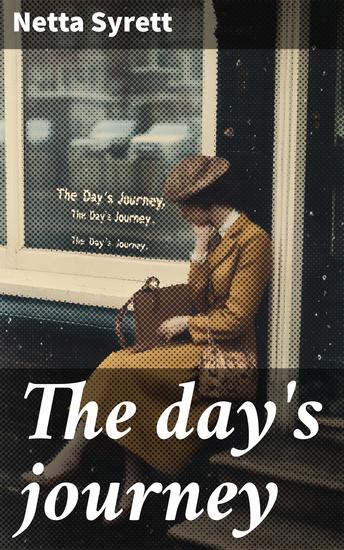
The day's journey - cover

The day's journey

Netta Syrett

Publisher: Good Press

  • 0
  • 0
  • 0

Summary

In "The Day's Journey," Netta Syrett crafts a poignant exploration of the complexities of human relationships through the lens of suburban life in early 20th-century England. The narrative employs a stream-of-consciousness style, which serves to intimately weave together the inner thoughts of its characters, allowing readers to navigate the subtleties of their emotional landscapes. Engaging with themes of love, loss, and societal expectations, Syrett reflects the broader literary context of the period, notably influenced by the rise of modernism and the questioning of traditional narrative forms. Her prose is both lyrical and incisive, providing a meditative examination of mundane yet profound moments in daily existence. Netta Syrett, a trailblazer in the feminist literary movement, was a figure deeply affected by her experiences in a patriarchal society. Her background in education and her involvement in women's writing groups distinctly influenced her literary voice, leading her to address issues of gender and identity in her works. Syrett's own life, marked by personal struggles and social critique, resonates through her vivid character portrayals and thematic depth in "The Day's Journey." For readers interested in a nuanced portrayal of human connections and a reflection on societal constraints, "The Day's Journey" is a compelling addition to early 20th-century literature. Syrett's mastery of language and her insightful exploration of character psychology make this novel a must-read for those seeking a deeper understanding of the interplay between individual desires and societal pressures.
Available since: 03/02/2025.
Print length: 200 pages.

Other books that might interest you

  • Sive - cover

    Sive

    John B Keane

    • 0
    • 0
    • 0
    Sive is a young and beautiful orphan who lives with her uncle Mike, his wife Mena and his mother Nanna. A local matchmaker, Thomasheen Seán Rua, wants Sive to marry an old man called Sean Dóta. Thomasheen convinces Mike and Mena to organise the marriage. They will receive a sum of two hundred pounds as soon as she marries him. However, Sive is in love with a young man, Liam Scuab. But Liam is not suitable and is refused permission to marry Sive. Sive is distraught but is forced to do the will of her uncle and his bitter wife. Faced with an unthinkable future she takes the only choice left to her. Set against the harsh poverty and difficult times of 1950s Ireland, Sive caused considerable controversy on its debut in February 1959. Since then it has become an established part of Ireland's theatrical canon.
    Show book
  • Seven Ravens The - Story Time Episode 48 (Unabridged) - cover

    Seven Ravens The - Story Time...

    Brothers Grimm

    • 0
    • 0
    • 0
    A peasant has seven sons and no daughter. Finally a daughter is born, but is sickly. The father sends his sons to fetch water for her, in the German version to be baptized, in the Greek version to take water from a healing spring. In their haste, they drop the jug in the well. When they do not return, their father thinks that they have gone off to play and curses them and so they turn into ravens.
    Show book
  • The Shunned House - cover

    The Shunned House

    HP Lovecraft

    • 0
    • 0
    • 0
    One of HP Lovecrafts earliest works, "The Shunned House", first published in Weird Tales in the October of 1937, is a short novellette about a mysterious, and apparently cursed house. The Shunned House on Benefit Street has long captivated the attention of the narrator and his uncle Elihu Whipple, but they are unprepared for the full scale of the horror they are to experience when they attempt to stay the night in it's benighted basement to finally unearth it's mysterious secrets. Considered one of Lovecrafts best short stories, it is beleived to have been his first individually published book: with 250 copies made by Recluse Press in 1928. 
    Narrated by Michael Ward.
    Show book
  • The Adventures of Captain Hatteras - cover

    The Adventures of Captain Hatteras

    Jules Verne

    • 0
    • 0
    • 0
    An explorer obsessed with reaching the North Pole undertakes a harrowing expedition in this classic novel of adventure and survival in the Arctic.Capt. John Hatteras will stop at nothing to reach the North Pole. After having a steamship built for the purpose, he embarks for terra incognita. But when he encounters a frozen sea, mutiny and shipwreck leave Hatteras and his remaining crew stranded on an island in the harsh Arctic winter. Even in the face of death by starvation or polar bear attack, Hatteras knows that the sea must eventually thaw, opening a path to incredible discovery. First published in 1864, The Adventures of Captain Hatteras was written in two parts: The English at the North Pole and The Desert of Ice. It was later included in Jules Verne’s Extraordinary Voyages series, alongside Twenty Thousand Leagues Under the Sea, Around the World in Eighty Days, and many others.
    Show book
  • Animal Farm - cover

    Animal Farm

    George Orwell

    • 0
    • 0
    • 0
    Animal Farm is an allegorical novella by George Orwell, first published in England on 17 August 1945. The book tells the story of a group of farm animals who rebel against their human farmer, hoping to create a society where the animals can be equal, free, and happy. Ultimately, however, the rebellion is betrayed, and the farm ends up in a state as bad as it was before, under the dictatorship of a pig named Napoleon. 
    According to Orwell, the fable reflects events leading up to the Russian Revolution of 1917 and then on into the Stalinist era of the Soviet Union. Orwell, a democratic socialist, was a critic of Joseph Stalin and hostile to Moscow-directed Stalinism, an attitude that was critically shaped by his experiences during the Spanish Civil War. The Soviet Union had become a brutal dictatorship built upon a cult of personality and enforced by a reign of terror. In a letter to Yvonne Davet, Orwell described Animal Farm as a satirical tale against Stalin ("un conte satirique contre Staline"), and in his essay "Why I Write" (1946), wrote that Animal Farm was the first book in which he tried, with full consciousness of what he was doing, "to fuse political purpose and artistic purpose into one whole". 
    The original title was Animal Farm: A Fairy Story, but U.S. publishers dropped the subtitle when it was published in 1946, and only one of the translations during Orwell's lifetime kept it. Other titular variations include subtitles like "A Satire" and "A Contemporary Satire". Orwell suggested the title Union des républiques socialistes animales for the French translation, which abbreviates to URSA, the Latin word for "bear", a symbol of Russia. It also played on the French name of the Soviet Union, Union des républiques socialistes soviétiques. 
    Show book
  • The Chimes - cover

    The Chimes

    Charles Dickens

    • 0
    • 0
    • 0
    The second in his series of "Christmas books," after A Christmas Carol. The Chimes is a lesser known, but no less powerful story by Charles Dickens of christmastime and the plight of the poor. Trotty Veck is a poor porter and father, who despairing of the poors lot, is shown a terrifying vision by the "Ghosts of the Chimes" of a world without him. 
    Narrated by Michael Ward.
    Show book